

How to Encapsulate Lead-Based Paint Safely
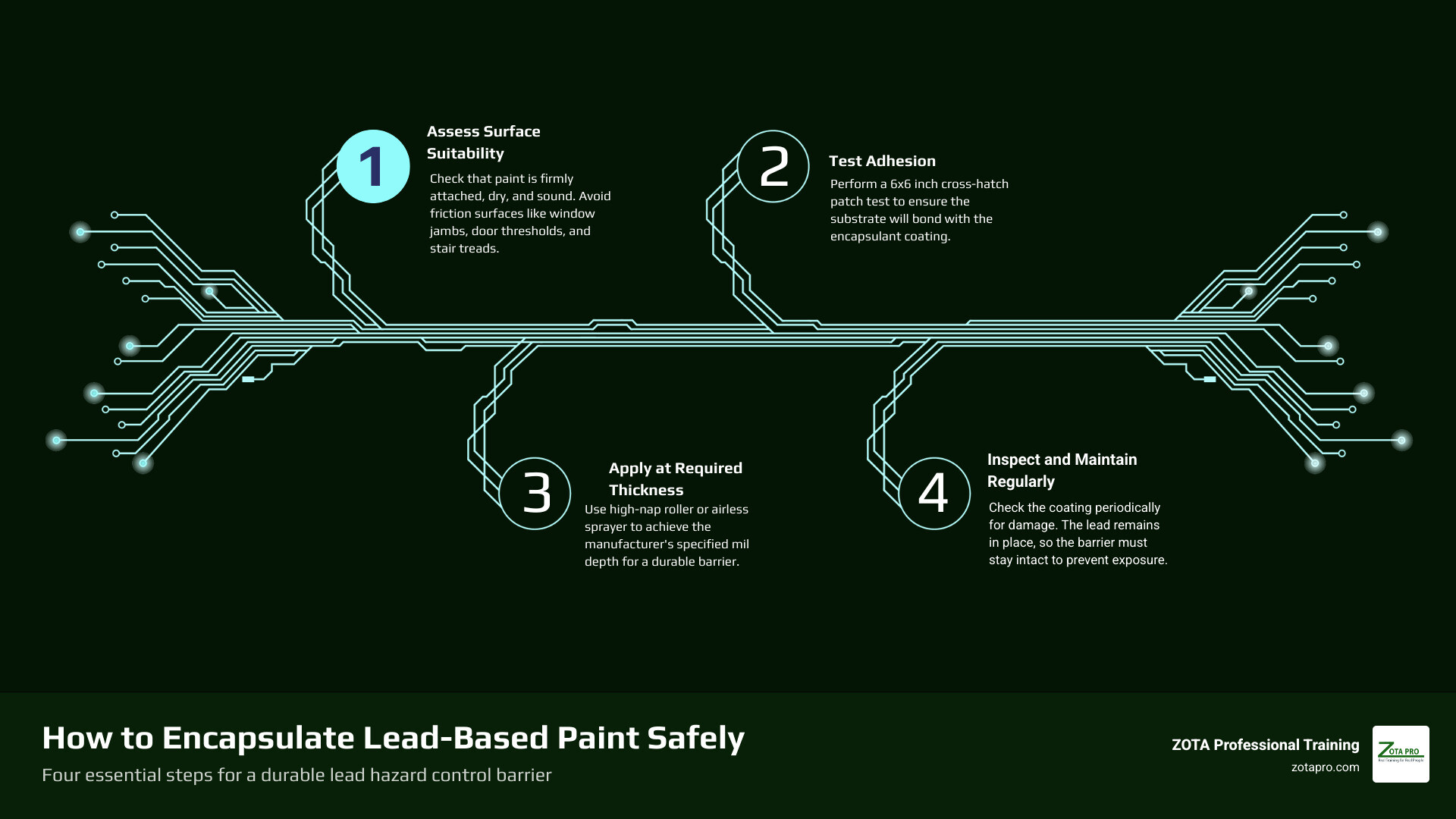
Encapsulating lead-based paint means sealing it beneath a coating made for that purpose, not simply painting over it. First, confirm the paint is firmly attached and the surface is dry and sound. Avoid surfaces that rub or take heavy wear, such as window jambs and stair treads. Then use lead-safe work practices, test the coating’s adhesion, and apply it at the thickness the manufacturer requires. The lead paint stays in place, so the barrier will need regular checks for damage.
For contractors working in pre-1978 homes, the key decision comes before opening a can: is this surface suitable for encapsulation at all? A failing surface may need another lead-hazard control method.
I’m Bob Zak, founder of ZOTA Professional Training, with more than 32 years of experience in occupational health and safety. My work in lead-safety training helps contractors understand the rules and precautions involved in encapsulating lead based paint.
Understanding and Encapsulating Lead Based Paint: Science, Surface Suitability, and Products
Encapsulation relies on barrier technology designed specifically to prevent toxic dust and chips from escaping into living environments. When dealing with pre-1978 residential structures—and especially pre-1960 housing stock where lead concentrations are highest—understanding historical lead-based paint is essential for choosing the right hazard control method.
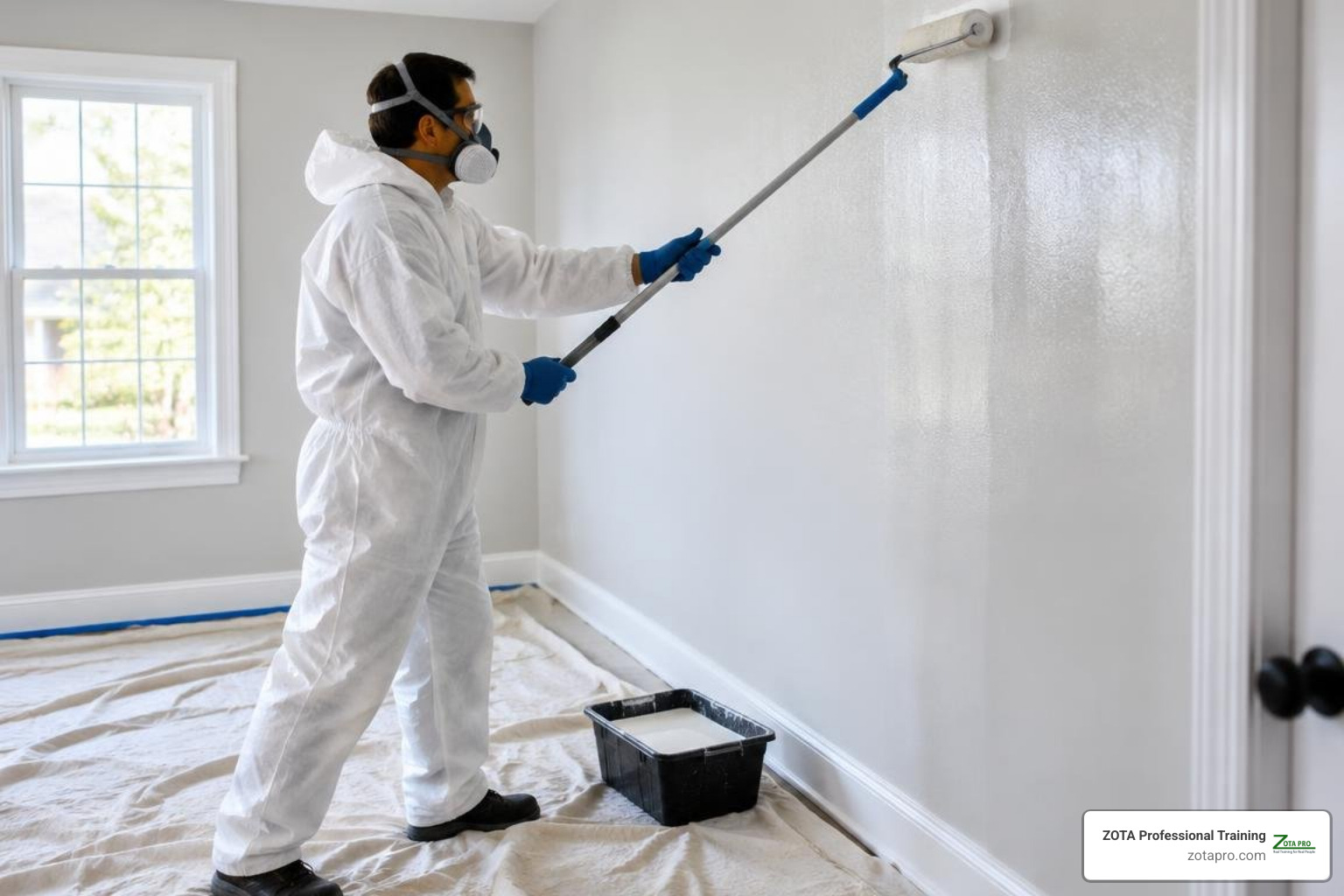
Unlike standard architectural paints, encapsulants are liquid-applied coating systems engineered with superior tensile strength, extreme flexibility, and robust mechanical bonding properties. They do not merely color a substrate; they form an impermeable, elastomeric membrane that locks the underlying lead compounds away from human contact.
What Is Encapsulation and How Do Specialty Coatings Differ from Standard Paint?
A common mistake property owners make is assuming a couple of coats of regular latex or oil-based enamel will make a wall safe. Regular paint is porous, brittle, and prone to micro-fissuring over time. When standard paint chips or flakes, it releases the dangerous lead paint underneath.
True encapsulants must meet strict national testing benchmarks, such as ASTM standards for impact resistance, fire safety, water vapor transmission, and aging. They dry to a much higher film thickness—often between 7 to 14 dry mils (thousandths of an inch)—compared to standard wall paint, which typically dries to only 1 to 2 mils per coat.
Specialty products such as ChildGuard from Fiberlock are water-based elastomeric coatings formulated with integrated bittering agents to discourage young children from chewing on coated surfaces. Similarly, products like Insl-X Specialty Coatings Lead Block provide flexible, non-porous elastomeric barriers that seal legacy lead coatings while accommodating normal structural expansion and contraction.
Evaluating Substrates Before Encapsulating Lead Based Paint
You cannot encapsulate a failing substrate. If the underlying paint is peeling, chalking, or separating from the base material, the encapsulant will simply peel off with it.
Before applying any product, you must conduct a thorough field evaluation and surface adhesion test:
- Visual Integrity Check: Look for signs of water intrusion, mold, rust on metal components, or deep structural cracks.
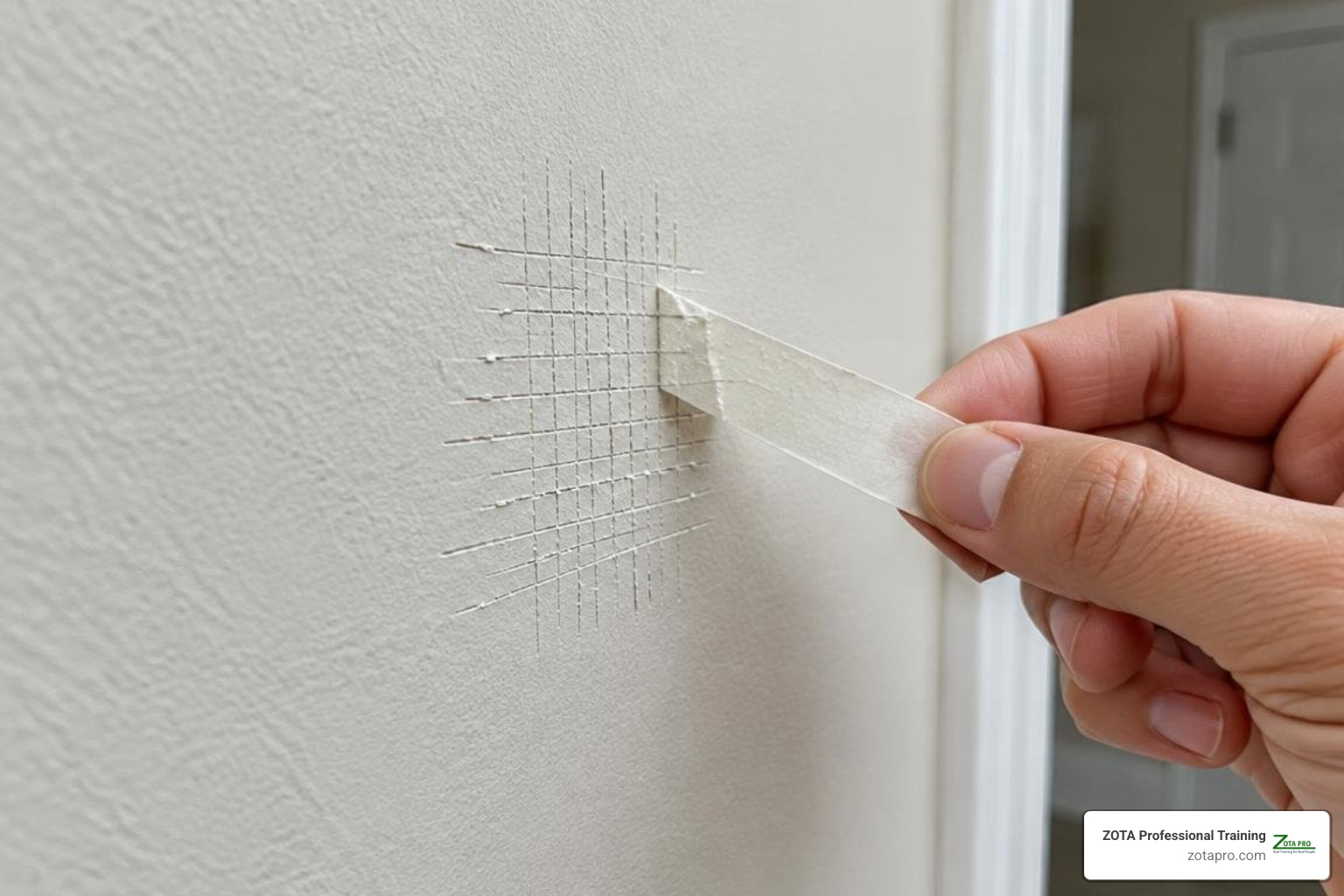
- Patch Testing: Apply the manufacturer’s specified primer and encapsulant to a representative 6-by-6-inch patch (or 3-by-3-inch for fiber-reinforced systems). Allow it to cure fully according to technical data sheets.
- Adhesion Evaluation: Perform an X-cut or cross-hatch adhesion tape test. If the coating pulls the underlying paint away from the substrate, the surface has failed and is unsuitable for encapsulation.
Surfaces Unsuitable for Encapsulation
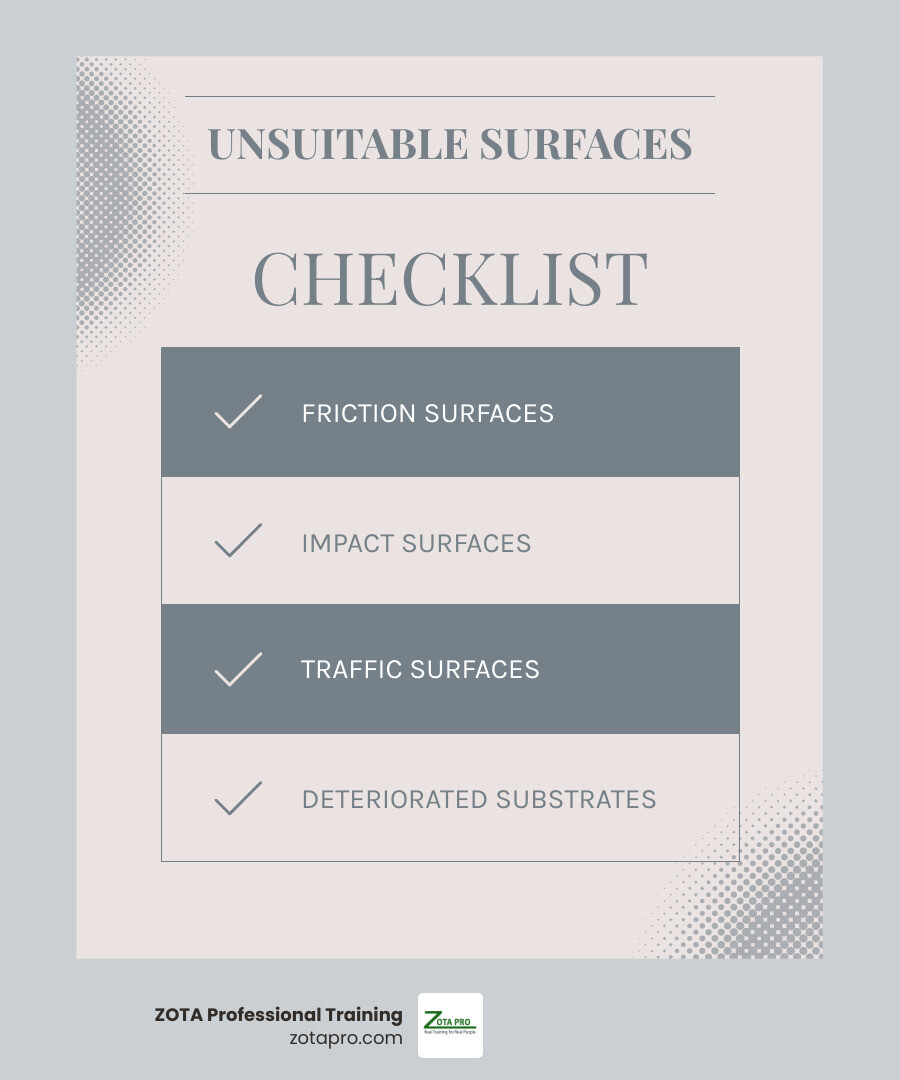
Encapsulants are strictly prohibited on surfaces subject to friction, direct impact, or severe mechanical stress:
- Friction surfaces: Window jambs, sashes, stop beads, and door jambs where rubbing abrades the coating.
- Impact surfaces: Door thresholds, baseboards subject to heavy vacuum strikes, and cabinet edges.
- Traffic surfaces: Stair treads, risers, and high-traffic flooring.
- Deteriorated substrates: Rotted wood, crumbling plaster, or unprimed metals prone to rust.
Types of Encapsulant Formulas: Polymers, Epoxies, and Cementitious Coatings
Manufacturers formulate encapsulants using several distinct chemical bases to match specific project substrates:
- Liquid Polymer-Based Coatings: Water-borne elastomeric acrylics or vinyl blends. These are the most common interior and exterior products, offering excellent elasticity, easy cleanup, and low VOC profiles.
- Epoxy and Polyurethane Formulas: Two-part or moisture-cure resins that provide exceptional chemical and moisture resistance. These are frequently used in commercial settings, damp basements, or areas requiring higher impact tolerance.
- Cementitious Systems: Cement-like polymer-modified coatings that cure into durable, stone-hard barriers, ideal for exterior masonry, rough stucco, or concrete block walls.
- Reinforced Liquid Systems: Encapsulant coatings embedded with flexible woven mesh or glass-fiber membranes, adding structural tensile strength across hairline cracks.
State regulatory bodies, such as those governed by Chapter 3742 of the Ohio Revised Code, require encapsulants to pass independent laboratory testing proving a minimum durability life expectancy of at least 20 years before approving them for regulated lead abatement projects.
Protocols, Regulations, and Alternatives for Lead Paint Management
Treating lead hazards is not standard remodeling; it requires strict containment, regulated personal protective equipment (PPE), and validated cleanup protocols. Following safe lead paint abatement procedures ensures that workers do not inadvertently poison themselves or create fine lead dust that contaminates the building.
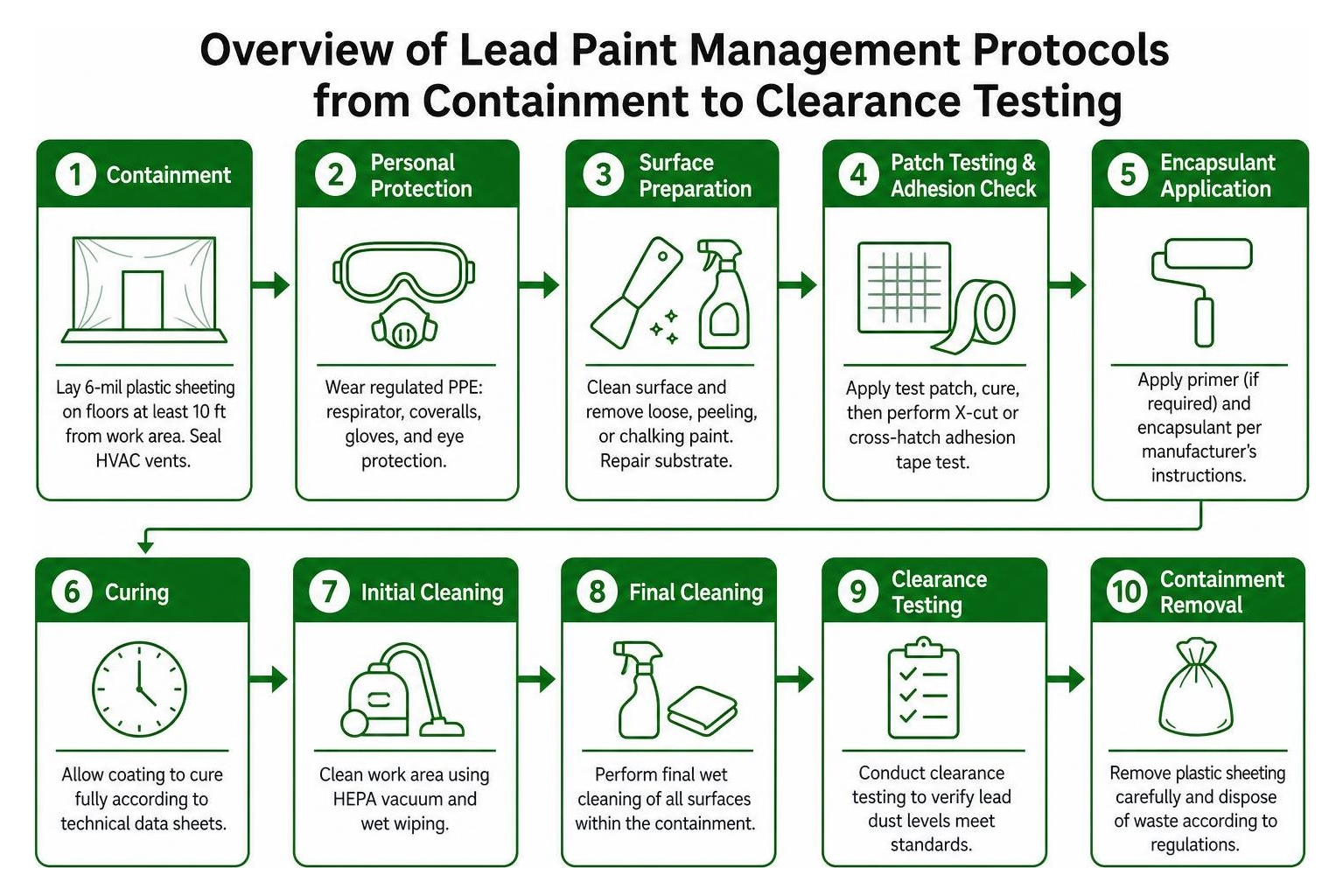
Step-by-Step Procedures for Encapsulating Lead Based Paint Safely
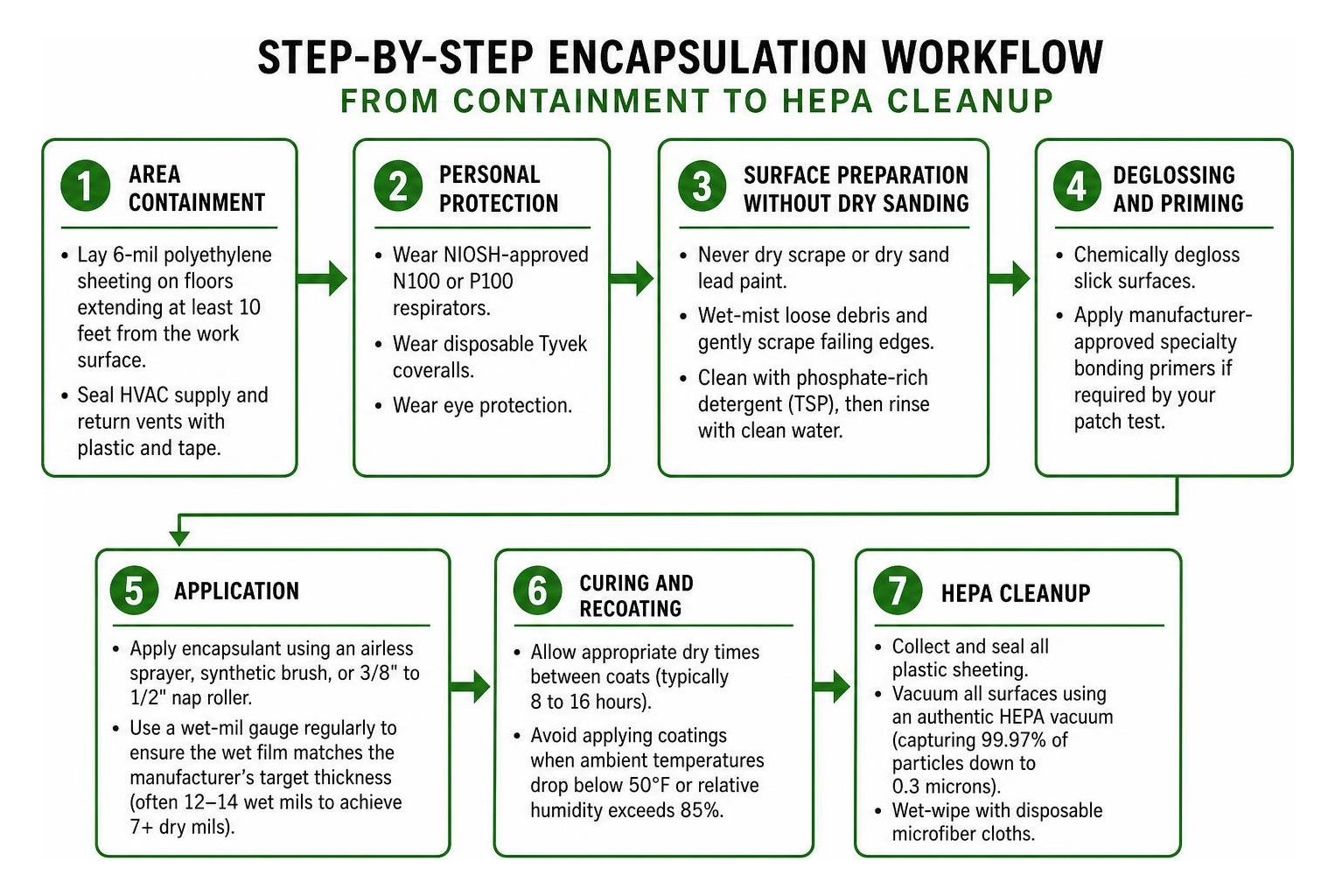
When executing an encapsulation project, contractors must follow a structured workflow to maintain environmental safety and ensure coating adhesion, as outlined in our guide to safe lead paint encapsulation.
- Area Containment: Lay 6-mil polyethylene plastic sheeting on floors extending at least 10 feet from the work surface. Seal HVAC supply and return vents with plastic and tape.
- Personal Protection: Wear NIOSH-approved N100 or P100 respirators, disposable Tyvek coveralls, and eye protection.
- Surface Preparation Without Dry Sanding: Never dry scrape or dry sand lead paint. Wet-mist loose debris and gently scrape failing edges. Clean surfaces using a phosphate-rich detergent such as Trisodium Phosphate (TSP) to remove oils and residues, followed by a clean water rinse.
- Deglossing and Priming: Chemically degloss slick surfaces using a liquid deglosser. Apply manufacturer-approved specialty bonding primers if required by your patch test.
- Application: Apply the encapsulant using an airless sprayer, synthetic brush, or 3/8-inch to 1/2-inch nap roller. Use a wet-mil gauge regularly during application to ensure the wet film matches the manufacturer’s target thickness (often 12–14 wet mils to achieve 7+ dry mils).
- Curing and Recoating: Allow appropriate dry times between coats (typically 8 to 16 hours). Avoid applying coatings when ambient temperatures drop below 50°F or relative humidity exceeds 85%.
- HEPA Cleanup: Collect and seal all plastic sheeting. Vacuum all surfaces using an authentic HEPA vacuum (capturing 99.97% of particles down to 0.3 microns), then wet-wipe with disposable microfiber cloths.
Encapsulation vs. Abatement: Longevity, Costs, and Alternatives
Encapsulation offers significant upfront cost savings and generates minimal lead dust during installation. However, evaluating lead abatement vs encapsulation lifecycle costs shows that encapsulation requires ongoing visual inspections and periodic repairs.
| Method | Upfront Cost | Dust Risk During Work | Longevity / Durability | Ongoing Maintenance Required? |
|---|---|---|---|---|
| Encapsulation | Low to Moderate | Very Low | 3–20 Years (dependent on substrate stability) | Yes (annual inspections and recoating) |
| Enclosure (Drywall/Capping) | Moderate | Low | 20+ Years | Minimal (check structural seams) |
| Component Replacement | Moderate to High | Low to Moderate | Permanent (Lifetime) | None |
| Complete Chemical/Mechanical Removal | High | High (Requires Full Containment) | Permanent (Lifetime) | None |
Field studies indicate that while manufacturers warrant products for 20 years, poor surface preparation or building movement can cause coating failures within 3 to 5 years. For owners seeking permanent solutions on historic trim or siding, exploring options such as dustless abrasive blasting, component replacement, or other permanent lead mitigation methods may be more cost-effective over a property’s lifetime.
Regulatory Compliance, Safety Standards, and Professional Training Requirements
Federal regulations establish clear distinctions regarding lead hazard activities. Under EPA definitions in 40 CFR 745.223 and 15 USC Chapter 53 Subchapter IV, encapsulation is legally classified as an abatement strategy when intended as a permanent control measure.
The Residential Lead-Based Paint Hazard Reduction Act of 1992 (Title X) establishes national guidelines for hazard evaluations and clearance testing. Whenever work disturbs painted surfaces above de minimis levels in pre-1978 target housing or child-occupied facilities, contractors must comply with federal lead paint compliance rules and RRP mandates.
State laws vary regarding who can apply encapsulants:
- In states like Massachusetts, homeowners can apply encapsulants themselves after reviewing training materials and passing an authorized state test.
- In commercial settings, multi-family housing, or federally assisted housing, work must generally be performed by EPA-certified lead abatement or RRP-certified personnel, followed by independent dust-wipe clearance testing.
At ZOTA Professional Training, we provide EPA-accredited Lead Inspector, Risk Assessor, Abatement Contractor, and Lead Renovator (RRP) certification courses. Whether you need in-person sessions, hybrid formats, or bilingual English/Spanish training with nationwide on-site support, our programs ensure your teams work safely, pass clearance testing, and stay fully compliant with all state and federal lead safety standards.