

Why Lead Abatement Is a Permanent Safety Solution
Lead abatement is the professional process of permanently removing or controlling lead-based paint hazards. For contractors working on pre-1978 homes, the safe path is simple: identify lead hazards before work begins, use the right certified professionals and containment methods, and complete independent clearance testing before occupants return.
This is not the same as painting over peeling surfaces or following standard renovation, repair, and painting (RRP) practices. Abatement is intended to last for years – often up to 20 years under normal conditions – through methods such as replacing old windows, enclosing painted surfaces, applying approved encapsulants, or removing contaminated soil.
The stakes are high. Lead dust can form when old paint chips, rubs on windows and doors, or is disturbed during renovation. Children can swallow or breathe in that dust through normal hand-to-mouth behavior. Even low levels of exposure can harm developing brains, learning, behavior, and growth. Although residential lead paint was banned for sale in 1978, roughly three-quarters of U.S. homes built before then may still contain it.
I am Bob Zak, Founder and CEO of ZOTA Professional Training, with more than 32 years of occupational health and safety experience. My work in lead abatement training, asbestos, mold, and OSHA safety helps contractors understand the certifications and field practices needed to protect workers, occupants, and their businesses.
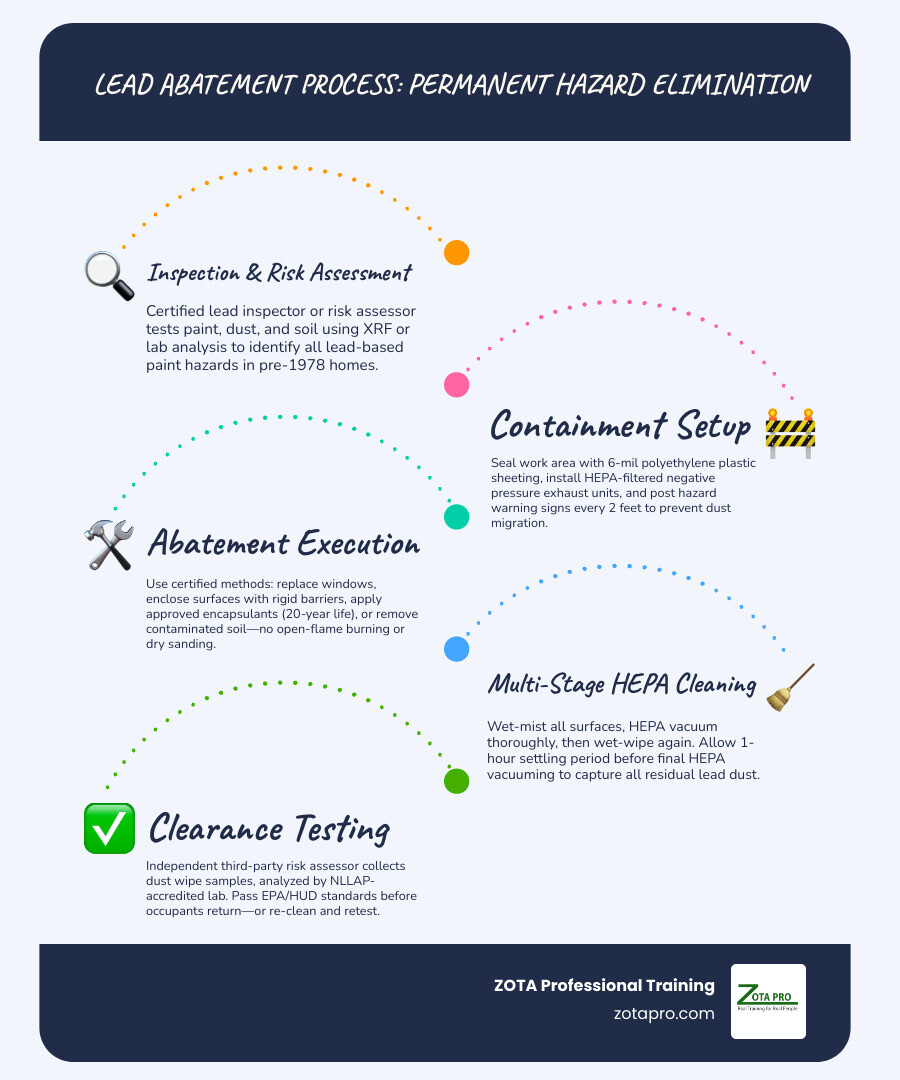
Core Lead Abatement Methods and Regulatory Triggers
When dealing with legacy housing, you cannot treat lead paint like ordinary building material. Federal agencies such as HUD and the EPA, along with state and municipal health departments, enforce strict rules under Title X and 40 CFR Part 745 to ensure dangerous lead hazards are eliminated rather than scattered across living spaces.
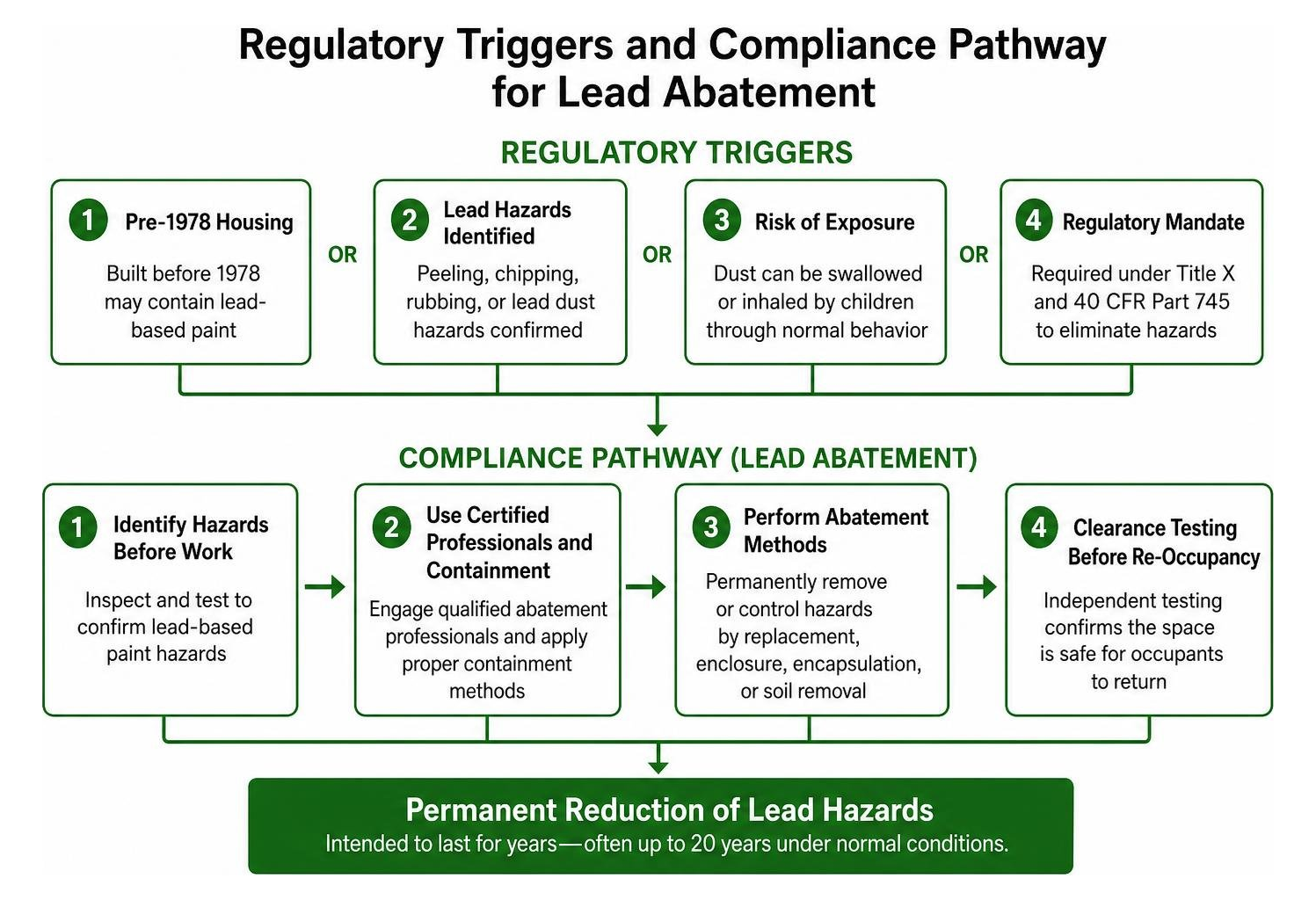
Regulatory Mandates and RRP vs. Lead Abatement Differences
Understanding the regulatory framework begins with the statutory purpose of the project. Under legal definitions under 40 CFR § 745.223, abatement refers to measures designed to permanently eliminate lead-based paint hazards. This distinction is critical when comparing RRP vs abatement.
While standard Renovation, Repair, and Painting (RRP) practices focus on minimizing dust during cosmetic upgrades or routine maintenance, permanent abatement is legally mandated under several specific conditions:
- Federal Funding Thresholds: Under HUD Subpart J, any federally assisted rehabilitation project receiving more than $25,000 per unit legally requires full lead abatement executed by certified abatement contractors. Projects under $5,000 per unit require only interim controls, while funding between $5,000 and $25,000 per unit permits a combination of interim controls and selective abatement.
- Public Health Orders: When a child under age six is identified with an elevated blood lead level (EBL), local health authorities typically issue mandatory abatement orders for the residence.
- Municipal Presumption Laws: Cities like New York enforce strict ordinances where all pre-1960 residential buildings are legally presumed to contain lead-based paint unless certified testing proves otherwise.
| Program Type | Primary Intent | Typical Cost Range | Regulatory Durability | Certification Needed |
|---|---|---|---|---|
| Interim Controls | Temporarily reduce exposure | $500 – $5,000 | 2 Years (Requires re-evaluation) | Lead Renovator / Lead-Safe Worker |
| EPA Lead RRP | Safely contain dust during remodeling | Project Dependent | Worksite Specific | Certified Renovator & Firm |
| Permanent Lead Abatement | Eliminate lead hazards entirely | $8,000 – $25,000+ | 20+ Years | Certified Supervisor & Workers |
Primary Lead Abatement Techniques: Replacement, Enclosure, and Encapsulation
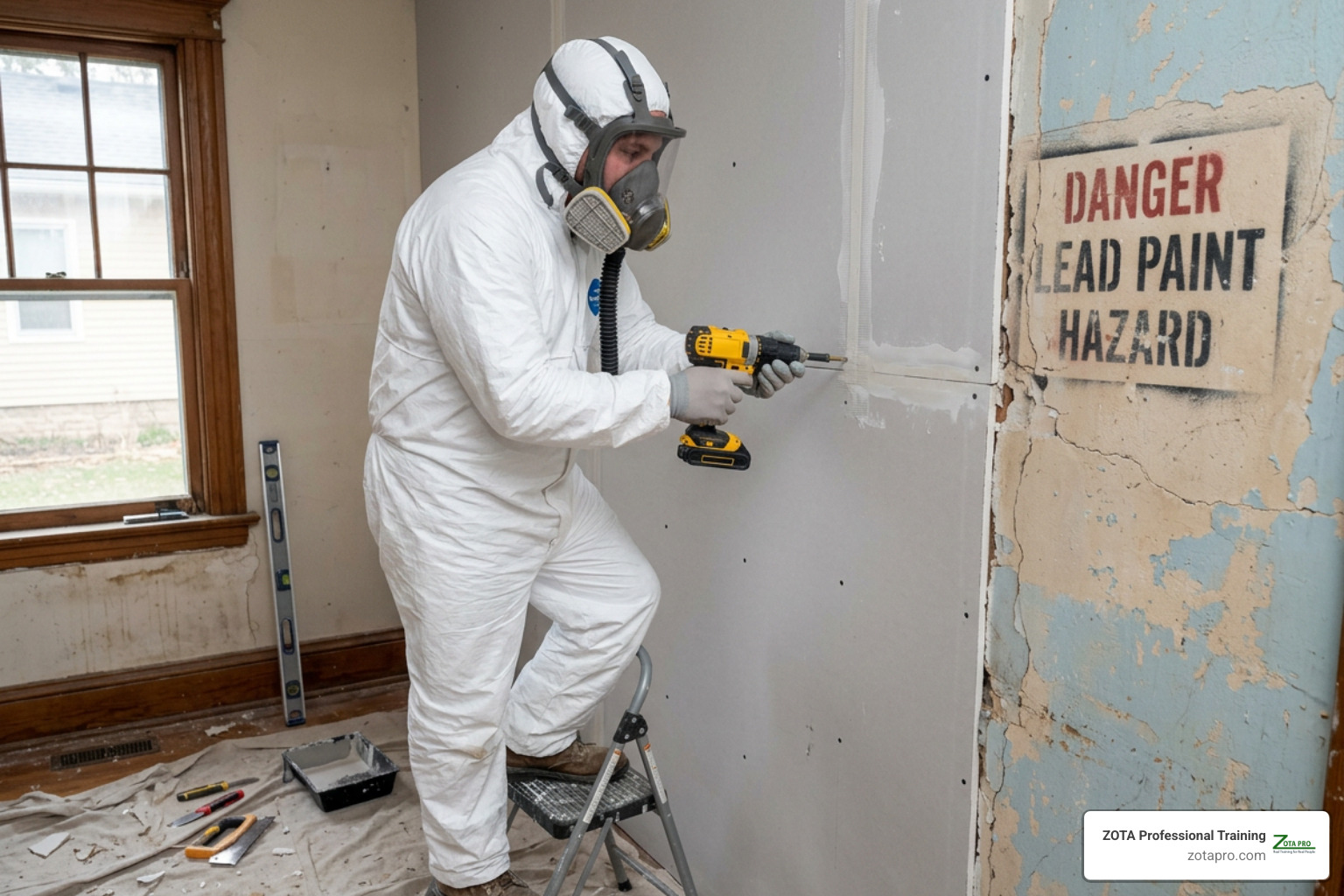
Permanent hazard elimination relies on systematic engineering controls rather than cosmetic cover-ups. As outlined in the HUD guidelines for lead abatement in housing, three primary methods dominate modern practice:
- Building Component Replacement: The gold standard of hazard elimination. Workers remove lead-coated components—such as friction-heavy wooden sashes, doors, and baseboards—and install brand-new, energy-efficient replacements. This removes the lead source entirely from the property.
- Permanent Enclosure: Lead-painted surfaces are mechanically sealed behind durable, rigid barriers like drywall, exterior vinyl siding, or subfloor underlayment. All seams must be back-caulked and sealed. Crucially, before sealing, workers must stencil warning labels reading “Danger: Lead-Based Paint” every 2 feet horizontally and vertically on the underlying surface.
- Encapsulation Coatings: Liquid encapsulants form an elastomeric, impact-resistant barrier over intact lead paint. However, when evaluating lead abatement vs encapsulation, contractors must remember that encapsulants are prohibited on high-friction or impact surfaces like window sills and door jambs.
Prohibited Removal Practices and Safety Hazards
Some traditional paint removal techniques create catastrophic levels of toxic dust and airborne lead fumes. The EPA and HUD strictly ban several practices:
- Open-Flame Burning or Torching: High temperatures vaporize lead pigments, allowing fine toxic fumes to bypass standard filters and settle into lungs.
- Heat Guns Operating at or Above 1,100°F: Exceeding this temperature threshold releases toxic lead vapors.
- Uncontained Power Sanding, Grinding, or Sandblasting: Any mechanical tool operating without an attached HEPA-filtered local exhaust shroud is prohibited.
- Dry Scraping or Dry Sweeping: Dry agitation turns paint into respirable airborne dust.
- Hydroblasting or Uncontained High-Pressure Washing: Creates contaminated runoff and micro-aerosols.
- Methylene Chloride Chemical Strippers: Poses acute neurological and carcinogenic hazards in indoor or poorly ventilated spaces.
Professional Safety Protocols, Clearance, and Project Execution
Every abatement project operates under strict worker safety rules mandated by OSHA 29 CFR 1926.62 and environmental safeguards supervised by the EPA.
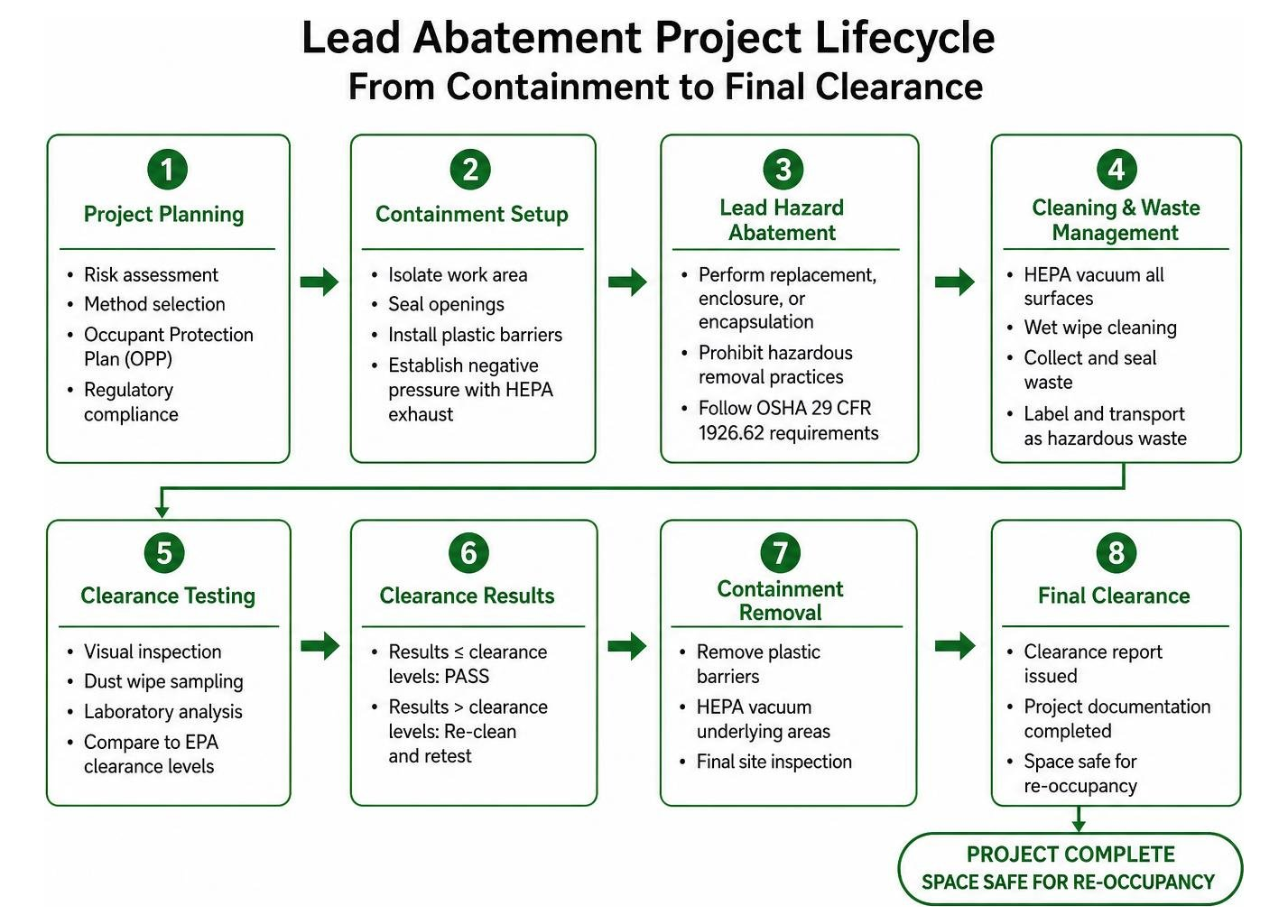
Step-by-Step Abatement Workflow and Containment Setup
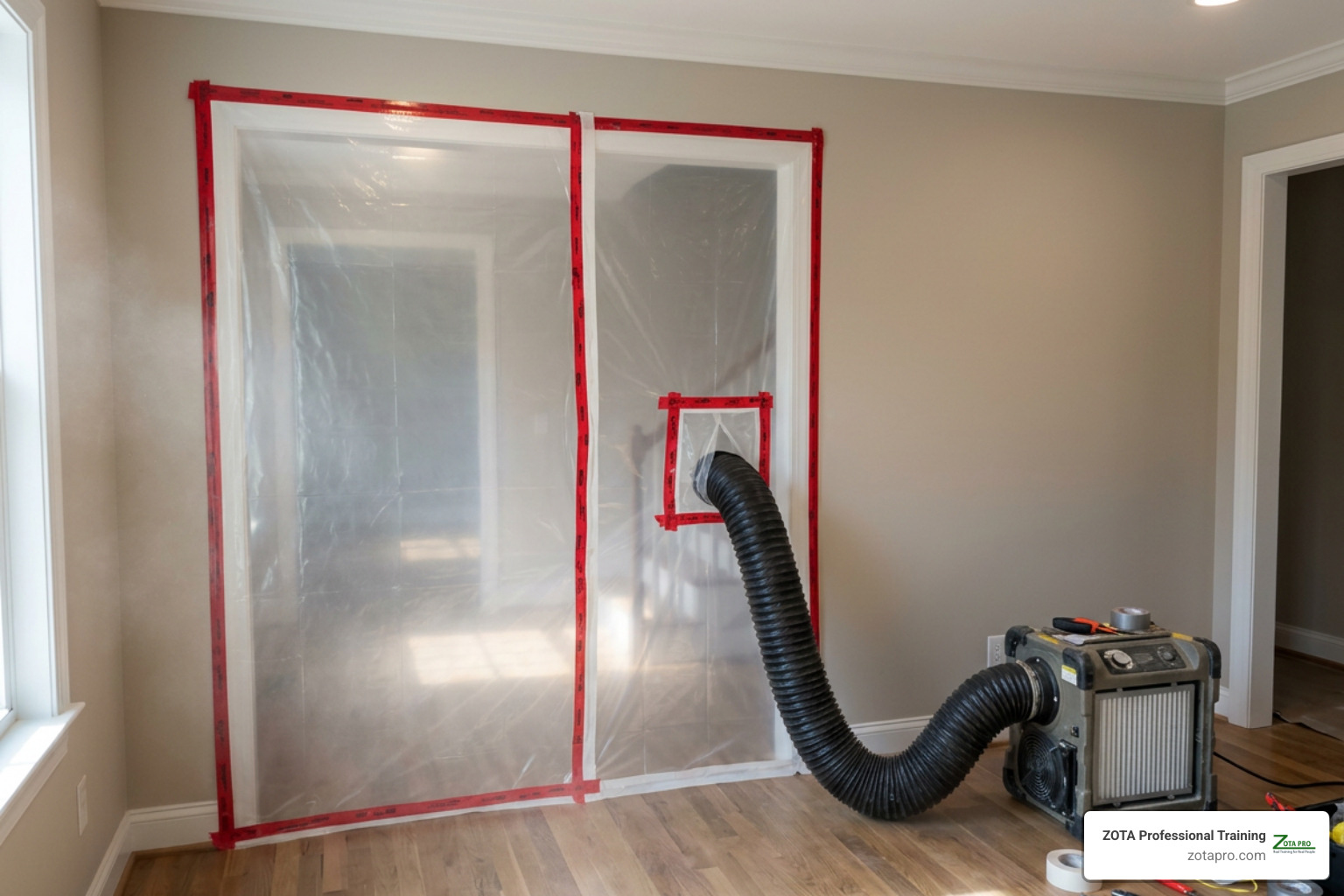
Before disturbing any painted surface, certified supervisors develop an Occupant Protection Plan (OPP) detailing egress pathways, pet safety, and containment measures. If you are a property owner, protecting your home by hiring certified lead abatement experts ensures these procedures are implemented without contaminating surrounding living areas.
- Notification: File project notices through the EPA Central Data Exchange (CDX) at least 5 business days prior to start, along with any mandatory state or local notifications.
- Containment: Seal all HVAC vents, doors, and windows using impermeable 6-mil polyethylene plastic sheeting. Set up HEPA-filtered air scrubbers to create negative pressure.
- Controlled Removal: Mist components with water to suppress airborne dust, score painted joints with sharp utility knives, and unfasten materials carefully.
- Weather Limits: Exterior abatement must stop immediately if sustained winds exceed 20 miles per hour to prevent outdoor dust drift.
- Waste Management: Double-bag all contaminated debris in heavy-duty poly bags, seal with duct tape, and stage them in dedicated, lined containers.
- HUD-Standard Cleaning: Complete multi-stage cleaning using HEPA vacuums, wet cleaning with specialized lead-specific detergents (two-bucket wash-and-rinse method), followed by a final HEPA vacuuming pass after surfaces air dry.
Follow the technical sequence in the official EPA lead-safe renovation and containment steps for day-to-day work area isolation.
Dust Clearance Testing, Soil Abatement, and Failure Protocols
Work is not legally complete until the site passes a mandatory post-abatement clearance examination. As detailed in federal EPA lead abatement, inspection and risk assessment guidance, examiners must wait at least 1 hour after final cleaning concludes to allow all airborne particulates to settle.
An independent, certified third-party Lead Inspector or Lead Risk Assessor conducts a comprehensive visual inspection followed by dust wipe sampling on floors, interior window sills, and window troughs. Samples are sent to an accredited National Lead Laboratory Accreditation Program (NLLAP) facility, with lab results usually delivered within 1 to 5 days.
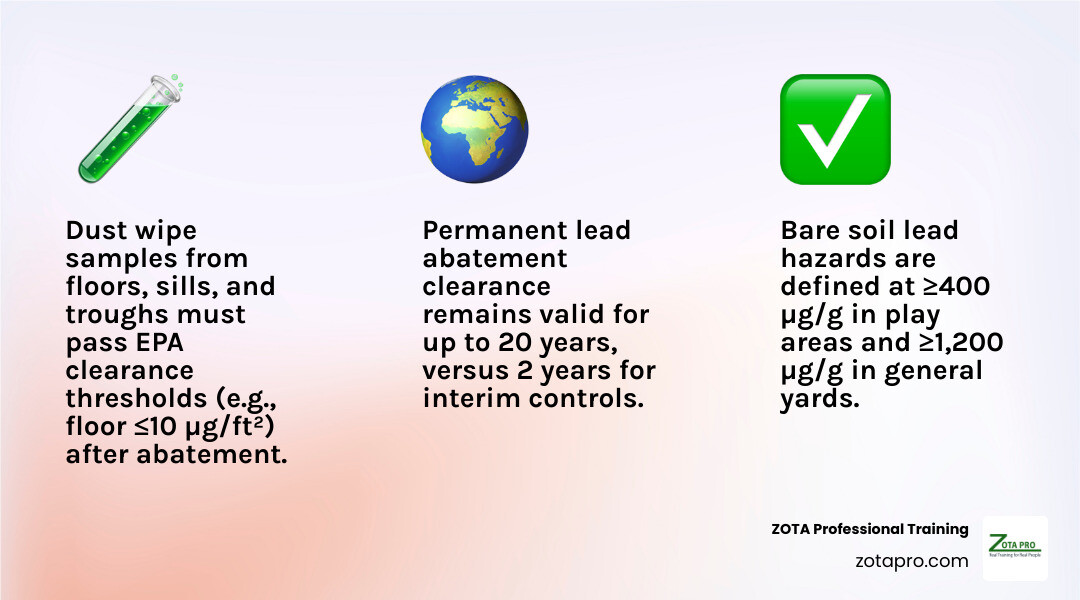
- Clearance Failure: If any dust wipe fails EPA safety thresholds, all surfaces represented by that sample must undergo complete environmental re-cleaning and follow-up dust wipe testing until passing levels are achieved.
- Soil Abatement Thresholds: Bare soil hazards exist if lead levels equal or exceed 400 µg/g in high-contact children’s play areas, or 1,200 µg/g across general yards (covering at least 9 bare square feet). Soil abatement (excavation, paving, or geotextile capping) is strongly recommended when soil lead levels hit or exceed 5,000 µg/g. Clean replacement soil must never exceed 200 µg/g.
- Clearance Validity: While interim control clearance is valid for only 2 years, permanent abatement clearance provides certified lead-free status for up to 20 years.
Contractor Qualifications, Assistance Programs, and Certification Pathways
Property owners should check for municipal hazard reduction grants, Community Development Block Grants (CDBG), and local no-cost remediation programs funded by HUD to offset permanent abatement costs.
For contractors and environmental professionals, getting certified is both a legal prerequisite and an opportunity to expand into high-demand remediation work. We at ZOTA Professional Training provide comprehensive, EPA-accredited compliance courses designed to equip your team with practical, field-tested safety skills.
If you are entering the industry or upskilling your workforce:
- Enroll in the Lead Abatement Worker Initial Certification Course to master hands-on containment, tool operation, and safe waste handling.
- Step up to leadership with the Lead Abatement Supervisor Initial Certification Course to learn project oversight, Occupant Protection Plan preparation, and regulatory compliance.
Explore our full catalog of accredited EPA lead certification courses to find flexible in-person, hybrid, and multilingual classes that keep your business certified, compliant, and ready to protect communities.