
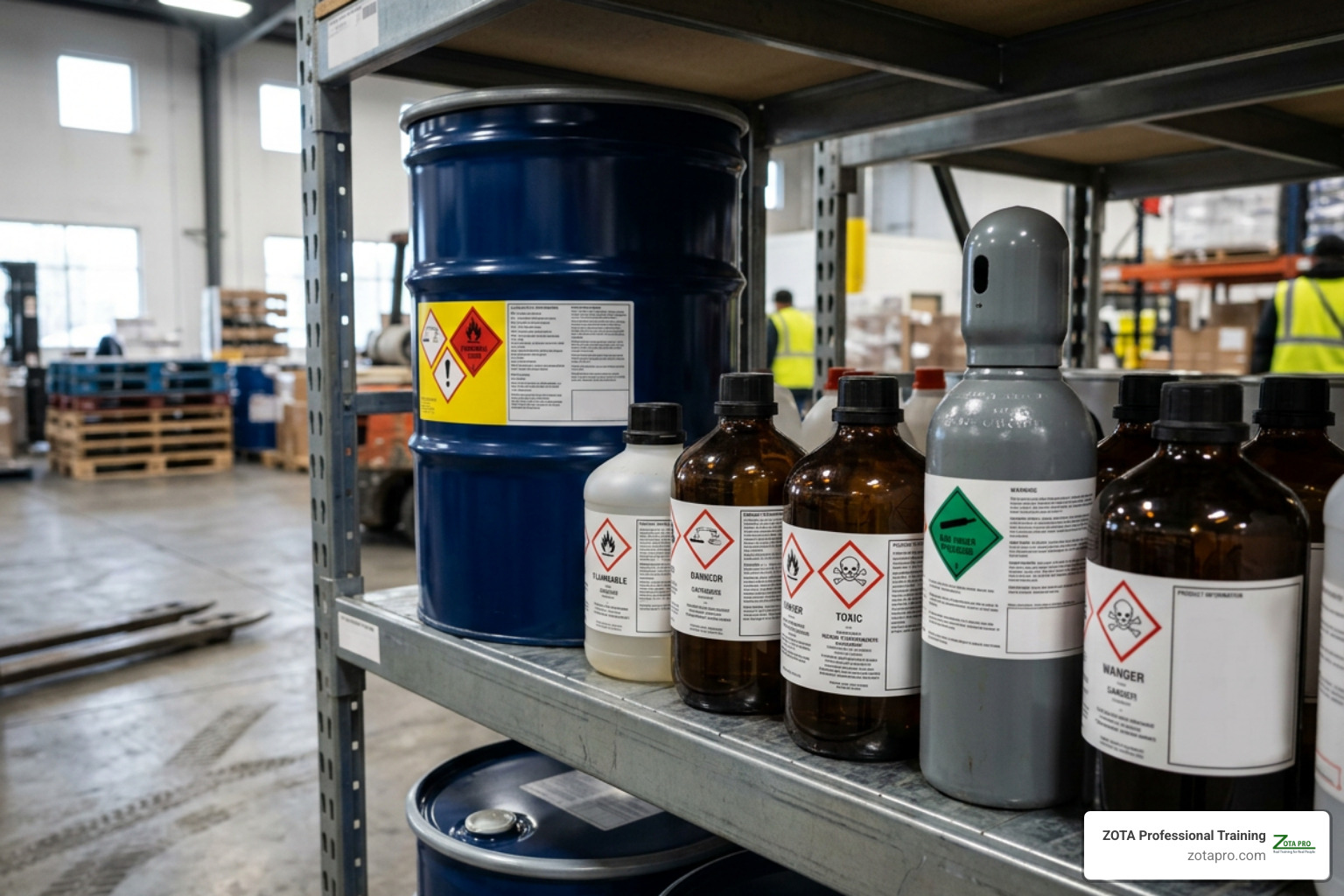
Core Requirements and Updates for Hazardous Communication OSHA Compliance
Understanding the regulatory framework under 1910.1200 – Hazard Communication. | Occupational Safety and Health Administration is essential for every business handling chemicals. The standard establishes clear duties depending on your role in the supply chain. Chemical manufacturers and importers must evaluate the scientific evidence regarding the hazards of the chemicals they produce or import and prepare labels and Safety Data Sheets (SDSs). Downstream employers, including general industry facilities and specialty contractors, must ensure their teams are protected through practical OSHA compliance requirements that keep businesses safe.
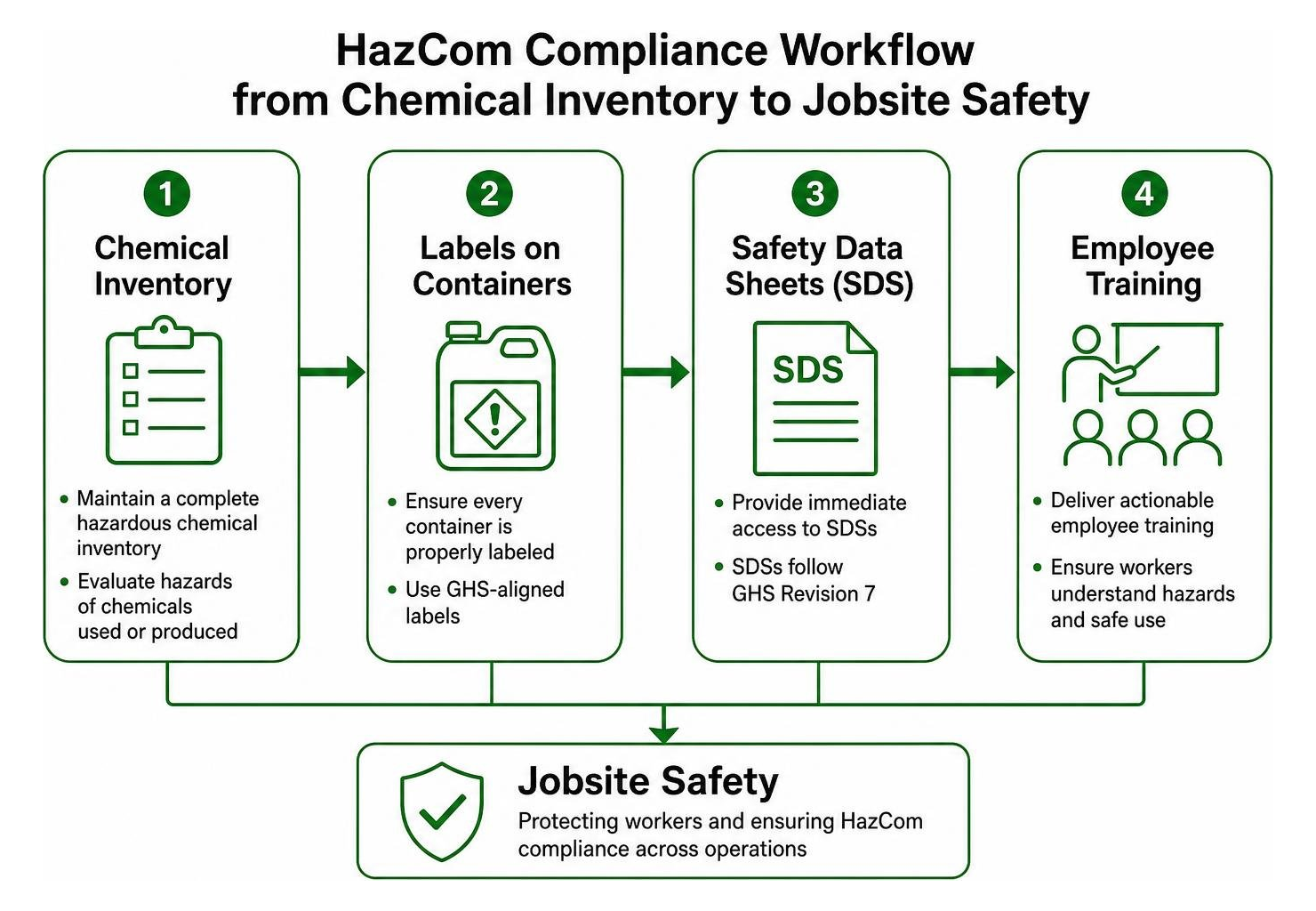
At its core, standard employer obligations revolve around four distinct pillars: maintaining a complete hazardous chemical inventory, ensuring every container is properly labeled, providing immediate access to detailed SDSs, and delivering actionable employee training.
Alignment of Hazardous Communication OSHA Standards with GHS Revision 7
The standard that originally gave workers the “right to know” now prioritizes the “right to understand.” To achieve global consistency, the standard aligns with the United Nations Globally Harmonized System of Classification and Labelling of Chemicals. As documented in the Federal Register, Volume 89 Issue 98 (Monday, May 20, 2024) and detailed in the Hazard Communication Standard; Final Rule | Occupational Safety and Health Administration, OSHA updated the rule to harmonize with GHS Revision 7.
This international alignment—coordinated closely with Canada’s Workplace Hazardous Materials Information System (WHMIS) through joint regulatory partnerships—removes cross-border trade friction while standardizing safety criteria. According to the Hazard Communication – Overview | Occupational Safety and Health Administration, the updated rule delivers an estimated net annual cost savings of $29.8 million to $30.7 million across affected industries by streamlining hazard classification, improving international supply chain clarity, and preventing severe occupational injuries.
Classification Updates, Desensitized Explosives, and Phased Compliance Deadlines
The update introduces several technical hazard classifications that refine how specific physical threats are classified and communicated:
- Aerosols and Chemicals Under Pressure: Distinguishes between flammable aerosols and non-aerosol pressurized containers (liquids or solids expelled by propellant gas).
- Desensitized Explosives: Addresses solid or liquid explosive substances phased or wetted with water, alcohol, or other substances to suppress their explosive properties.
- Flammable Gases and Pyrophoric Gases: Refines subclassifications (e.g., pyrophoric gases and chemically unstable gases) to ensure precise risk mitigation during hot work and storage.
To help facilities adapt smoothly, OSHA established a phased transition schedule for chemical manufacturers, importers, distributors, and downstream employers.
| Chemical Type | Manufacturer / Importer Label & SDS Deadline | Downstream Employer Written Program & Training Deadline |
|---|---|---|
| Substances (Pure Chemicals) | January 19, 2026 | July 19, 2026 |
| Mixtures (Blended Products) | July 19, 2027 | January 19, 2028 |
During these transition windows, employers may comply with either the prior HazCom standard or the updated rule, giving teams ample time to phase in updated labeling templates and training materials.
Labeling Exemptions and Small Container Packaging Protocols
Not all hazardous materials fall under 29 CFR 1910.1200 labeling mandates. The standard explicitly excludes items regulated under other federal labeling statutes, including:
- Pesticides subject to EPA labeling requirements under the Federal Insecticide, Fungicide, and Rodenticide Act (FIFRA).
- Food, drugs, cosmetics, and medical devices regulated by the FDA.
- Distilled spirits, wines, and malt beverages governed by the Alcohol and Tobacco Tax and Trade Bureau.
- Consumer products used in the workplace in a duration and frequency matching ordinary household consumer use.
For industrial chemicals packaged in containers too small to accommodate standard GHS labels (such as ampoules, sample vials, and small reagent bottles), the updated rule provides practical relief. If an employer or manufacturer demonstrates that traditional labels are impracticable, they may utilize fold-out labels, pull-out tags, or outer package labels containing the full GHS elements, as long as the immediate container bears at least the product identifier, responsible party contact info, signal word, and pictograms.
Workplace secondary containers (such as spray bottles or small buckets used to dilute cleaning agents) do not require full supplier shipping labels if they are labeled with either the GHS product identifier and general hazard statements, or standardized workplace symbols. When a chemical is transferred from a labeled container for the immediate, exclusive use of the person performing the transfer within that work shift, no secondary label is legally required—though best safety practices favor labeling every active container.
Implementing HazCom: Labels, Safety Data Sheets, and Training Programs
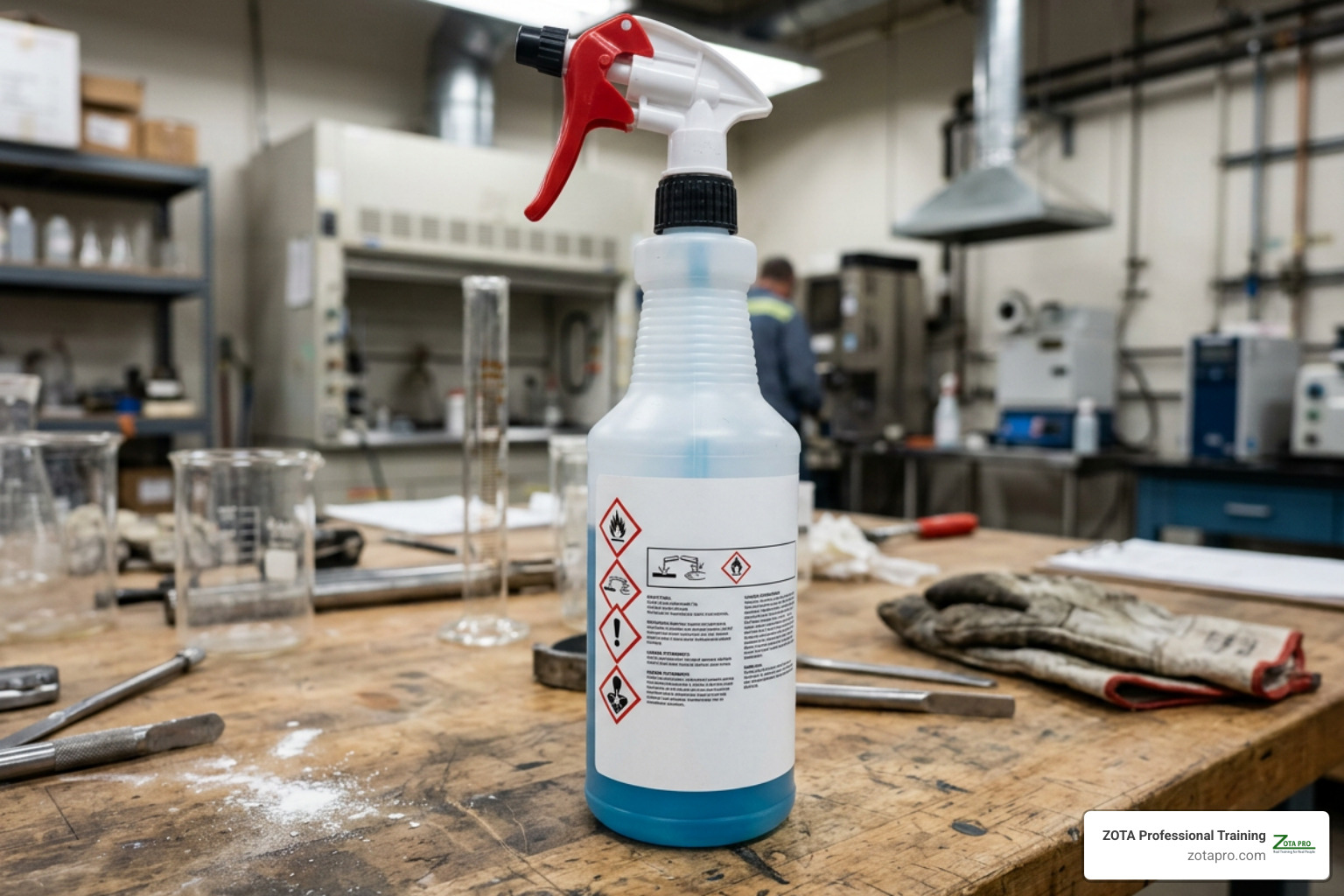
A successful hazard communication framework requires consistent application across daily operations. In our field experience helping teams maintain OSHA in the workplace, compliance rests on seamless coordination among contractors, clear labeling, and rapid emergency readiness.
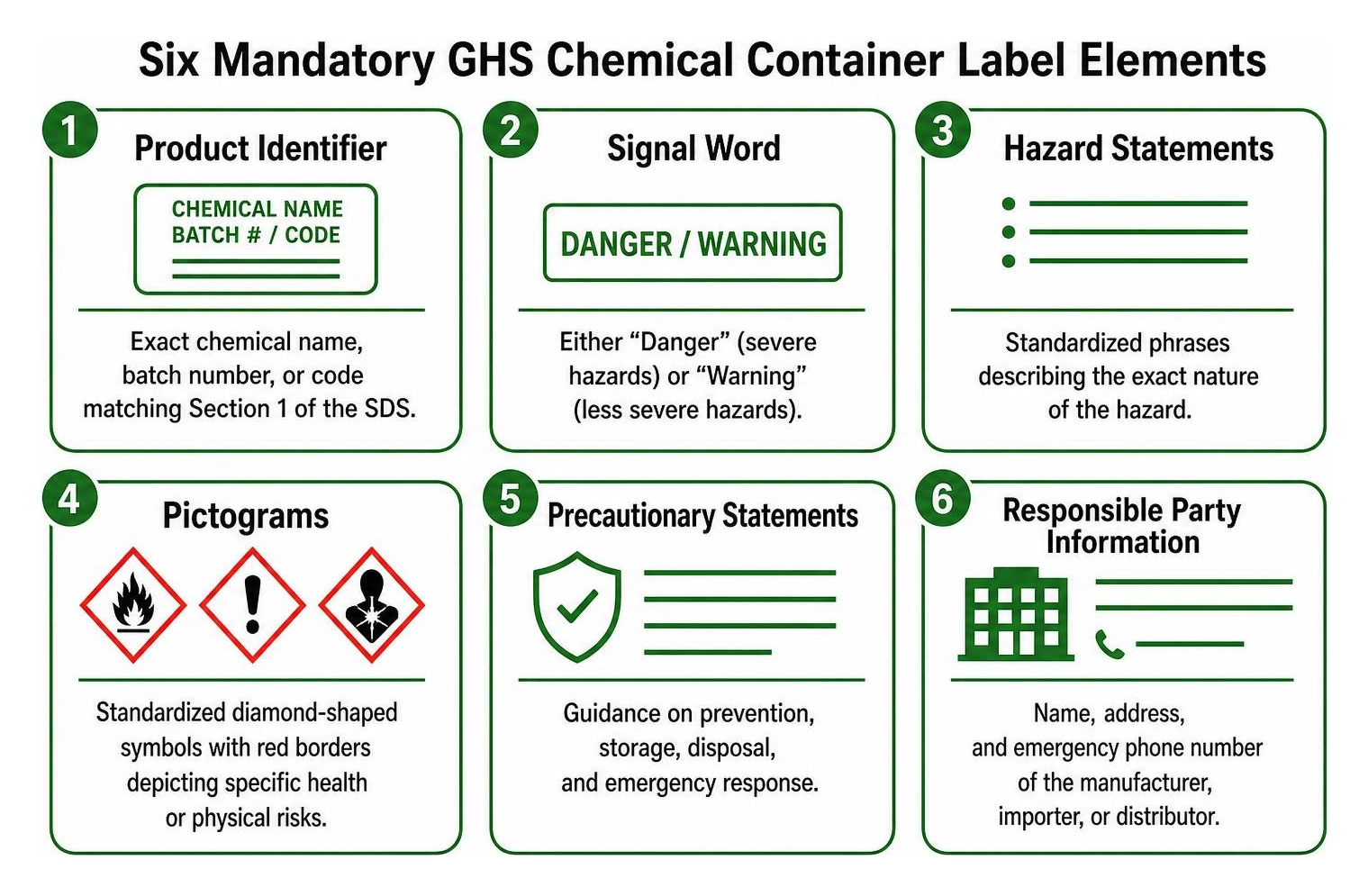
All shipped container labels must include six mandatory elements:
- Product Identifier: The exact chemical name, batch number, or code matching Section 1 of the SDS.
- Signal Word: Either “Danger” (reserved for severe hazards) or “Warning” (used for less severe hazards).
- Hazard Statements: Standardized phrases describing the exact nature of the hazard (e.g., “Highly flammable liquid and vapor”).
- Pictograms: Standardized diamond-shaped symbols with red borders depicting specific health or physical risks.
- Precautionary Statements: Guidance on prevention, storage, disposal, and emergency response.
- Responsible Party Information: Name, address, and emergency phone number of the manufacturer, importer, or distributor.
Safety Data Sheets, 16-Section Formats, and Trade Secret Protection
Under Appendix D of the standard, every hazardous chemical must have an accompanying 16-section Safety Data Sheet. Standardizing this format ensures first responders, toxicologists, and workers can quickly find emergency procedures in Section 4, fire-fighting measures in Section 5, and personal protective equipment (PPE) requirements in Section 8.
Employers must ensure SDSs are readily accessible to workers during every shift. While digital databases on tablets and computers are fully compliant, facilities using electronic systems must maintain battery backups and alternate access methods so power outages or dead network spots never block emergency medical response.
To protect proprietary formulations while keeping workers safe, employers and manufacturers can withhold specific chemical identities or exact percentages under the HCS/HazCom Final Rule Regulatory Text trade secret provisions. The updated rule standardizes the use of approved concentration ranges when withholding exact trade-secret ingredient percentages on the SDS. However, the sheet must still clearly outline the physical and health hazards of the withheld chemical, and the company must release the exact formulation to healthcare professionals during medical emergencies.
Developing a Written Program for Hazardous Communication OSHA Audits
Your written HazCom plan serves as your blueprint during regulatory inspections. A complete written program must outline how labels, SDSs, and training are maintained, and must include:
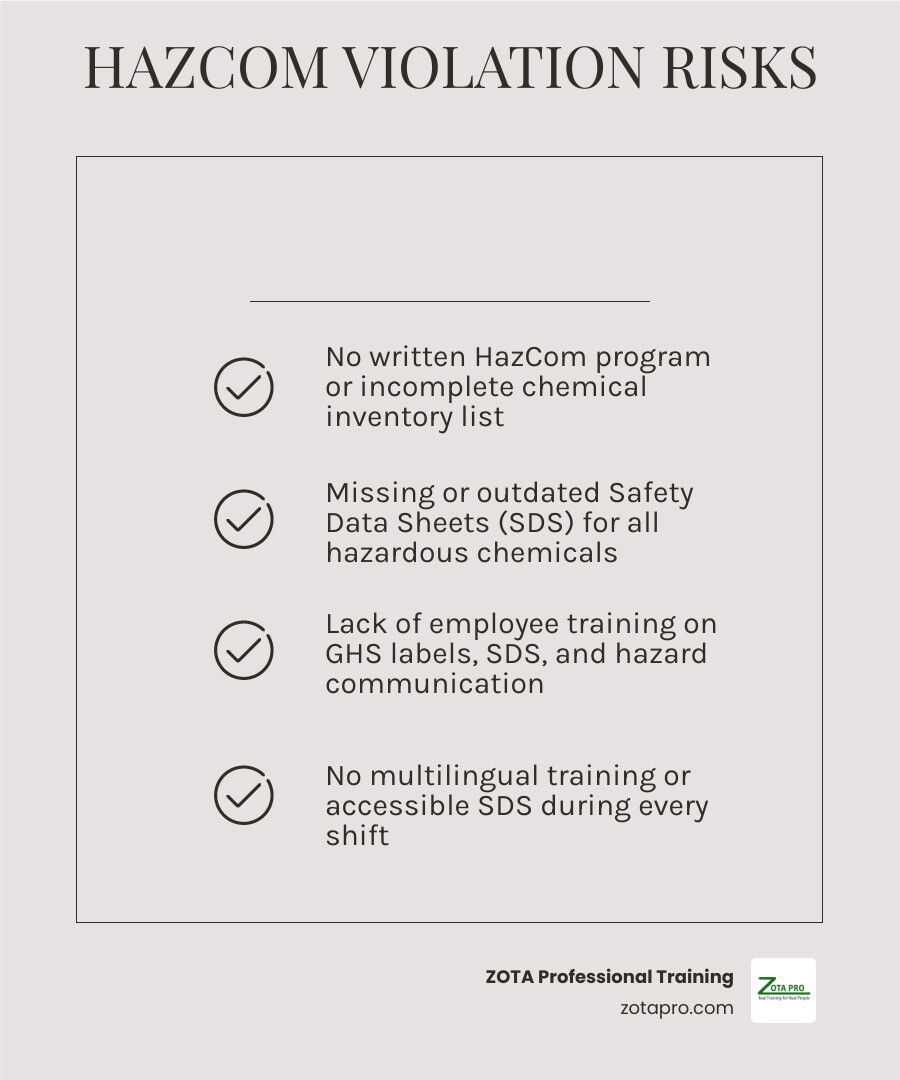
- A comprehensive hazardous chemical inventory covering all materials across every storage room and job box.
- Protocols for labeling un-piped transfer systems, fuel tanks, and process piping.
- Standardized procedures to inform workers of hazards during non-routine maintenance tasks (such as cleaning tanks or servicing industrial ductwork).
- Communication protocols for multi-employer worksites to ensure subcontractors share SDS libraries and precautionary instructions before work begins.
Because chemical risks are widespread, general industry and construction firms often land among the top industries at risk for OSHA violations. Reviewing your written documentation regularly helps avoid serious OSHA violations that disrupt operations and impact workplace safety.
Employee Training, Multilingual Instruction, and Non-Compliance Penalties
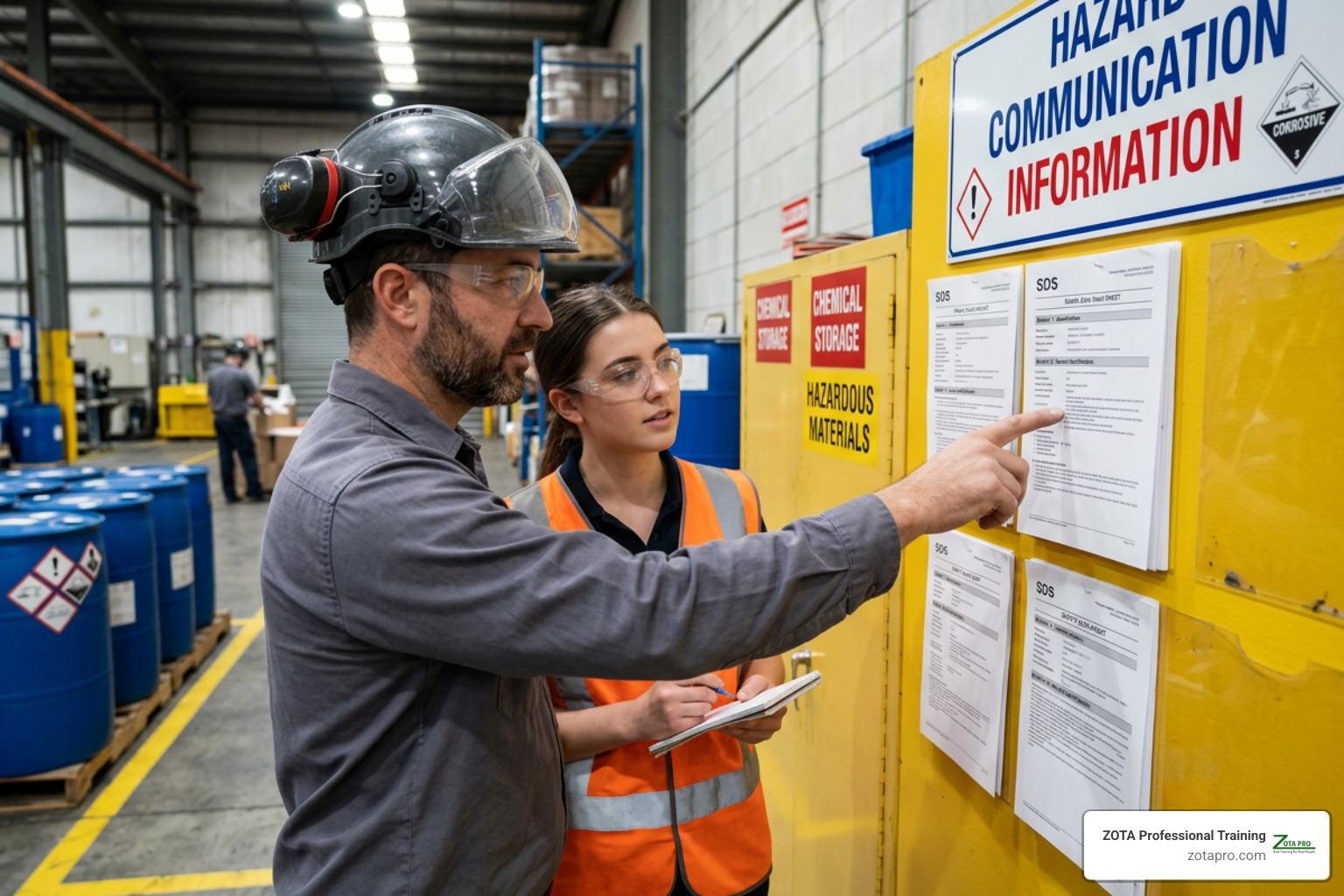
Under § 1910.1200 – Hazard communication., Subpart Z – Toxic and Hazardous Substances, Part 1910 – Occupational Safety and Health Standards, Chapter XVII—Occupational Safety and Health Administration, Department of Labor, Subtitle B—Regulations Relating to Labor, Title 29 – Labor, Code of Federal Regulations, training must occur at the time of an employee’s initial assignment and whenever a new chemical hazard is introduced into their work area. Instruction must be understandable: if your workforce includes Spanish-speaking personnel, training and safety summaries must be provided in their primary language.
Training must teach employees:
- How to read and interpret GHS container labels and SDS sheets.
- The physical and health hazards of chemicals in their work areas.
- Personal protective equipment (PPE), work practices, and emergency spill procedures.
- The primary routes of chemical exposure: inhalation, skin absorption, ingestion, and injection.
Non-compliance carries substantial operational and financial consequences. OSHA maximum penalties are adjusted annually for inflation, making serious citations a significant liability for unprepared businesses. Knowing and implementing standard safety requirements keeps your workers safe and protects your bottom line.
Enrolling your personnel in dedicated OSHA Compliance Training – Hazard Communications Globally Harmonized System or comprehensive OSHA Compliance Training equips your team with the practical skills needed to maintain a safe, compliant work environment. Contact ZOTA Professional Training today to schedule flexible on-site, hybrid, or multilingual training for your team.