
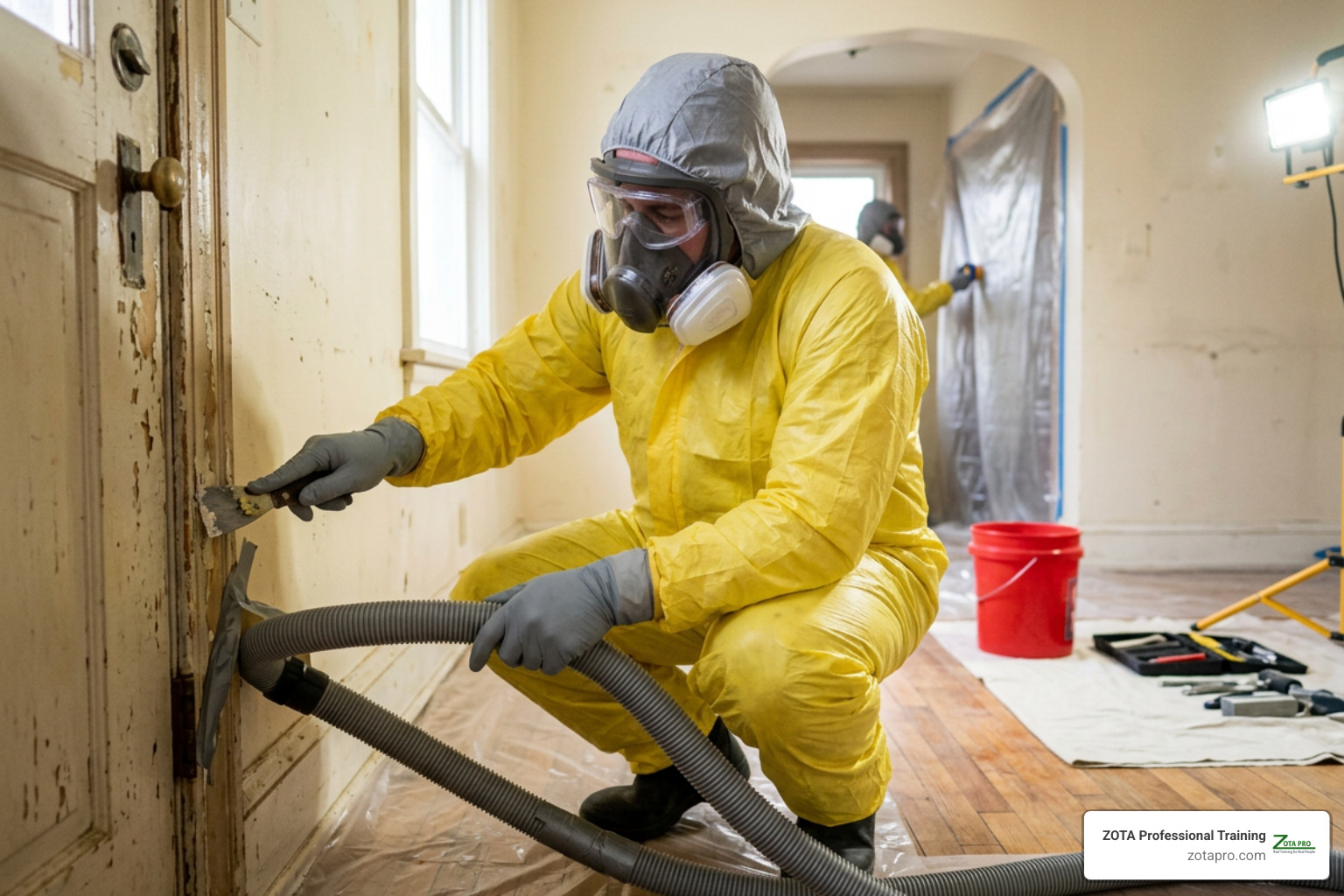
Why Your EPA RRP Refresher Course Can’t Wait
The EPA RRP refresher course is a 4-hour recertification training required for lead renovators working in pre-1978 homes and child-occupied facilities. Here’s what you need to know right now:
- Who needs it: Any certified renovator whose EPA RRP certification is active and approaching expiration
- How long it takes: 4 hours (half a day)
- How long the new certification lasts: 3 years (online) or 5 years (in-person with hands-on training)
- What happens if you skip it: Your certification expires, you lose eligibility for the refresher, and you must retake the full 8-hour initial course from scratch
- Fines for working uncertified: Up to $37,500 per day
If you renovate, repair, or paint in older housing, this isn’t optional. The EPA’s Renovation, Repair and Painting (RRP) Rule requires at least one certified renovator on every regulated job. And as of January 12, 2026, updated dust-lead action levels under 89 FR 89416 mean the rules are stricter than ever.
The stakes are real. Let your certification lapse by even one day, and you’re no longer eligible for the 4-hour refresher — you’re back to square one with the full 8-hour course.
I’m Bob Zak, Founder and CEO of ZOTA Professional Training, and with over 32 years in occupational health and safety, I’ve helped thousands of contractors navigate the EPA RRP refresher course requirements to stay compliant and avoid costly penalties. In this guide, I’ll walk you through everything you need to know to renew your certification the right way.
What is the EPA RRP Refresher Course and Who Needs It?
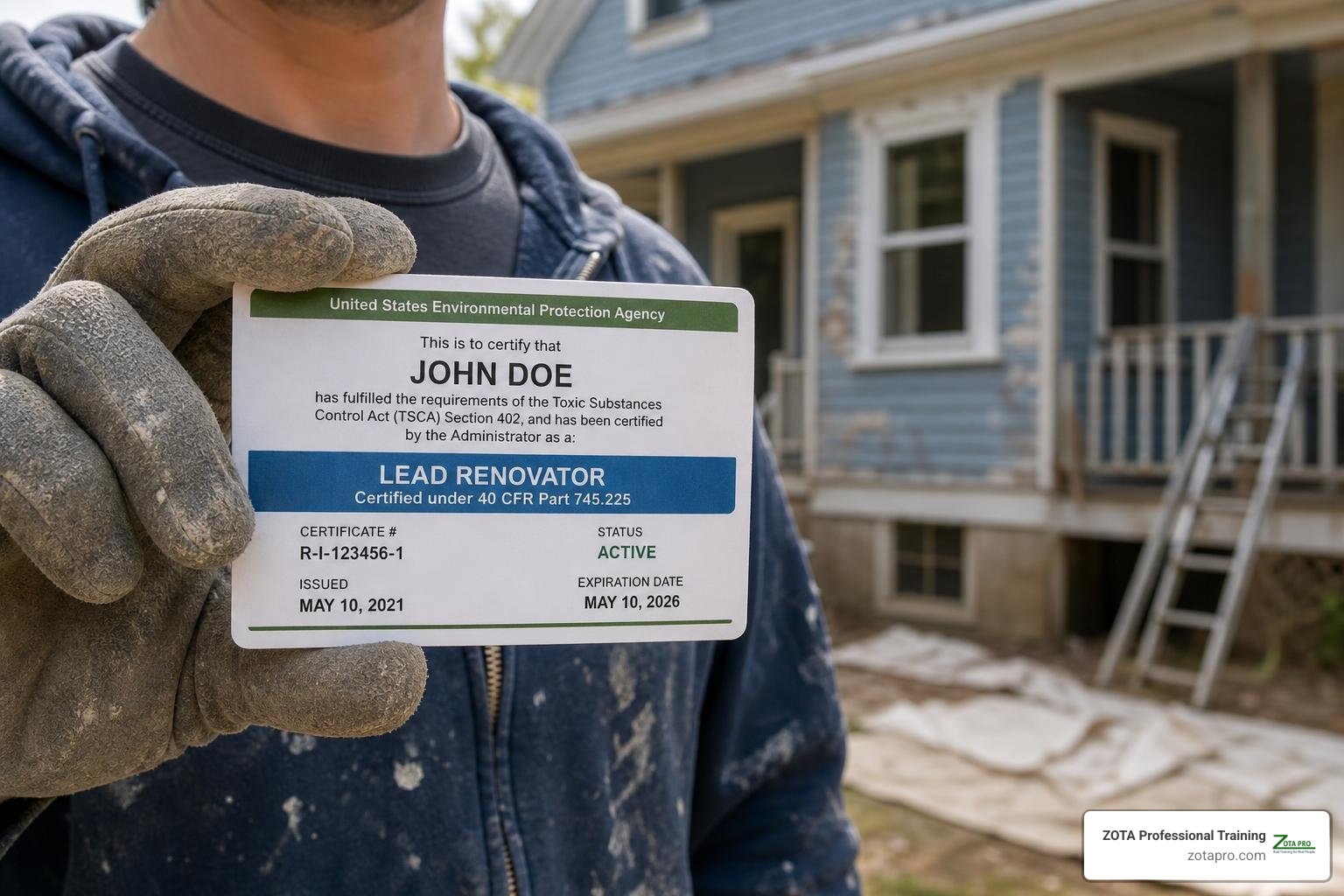
The EPA RRP refresher course is a condensed, 4-hour training program designed specifically for contractors who have already completed their initial 8-hour lead safety training. It serves as a regulatory check-in to ensure that active renovators remain up-to-date on safe work practices, lead testing protocols, and evolving federal guidelines.
Who exactly needs to take this course? Any contractor, painter, plumber, electrician, or property manager who performs work that disturbs painted surfaces in “target housing” (residential properties built before 1978) or “child-occupied facilities” (such as daycares, preschools, and kindergarten classrooms built before 1978). If your current credential is still active but approaching its expiration date, you are the prime candidate for this course.
We cannot stress the timeline enough. To maintain your legal status under the law, you must complete your recertification training before your current certificate expires. Keeping up with your training is not just about avoiding penalties; it is about protecting your crew, your clients, and your business. For a deeper look into why staying current is so critical, check out our guide on Why Contractors Should Keep Up With The EPA RRP Refresher Training.
This training is also your opportunity to master new regulatory updates. For example, the EPA’s revised rules on dust-lead action levels (previously known as dust-lead clearance levels) went into effect on January 12, 2026, following the final rule publication (89 FR 89416). These changes directly affect how you verify that a work area is clean and safe, making the EPA RRP Refresher Course more critical than ever. To review the core principles that form the foundation of these updates, you can consult the official Renovation, Repair and Painting Program: Renovator Training | US EPA resource.
Prerequisites and the Cost of Letting Your Certification Expire
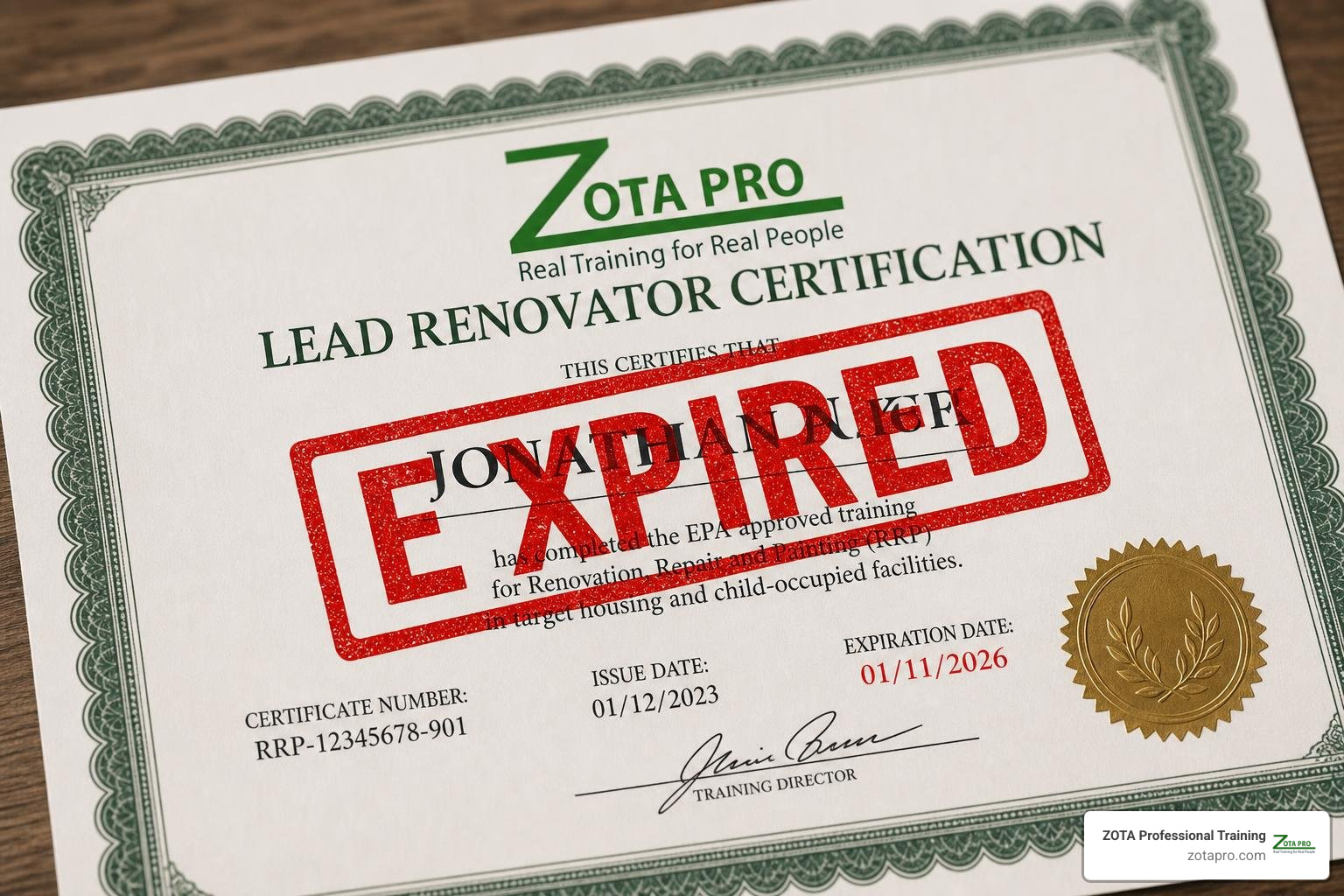
Let’s address the elephant in the room: there is absolutely zero grace period. If your certificate expires on a Tuesday, you cannot sign up for a 4-hour refresher course on Wednesday. The moment your card lapses, you lose your eligibility for the shorter refresher course and must retake the full 8-hour initial course.
Beyond the annoyance of sitting through an extra four hours of training, the financial consequences of working with an expired certificate are severe. The EPA actively enforces lead safety rules and can issue civil penalties of up to $37,500 per day for non-compliant work. If you want to keep your hard-earned money in your pocket, you need to proactively Avoid Hefty Fine Renew EPA Lead Certification protocols before your deadline hits.
It is also important to remember that staying compliant is a two-step process:
- Individual Certification: You must personally pass your refresher course and keep your training certificate on the job site.
- Firm Certification: Your business entity must also be registered as an EPA Lead-Safe Certified Firm.
If you have a crew, you must ensure that both your personal credentials and your business registration are active. If you find yourself wondering about your current status, read our breakdown on if you Need EPA Lead Certification Renewal and review our guide on How Is Lead Safety Enforced and What Are the Penalties for Disobeying.
Online vs. In-Person EPA RRP Refresher Course Formats
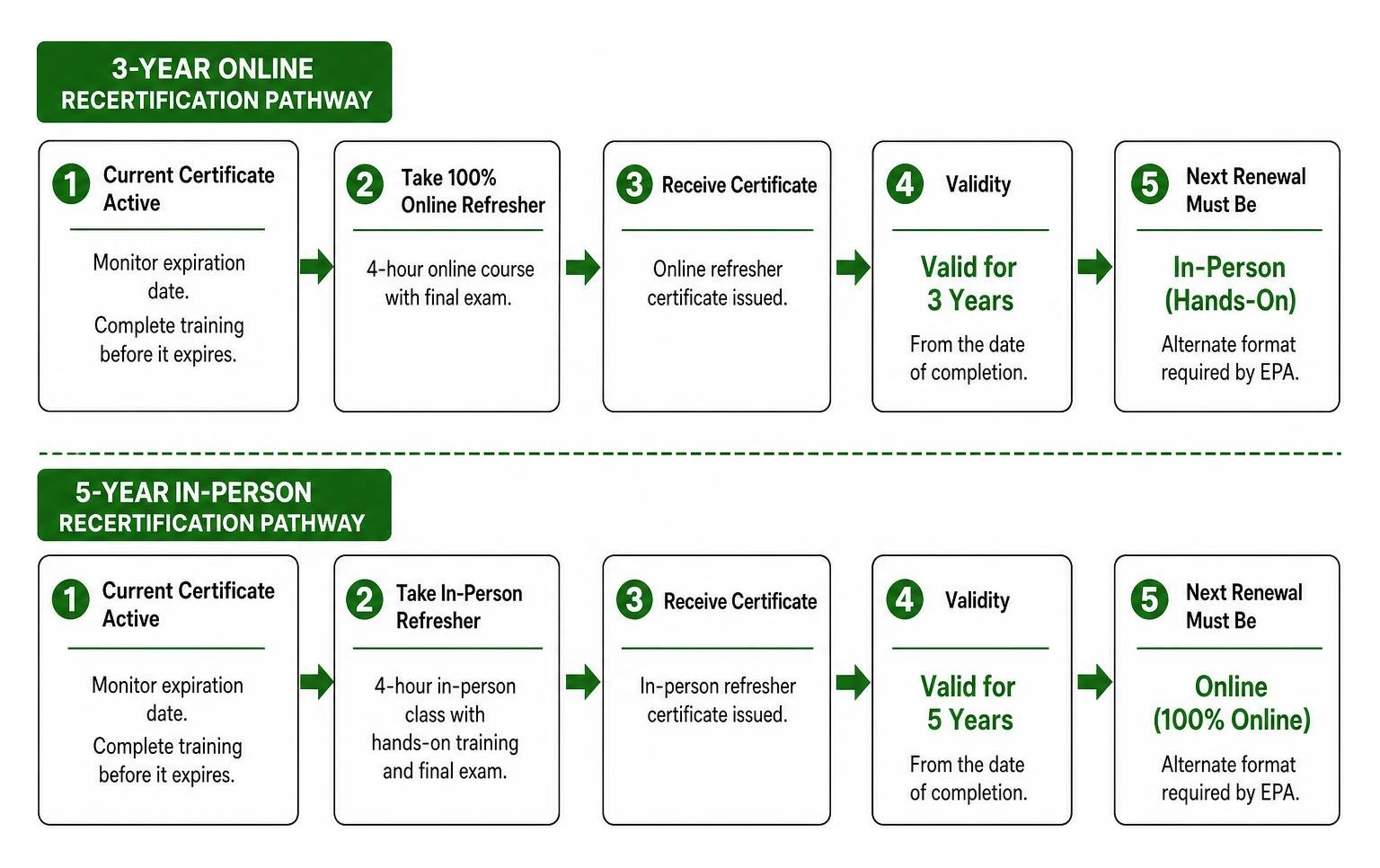
Contractors today have more flexibility than ever, but that flexibility comes with a few important rules. In 2016, the EPA finalized a rule allowing accredited providers to offer the refresher course entirely online. However, choosing between online and in-person formats directly impacts how long your next certification will last.
If you complete a 100% Online EPA RRP Refresher, your certification is valid for 3 years. If you choose an in-person class that includes hands-on learning, your certification is valid for 5 years.
Furthermore, you cannot take the online-only course back-to-back. The EPA requires you to alternate formats: if you renew online this time, your next renewal must include an in-person, hands-on training component.
| Feature | Online-Only Refresher | In-Person / Hybrid Refresher |
|---|---|---|
| Course Duration | 4 Hours | 4 Hours |
| Certification Validity | 3 Years | 5 Years |
| Hands-On Component | None | Yes (Required) |
| Alternating Rule | Must alternate with hands-on next time | Can be taken consecutively |
| State Restrictions | Prohibited in 11 states | Accepted nationwide |
Before you register for an online class, check your local geography. Eleven states completely prohibit the “online anytime” version of this course: Alabama, Delaware, Georgia, Iowa, Kansas, Massachusetts, Mississippi, North Carolina, Oklahoma, Rhode Island, and Wisconsin. If you operate in one of these states, you must take an in-person or hybrid class to comply with state-authorized programs.
Additionally, for online recertification, you must submit a digital student photo that meets strict EPA specifications: a clear, front-facing headshot (no hats or sunglasses) with a neutral background, saved as a JPEG under 240 kilobytes. For more tips on navigating these format rules, read our article on Things Know Lead Recertification Refresher Courses and learn more about How Long Does EPA Lead Certification Last How to Renew It.
Key Differences Between EPA RRP and HUD Lead Safe Housing Rules
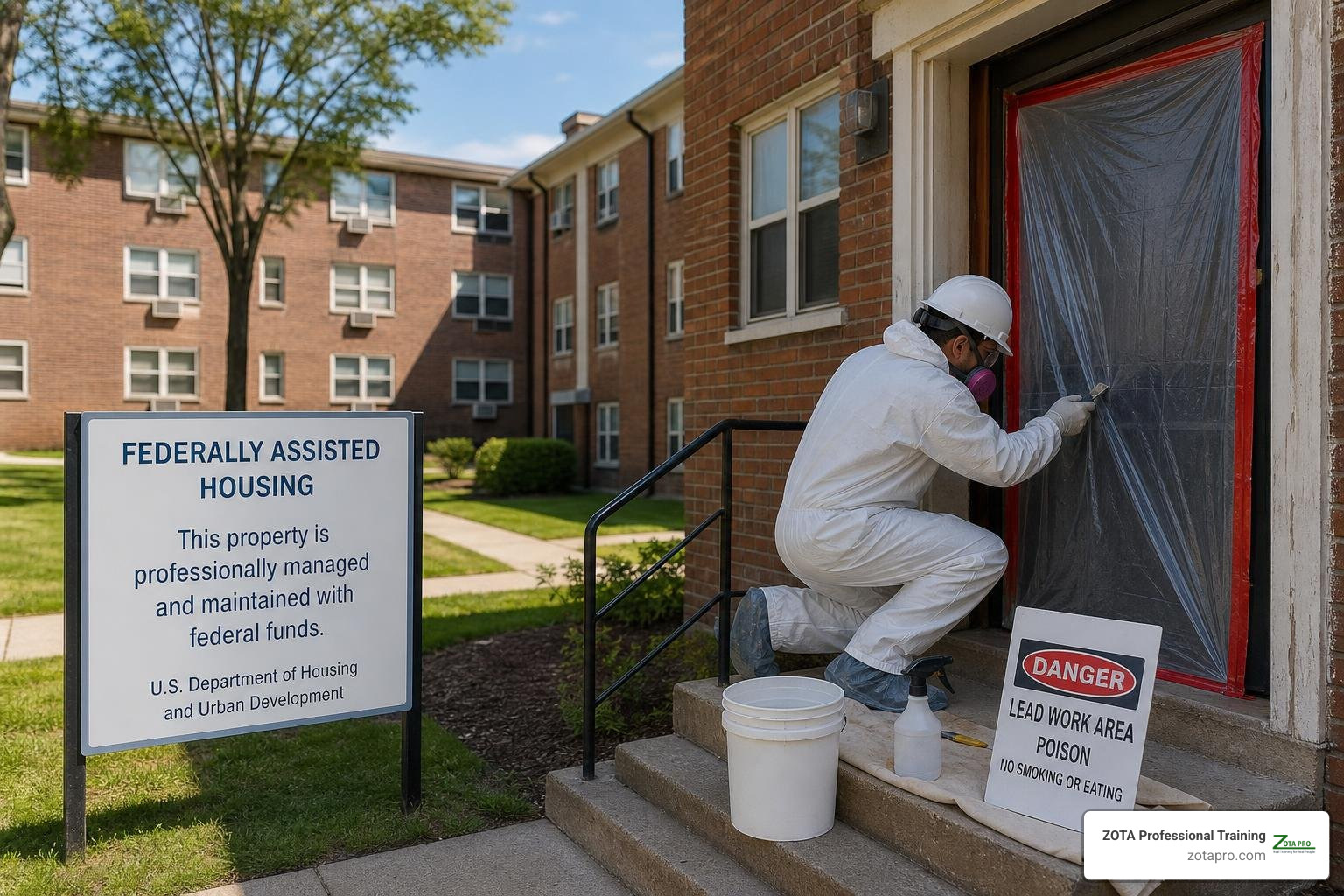
When working on residential properties, you must always determine if the project receives federal housing assistance. If it does, you must comply with both the EPA RRP Rule and the Department of Housing and Urban Development (HUD) Lead Safe Housing Rule. These two frameworks are taught together in the EPA/HUD Model Refresher Renovator Training Course | US EPA , but they have several key differences that you must keep straight on the job.
The first major difference lies in the “de minimis” thresholds (the amount of paint disturbance that triggers lead-safe work practices):
- EPA RRP Thresholds: Triggered when disturbing more than 6 square feet of interior painted surface per room, or more than 20 square feet of exterior paint.
- HUD LSHR Thresholds: Triggered at a much lower limit of 2 square feet of interior paint, or 10% of the total surface area on small components (like window sills, baseboards, or trim).
Another critical difference is how you finish the job. Under EPA rules, a certified renovator can perform a visual cleaning verification using an EPA-certified cleaning verification card. HUD, however, does not accept this visual check for projects exceeding the de minimis threshold. Instead, HUD requires an independent clearance examination performed by a certified Lead Inspector, Risk Assessor, or Dust Sampling Technician.
Step-by-Step Guide to the Refresher Course Curriculum and Work Standards
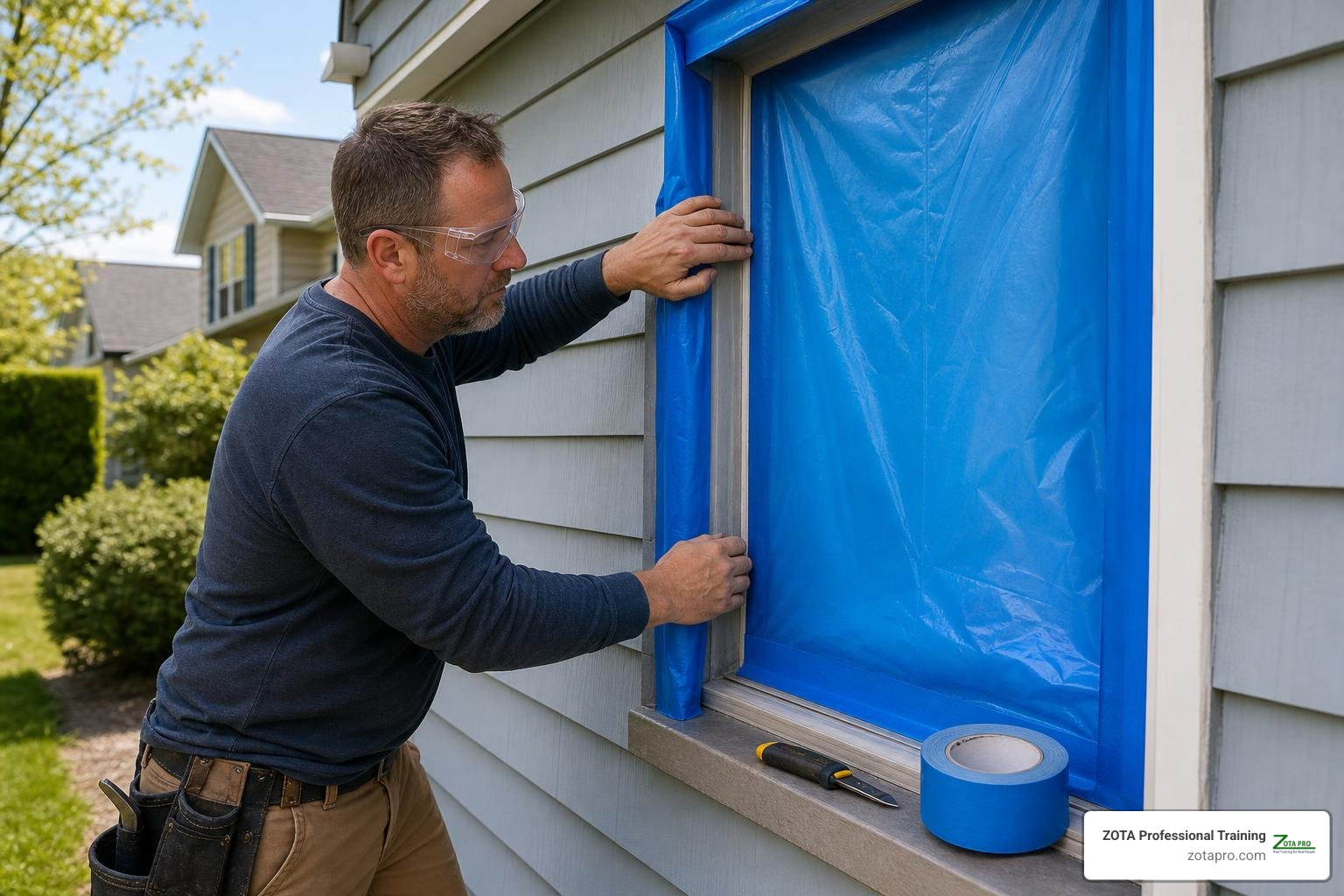
The heart of the refresher course is reinforcing the practical work standards that keep you and your clients safe. When you are on a job site, you are responsible for executing and documenting a clean, contained work area from start to finish. To get a complete overview of what it takes to protect your business, read our guide on Lead Paint Certification What You Need to Know to Stay in Compliance and learn how the EPA monitors sites by reading about RRP Enforcement.
Core Modules Covered in the EPA RRP Refresher Course
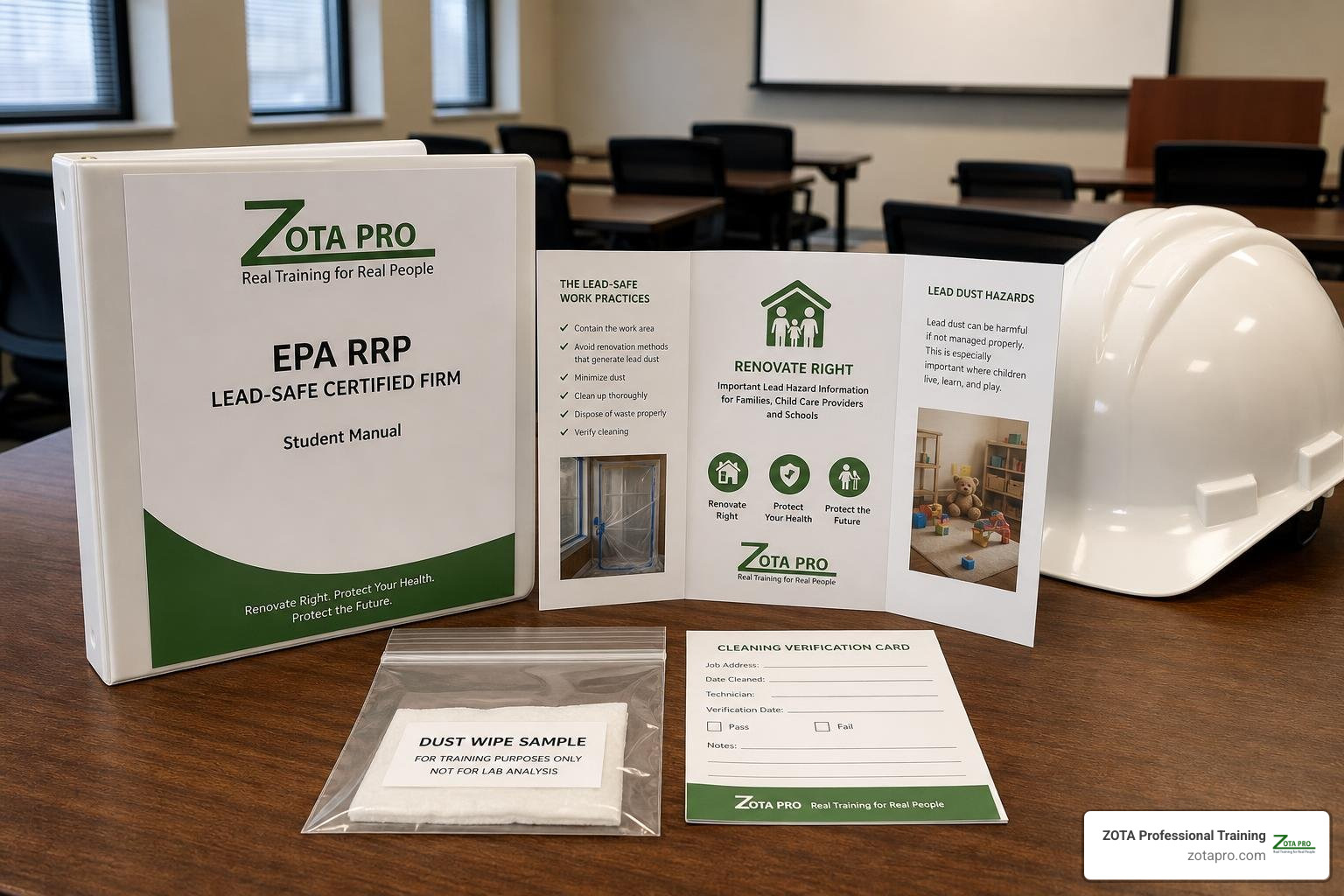
During your 4-hour refresher, we review the essential curriculum modules developed by the EPA and HUD to keep your field skills sharp:
- Regulations & Updates: Reviewing federal, state, and local laws, including the 2026 dust-lead action levels.
- Lead Testing Protocols: Safely determining if lead-based paint is present before work begins.
- Containment Setup: Creating protective barriers to isolate dust within the work area.
- Cleanup & HEPA Vacuuming: Cleaning up safely using wet-mopping and HEPA-filtered vacuums.
- Cleaning Verification: Performing the official wipe-test to confirm the work area is safe.
- Recordkeeping & Documentation: Organizing your records to prove compliance.
To understand how these modules apply directly to your day-to-day operations, check out What Are the Requirements for EPA Lead Renovator Certification. You must keep all RRP job records for at least 3 years after completing a project, and you are legally required to report any lead test kit results to your client within 30 days of testing.
Lead Testing, Work Practices, and Renovator Responsibilities
As a certified renovator, you are the designated lead safety expert on your job sites. This means you have specific duties that cannot be delegated to uncertified workers. You must be physically present on-site during:
- The posting of warning signs
- The installation of work-area containment barriers
- The final post-renovation cleanup and cleaning verification
Additionally, you are responsible for providing on-the-job training to any non-certified crew members and keeping detailed records of that training. When it comes to testing for lead, you must use EPA-recognized test kits or perform paint chip sampling according to strict federal guidelines. To make sure your hands-on skills are up to par, we guide you through a practical review during the RRP Hands On Skills Assessment portion of our in-person courses.
Finally, the refresher course reviews strictly prohibited work practices. You must never use open-flame burning, high-temperature heat guns (operating above 1,100°F), or high-speed power tools like sanders or grinders unless they are equipped with a shrouded HEPA-filtered vacuum attachment.
How to Find an Accredited Provider and Register
Maintaining your lead-safe credential doesn’t have to be a logistical headache. When you are ready to renew, it is vital to choose an EPA-accredited training provider that offers flexible options tailored to your busy schedule. To learn what to look for in a school, read our guide on How to Choose an EPA Accredited Training Provider.
At ZOTA Professional Training, we make the recertification process as smooth as possible. We offer fully accredited EPA Lead Certification programs, including in-person, hybrid, and online refresher courses designed to keep you in compliance. Whether you need an individual seat in a local class or want to arrange custom group training with bilingual (English/Spanish) instruction for your entire crew, we provide nationwide on-site support to meet your needs.
Don’t wait until your card expires and you’re forced to retake the 8-hour initial course. Protect your business, stay compliant, and keep your jobs legal by exploring our RRP Certification Services and registering for your refresher course today!