

Comprehensive Analysis of OSHA 10 Certification Cost
Understanding the osha 10 certification cost requires evaluating how different training formats impact your wallet and schedule. Training prices vary depending on whether you take the course individually online, attend an open enrollment classroom session, or host an instructor at your facility.
Online self-paced options are the most affordable entry point for individual workers. These courses typically cost between $60 and $90 (with promotional pricing occasionally dropping to $59.99). In-person classroom training ranges higher, usually between $150 and $300 per seat, due to venue rentals, printed workbooks, and instructor travel expenses.
Virtual instructor-led training (VILT)—where students join a live instructor over video conference—sits in the middle at $100 to $200 per student. For businesses with multiple workers, on-site group training charged at a flat rate of $1,500 to $3,000 often brings the per-person cost down significantly.
| Training Format | Typical Cost Range | Best Suited For | Key Advantages |
|---|---|---|---|
| Online Self-Paced | $60 – $90 | Individual entry-level workers | Lowest price, 24/7 access, study at your own pace |
| Virtual Instructor-Led | $100 – $200 | Remote teams needing live interaction | Live Q&A without travel expenses |
| In-Person Classroom | $150 – $300 | Hands-on learners, local cohorts | Face-to-face instruction, networking |
| On-Site Group Flat Rate | $1,500 – $3,000 | Employers training 6+ workers | Lowest per-worker cost, custom jobsite focus |
Primary Factors Influencing OSHA 10 Certification Cost
Several regulatory guidelines and provider features influence overall pricing. Federal OSHA enforces strict rules on how Outreach training is delivered, which affects training providers’ overhead.
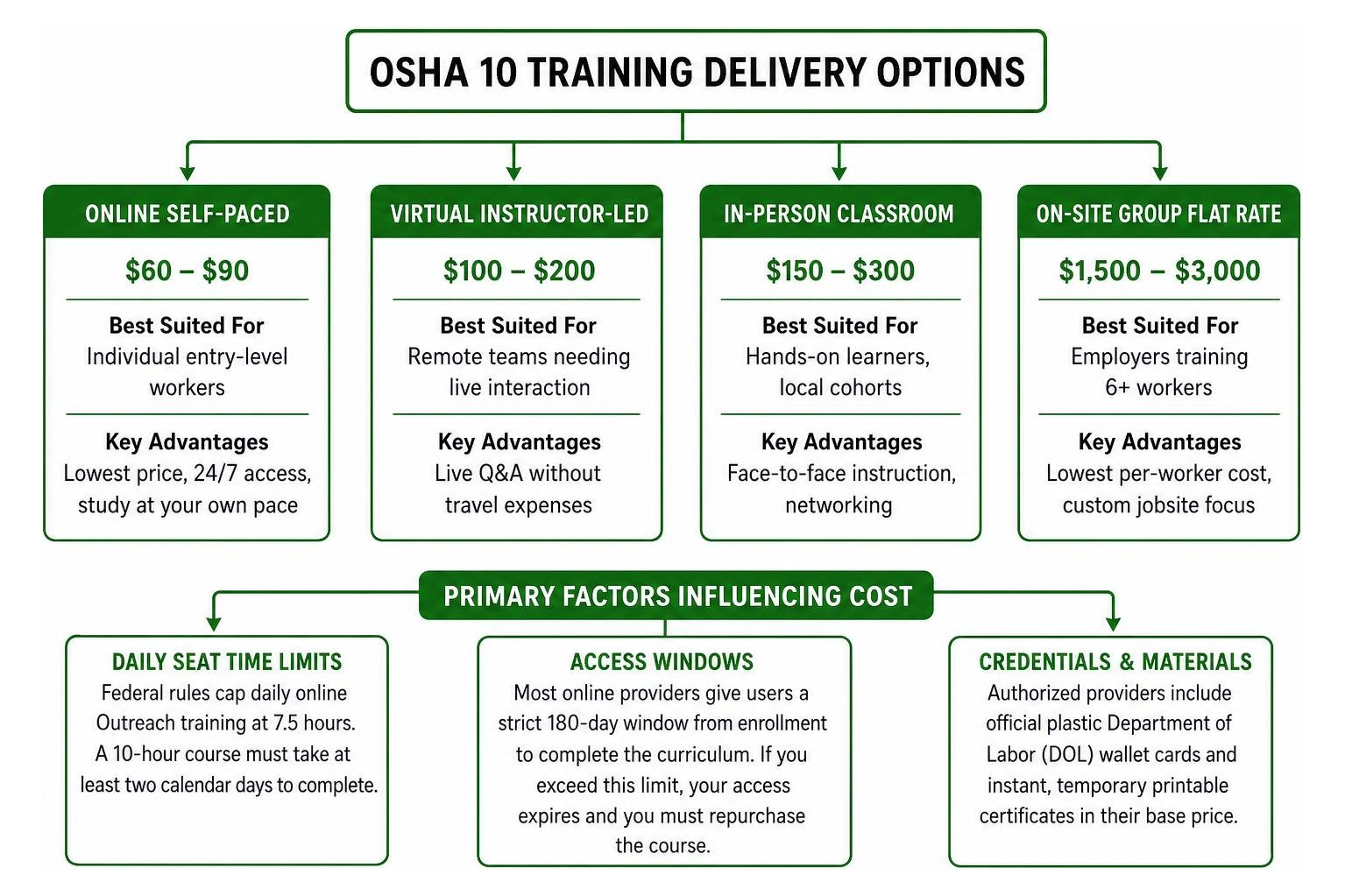
- Daily Seat Time Limits: Federal rules cap daily online Outreach training at 7.5 hours. A 10-hour course must take at least two calendar days to complete.
- Access Windows: Most online providers give users a strict 180-day window from enrollment to complete the curriculum. If you exceed this limit, your access expires and you must repurchase the course.
- Credentials & Materials: Authorized providers include official plastic Department of Labor (DOL) wallet cards and instant, temporary printable certificates in their base price.
For full details on mandatory safety guidelines, review our comprehensive OSHA Compliance Training resources.
Construction vs. General Industry OSHA 10 Certification Cost
The specific industry track you choose can slightly alter the course price and material covered:
- Construction Industry (29 CFR 1926): Focuses heavily on hazard recognition, prevention, and the “Focus Four” hazards (falls, caught-in/between, struck-by, and electrocution). Base pricing generally ranges from $59 to $89 online. Explore our dedicated OSHA Compliance Training – 10 Hour Construction Industry Training to learn more.
- General Industry (29 CFR 1910): Aimed at warehousing, manufacturing, healthcare, and retail operations. Prices typically run $59 to $79 online. Check out our OSHA Compliance Training – 10 Hour General Industry Training for specific sector details.
Specialized state-specific courses, such as Cal/OSHA 10-Hour training, or platforms requiring voice-authentication security features, can raise course prices to $89–$99.
Hidden Fees, DOL Replacement Costs, and Scams to Avoid
When shopping for training, watch out for fine-print add-ons that inflate the true cost.
Common extra costs and traps include:
- DOL Card Shipping Charges: Legitimate providers include standard shipping. Beware of sites charging extra $15–$25 fees just to mail your official plastic card.
- Replacement Card Fees: If you lose your plastic DOL card, replacement fees range from $15 to $30. That replacement cards can only be issued if your original training was completed within the last 3 to 5 years.
- Exam Re-test Lockouts: OSHA rules allow students up to 3 attempts to pass module quizzes and the 20-question final exam (requiring a 70% passing score). Failing three times locks you out permanently, forcing you to re-enroll and pay again.
- Unaccredited Provider Scams: Scammers sell cheap “free” or $20 certificates that offer no official DOL wallet card. Always verify provider authorization before paying.
To avoid fake certifications, learn more by reading about Top Free Online OSHA 10 Hour Courses for Quick Certification and our guide on Yes You Can Get OSHA 10 Free Here Is How.
Smart Savings, OSHA 10 vs 30 Comparison, and Business Value
Managing training costs effectively involves knowing when to upgrade to supervisory training, how to leverage group discounts, and understanding the tax tax advantages available to business owners.
OSHA 10 vs. OSHA 30 Cost Comparison
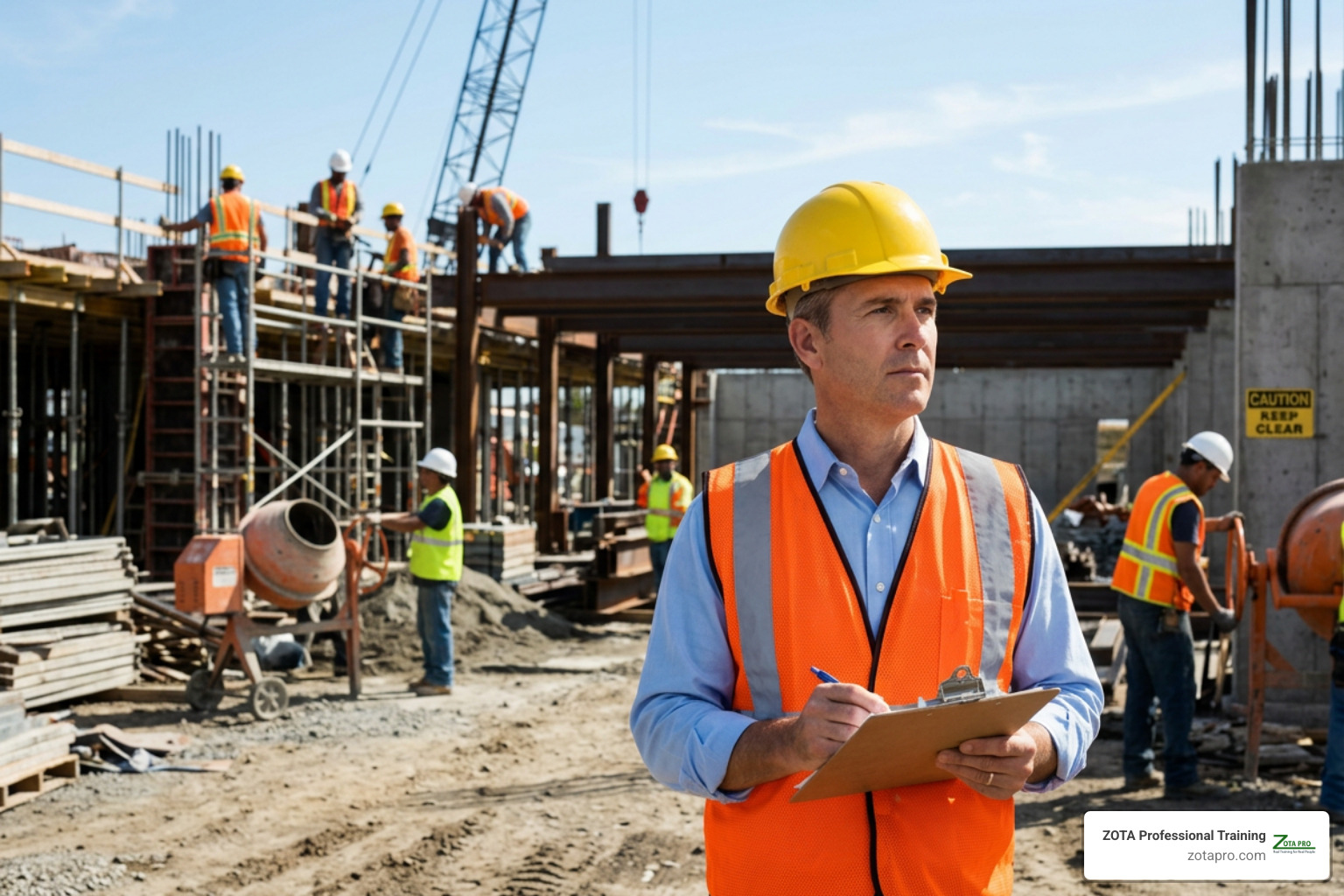
While OSHA 10 is designed for entry-level field workers, OSHA 30 is built for foremen, supervisors, and safety managers.
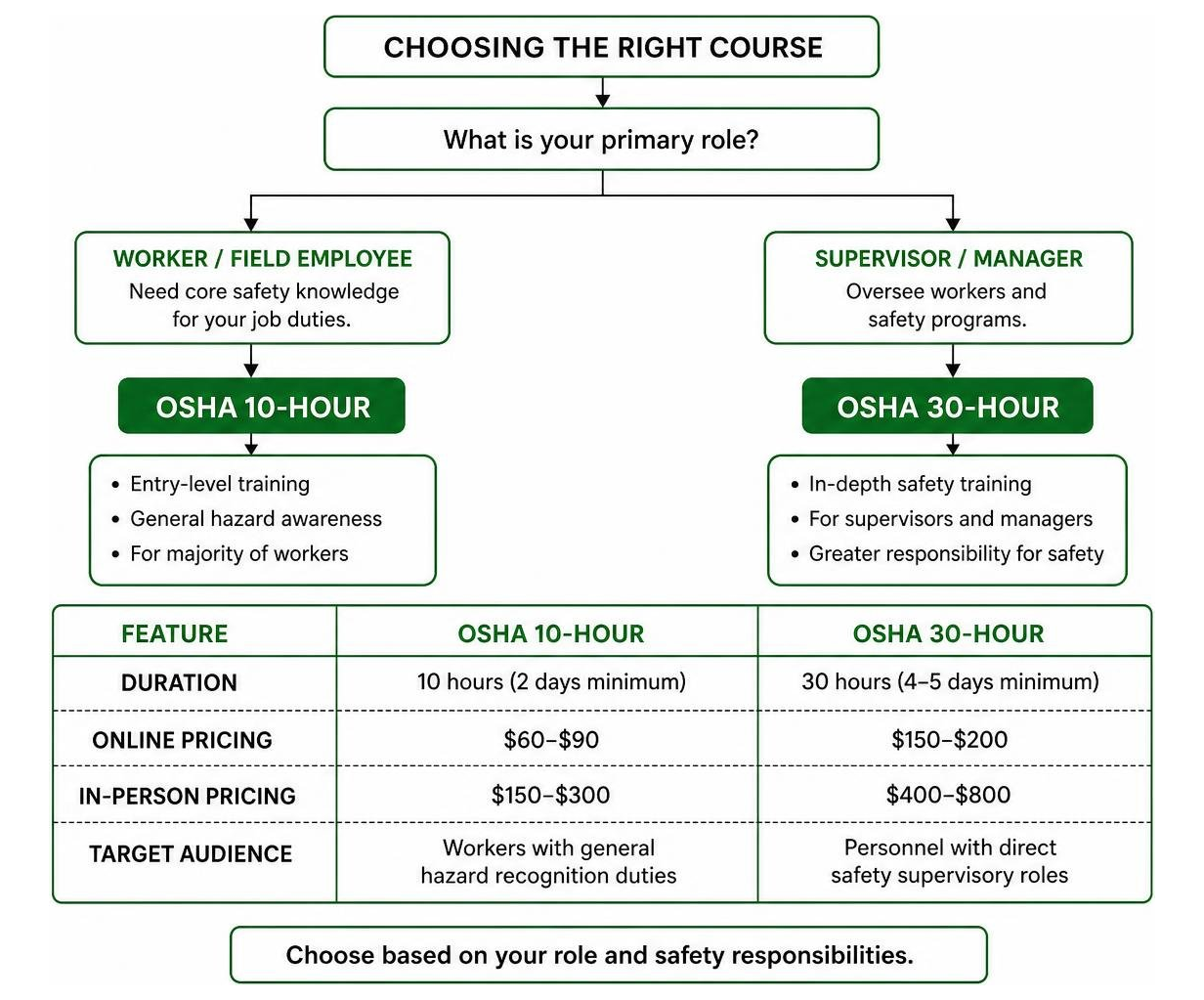
- Duration: OSHA 10 takes 10 hours (2 days minimum); OSHA 30 takes 30 hours (4 to 5 days minimum).
- Online Pricing: OSHA 10 costs $60–$90; OSHA 30 costs $150–$200.
- In-Person Pricing: OSHA 10 costs $150–$300; OSHA 30 costs $400–$800.
- Target Audience: Workers with general hazard recognition duties vs. personnel with direct safety supervisory roles.
To evaluate which level your team needs, read What Is the Difference Between OSHA 10 and OSHA 30 Training and review Who Needs OSHA 10 vs OSHA 30 Training. If you require supervisor credentials, see our guides on OSHA Compliance Training – 30 Hour Construction Industry Training and OSHA Compliance Training – 30 Hour General Industry Training.
How to Save Money with Group Rates and State Subsidies
Employers looking to certify teams can significantly reduce per-worker expenses:
- On-Site Group Break-Even: Private on-site group training breaks even at just 6 workers compared to paying individual classroom registration fees ($150–$300 each).
- State-Sponsored Programs: Certain state agencies offer heavily subsidized safety classes. For example, the Texas Division of Workers’ Compensation (DWC) hosts OSHA 10 General Industry classes for state residents/employees for just $30.
- Educational Discounts: High school CTE and vocational programs can access discounted student rates (such as $35 per student through specific authorized providers).
For regulatory context, review OSHA Training Requirements for the Construction Industry and our guide to Top OSHA Required Trainings for Construction and General Industry.
ROI, Tax Deductions, and Selecting Authorized Training
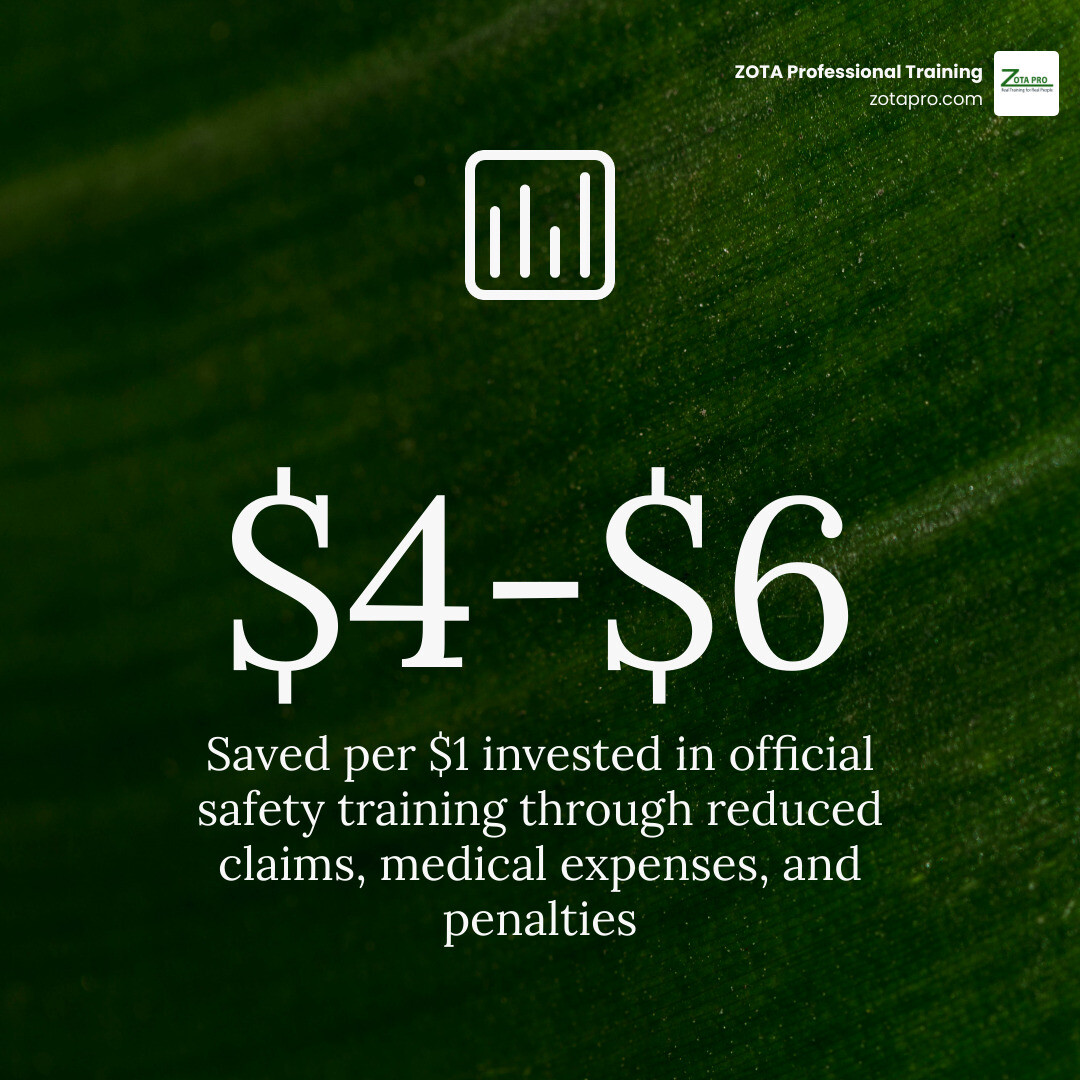
Investing in workplace safety yields direct financial returns. Studies show that every $1 invested in official safety training saves businesses $4 to $6 in reduced workers’ compensation claims, medical expenses, and avoided OSHA penalties. Furthermore, OSHA safety programs have contributed to a 65% reduction in workplace fatalities since 1970.
From a tax perspective, employers can fully deduct safety training costs as ordinary and necessary business expenses. Keep thorough records, including invoices, course outlines, and employee attendance logs. Individual employees paying out-of-pocket can no longer claim unreimbursed employee expense deductions on federal tax returns due to tax law updates running through 2025, making employer sponsorship even more valuable.
At ZOTA Professional Training, we provide flexible, authorized safety training solutions tailored to contractors and businesses nationwide. Get Certified with ZOTA Professional OSHA Compliance Training today to ensure your workforce stays safe, compliant, and cost-effectively certified.