
When Lead Paint Encapsulation Makes Sense for CMOs
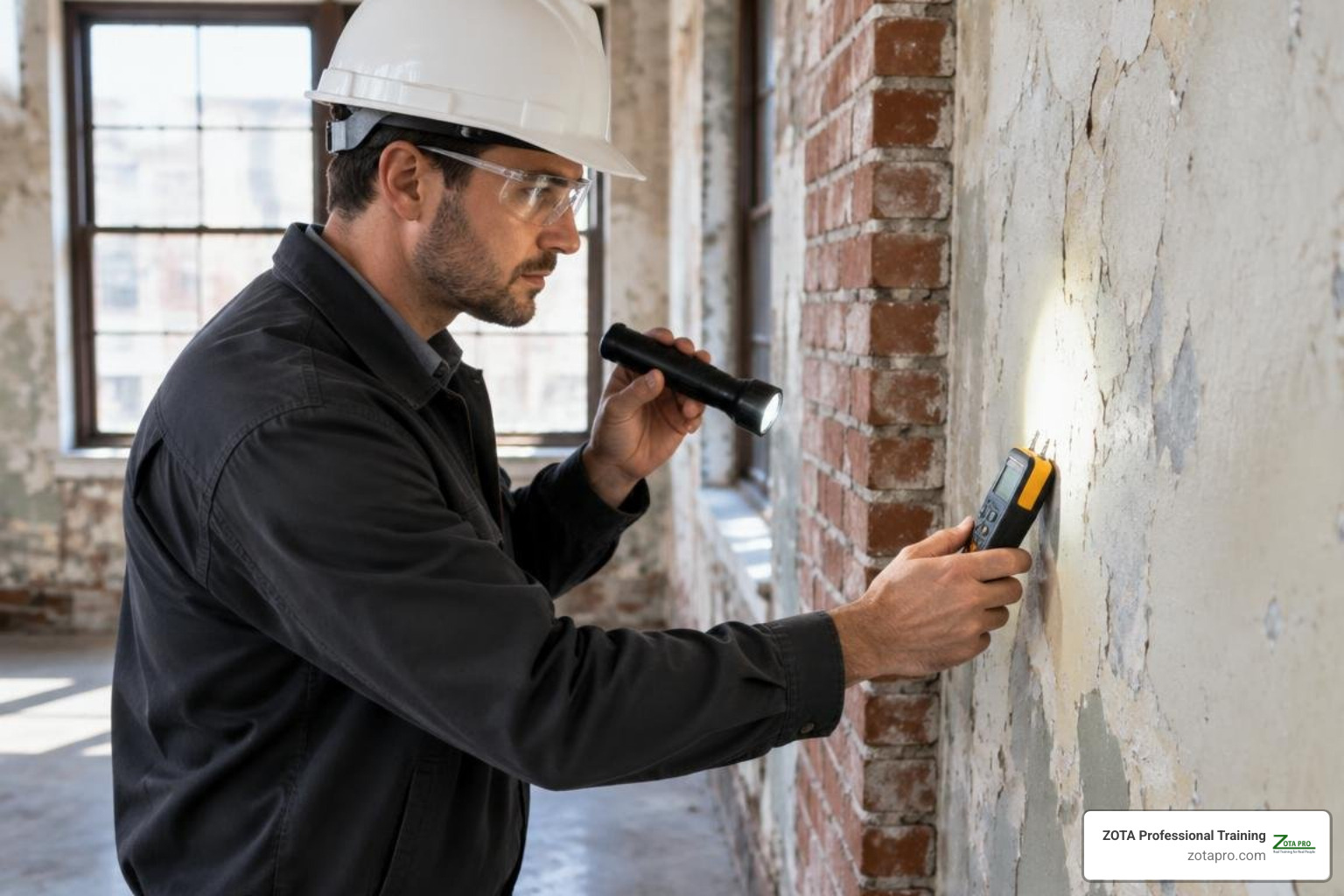
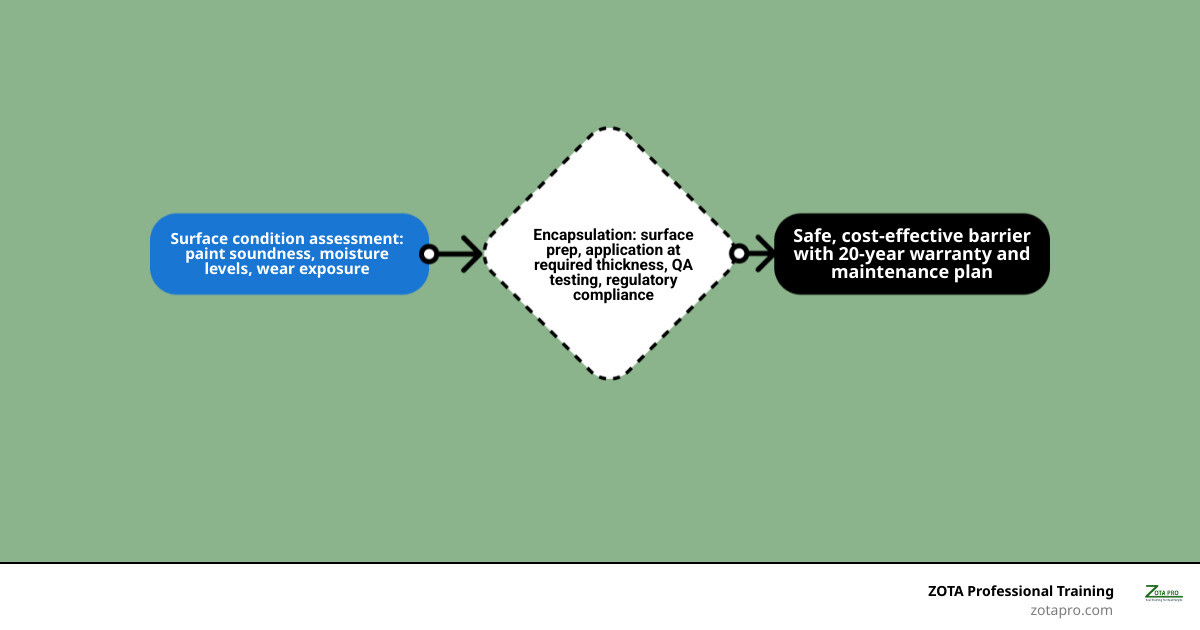
Lead paint encapsulation can be a good option when the existing paint is sound, the surface is dry, and the area will not face heavy wear. Choose a lead-rated coating that suits the substrate, prepare the surface safely, and apply it at the maker’s required thickness. If the paint cannot be made sound, moisture is getting behind it, or the surface is often rubbed or struck, consider removal or enclosure instead. Ordinary paint is not a substitute for an encapsulation system.
The coating is only part of the job. CMOs also need to plan for applicable EPA rules, worker protection, inspection, and future repairs.
I’m Bob Zak, founder and CEO of ZOTA Professional Training, with over 32 years of experience in occupational safety, including work as Ramsey County’s occupational health and safety manager. I bring that training and compliance background to lead paint encapsulation for CMOs as we compare the options and the checks that matter most.
Evaluating Lead Paint Encapsulation for CMOs: Materials, Physics, and Failure Modes
Encapsulation serves as an engineered, liquid-applied elastomeric barrier that locks legacy coatings in place, preventing hazardous dust migration without generating extensive demolition waste. When weighing lead abatement vs encapsulation, facility leaders quickly realize that encapsulation offers immense cost and schedule advantages—provided the physics of the barrier system are respected.
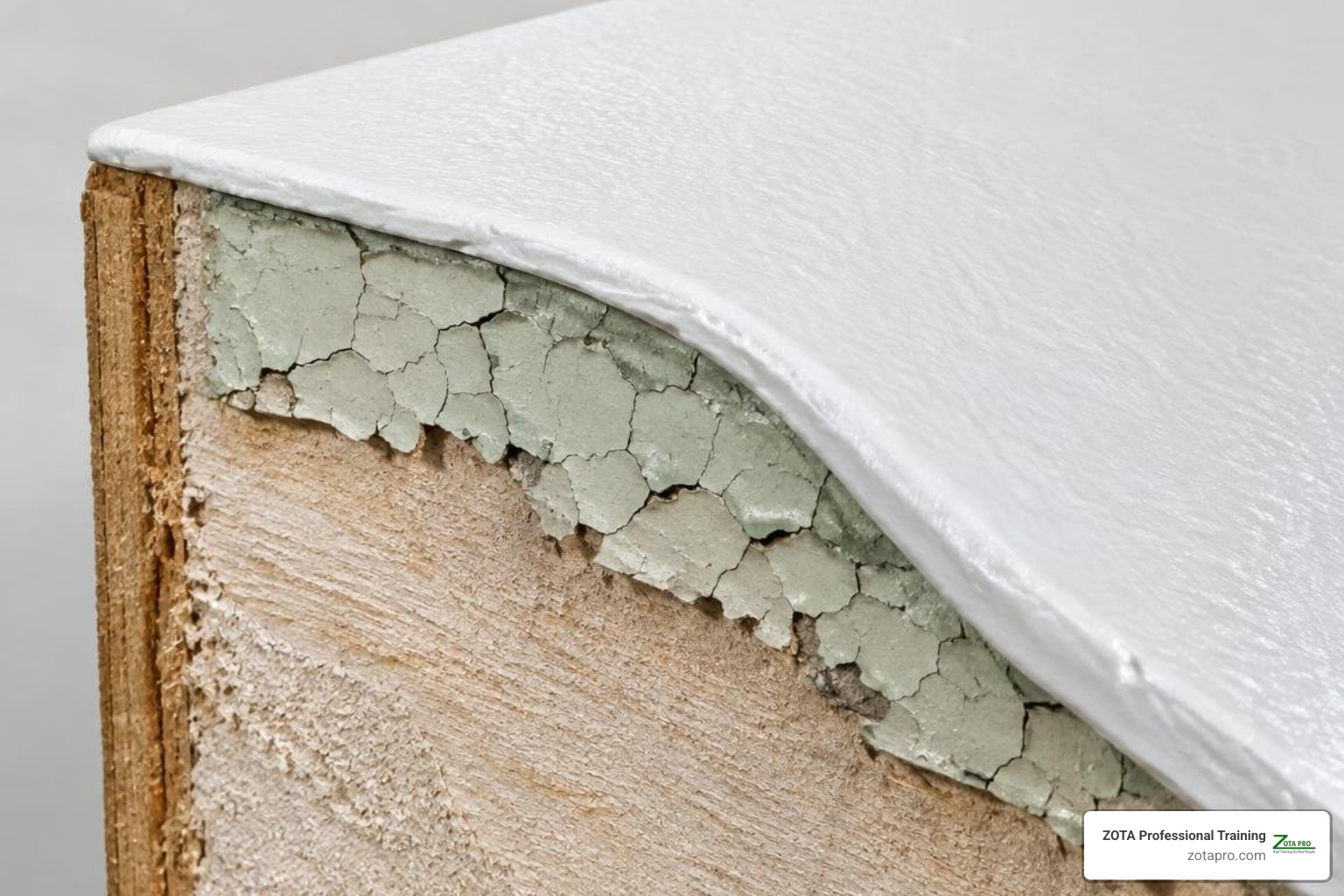
Encapsulating building surfaces shares core engineering principles with high-reliability microelectronics and medical implants. In medical transmitter encapsulation, for instance, EP965 epoxy offers an electrical resistivity of $8 times 10^{14} Omegatext{-cm}$ (with a 1 mm cube presenting a resistance of $10^{15} Omega$), but water vapor still penetrates throughout both silicone and epoxy encapsulants within days at 37°C. Similarly, in commercial facilities, no liquid coating is entirely impenetrable at the molecular level. Long-term performance depends on controlling vapor gradients, adhesion strength, and coating flexibility to withstand continuous environmental aging.
Material Selection and Engineering Principles in Lead Paint Encapsulation for CMOs
Selecting the correct polymer matrix dictates whether your barrier lasts for decades or fails prematurely. While microelectronics rely on rigid epoxy potting or peelable silicone dispersions, architectural encapsulation centers around high-build elastomeric acrylics and copolymer formulations engineered to withstand structural movement.
| Material Type | Typical Solids & Mil Build | Primary Advantages | Common Trade-Offs / Serviceability |
|---|---|---|---|
| Elastomeric Acrylic (e.g., Lead Block®) | 44% volume solids; 14–16 wet mils (7–8 dry mils) | High elongation, covers micro-cracks, low VOC (<100 g/L), integrates Bitrex® anti-ingestant | Susceptible to mechanical gouging on high-friction walking surfaces |
| Industrial Epoxy Coating | 60–100% volume solids; 8–15 dry mils | Extreme chemical and abrasion resistance, rigid barrier | Non-breathable, permanent (non-removable), prone to embrittlement on wood substrates |
| Silicone Dispersion Matrix | 30–50% volume solids; 10–20 dry mils | Outstanding thermal stability, UV resistance, completely serviceable/peelable | Difficult to recoat with standard architectural topcoats, poor shear adhesion |
Modern architectural encapsulants such as Lead Block® Lead Encapsulating Coating – Eggshell use high-solids elastomeric polymers that cure into flexible, impact-resistant membranes. Many formulations also incorporate Bitrex® (denatonium benzoate), an FDA-recognized bittering agent that deters oral contact.
Failure Mechanisms: Moisture Ingress, Capillary Action, and Delamination
Why do barrier coatings fail? Physics provides the answer. In microelectronics, stranded conductors can draw moisture along a 160 mm path in under 6.5 minutes via capillary action, and PVC-insulated stranded wires exhibit blackened conductor tips after just 20 days in saltwater. In industrial facilities, moisture migration behaves identically along porous plaster, timber grain, and unsealed masonry joints.
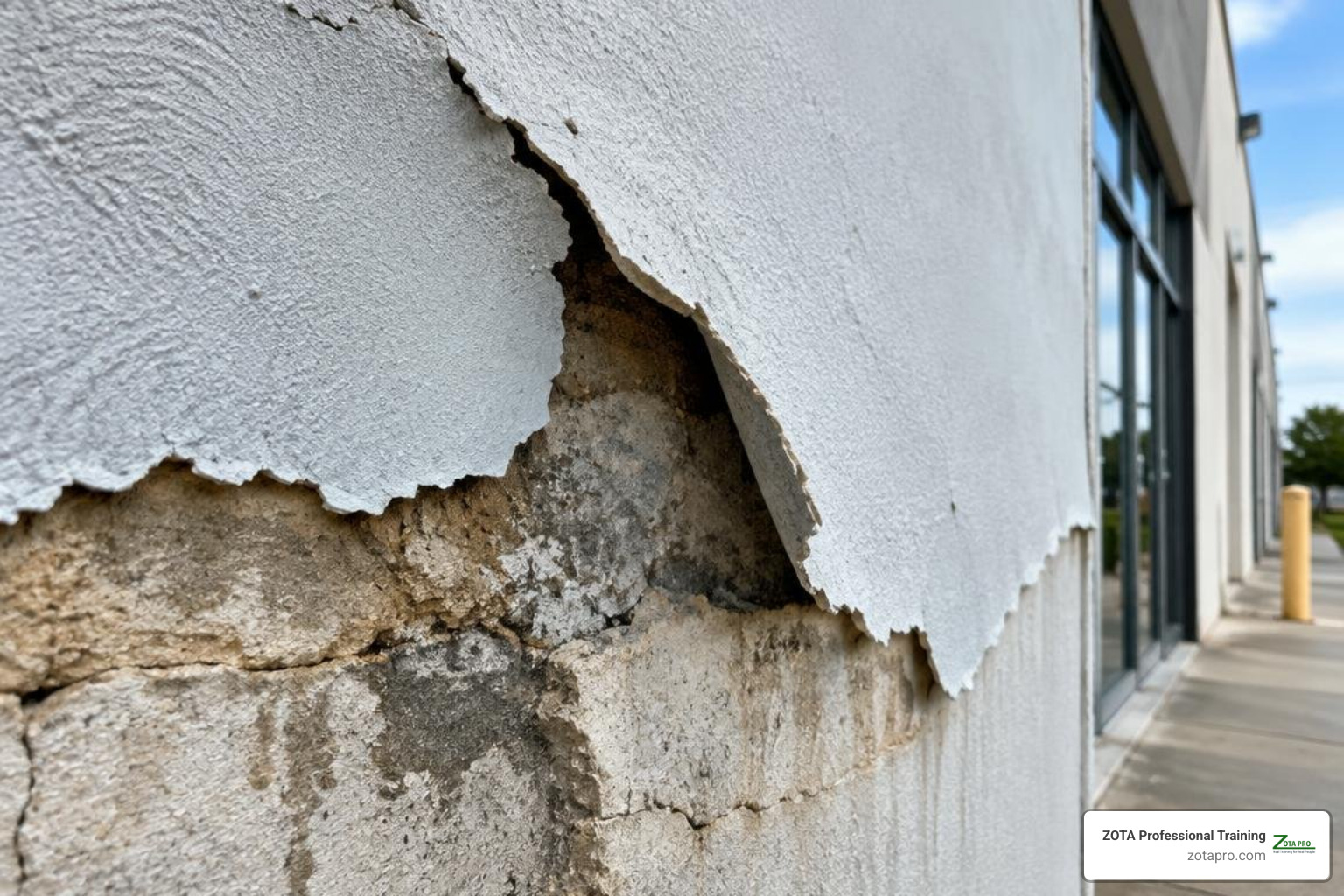
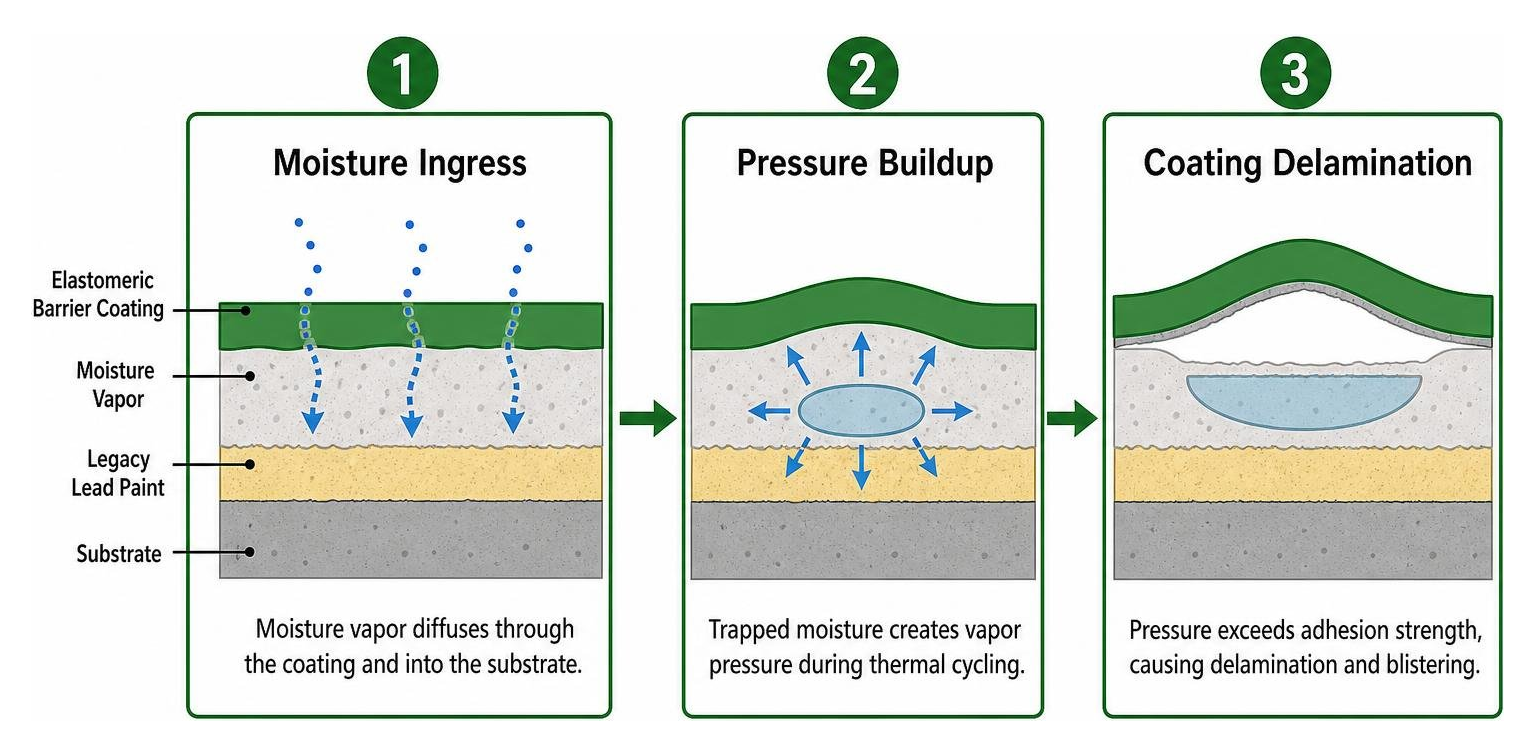
When moisture vapor becomes trapped beneath a poorly bonded, unbreathable coating, vapor pressure builds during thermal cycling. Analogous to the “popcorn phenomenon” in plastic-encapsulated microcircuits—where trapped moisture vaporizes and fractures the resin matrix—architectural coatings experience osmotic blistering and delamination if applied over damp substrates. If peeling occurs over aging lead-based paint, toxic dust is instantly liberated into the workplace.
Surface Geometry, Edge Preparation, and Adhesion Testing Protocols
Surface geometry directly governs coating integrity. Sharp outside corners, narrow trim profiles, and architectural reveals create thin spots due to surface tension during curing. To prevent stress concentrations and micro-cracking:
- Radius Sharp Profiles: Slightly chamfer or ease all 90-degree outside edges before application.
- Surface Cleaning: Wash surfaces thoroughly with an emulsifying degreaser and rinse completely.
- Perform Field Adhesion Testing: Follow Design Services Lead Encapsulation AIA Specifications by conducting a pressure-sensitive tape test. Firmly apply a 6-to-10-inch strip of heavy-duty industrial tape over an X-cut, press with an eraser, wait 90 seconds, and pull back at 180 degrees to confirm substrate cohesion.
Best Practices, Quality Assurance, and Regulatory Compliance for Facility Managers
Executing lead encapsulation at enterprise scale requires rigorous procedural discipline and full alignment with OSHA 29 CFR 1910.1025 and EPA 40 CFR 745 standards.
Implementing Scalable Lead Paint Encapsulation for CMOs Across Substrates
Scaling encapsulation across thousands of square feet demands substrate-specific protocols:
- Drywall & Plaster: Seal chalky surfaces, repair damaged base coats, and apply via professional airless spray equipment (0.017-inch tip size at 1,200–3,000 PSI).
- Structural Wood Trim: Verify that moisture content is below 12% to prevent interior outgassing.
- Concrete & Exterior Masonry: Follow AIA MasterSpec Division 09 Finish Standards, ensuring ambient application temperatures remain between 50°F and 95°F with relative humidity under 85%.
Quality Control, Accelerated Aging, and Regulatory Standards
Reliable encapsulation relies on standardized quality control testing. In electronics testing, 10% of encapsulated units undergo destructive water submersion at 60°C to verify a baseline lifespan of 300 days at 37°C. In facility management, we validate longevity against ASTM E1795 standards.
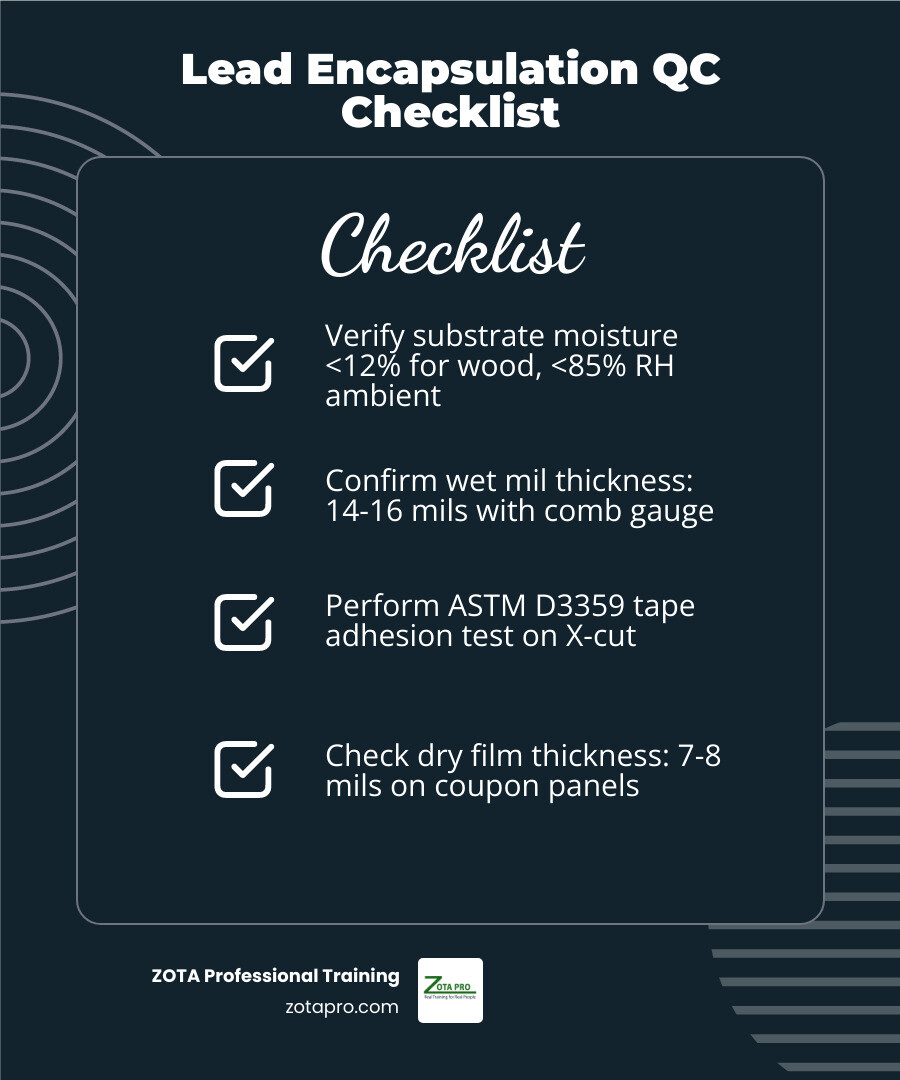
Field inspection teams must use wet-mil comb gauges during application to confirm 14 to 16 wet mils. After curing, crews should verify dry film thickness on coupon panels using precision micrometers to ensure the system delivers a continuous 7 to 8 dry mils.
Products like Sentinel Lead Encapsulant achieve zero VOC levels (<5 g/L) and a Class A fire rating (Flame Spread Index: 0), making them safe for occupied facilities. Maintaining complete documentation and ensuring workers hold formal lead paint certification shields your organization from substantial regulatory liabilities.
Verification, Repairability, and Compliance Management
A proper encapsulation project includes a written 20-year material performance warranty. Unlike non-serviceable potting epoxies, architectural elastomeric encapsulants can be easily inspected and touched up:
- Establish Mock-Up Panels: Document baseline color, texture, and film thickness on representative 100 sq ft mock-ups prior to full-scale deployment.
- Routine Visual Audits: Inspect high-contact architectural elements semi-annually for gouges, peeling, or water intrusion.
- Localized Remediation: Clean damaged areas with HEPA-shrouded equipment, feather the edges of the sound coating, and reapply the elastomeric encapsulant to restore the continuous barrier.
Implementing long-term facility protocols for safely painting over lead paint guarantees sustained building safety, environmental compliance, and structural integrity for years to come.