

Why a Lead Paint Inspection Matters Before Renovation
A lead paint inspection identifies which painted surfaces in a property contain lead-based paint. For homes built before 1978, it helps owners and contractors plan renovation work safely, protect occupants, and avoid creating hazardous lead dust.
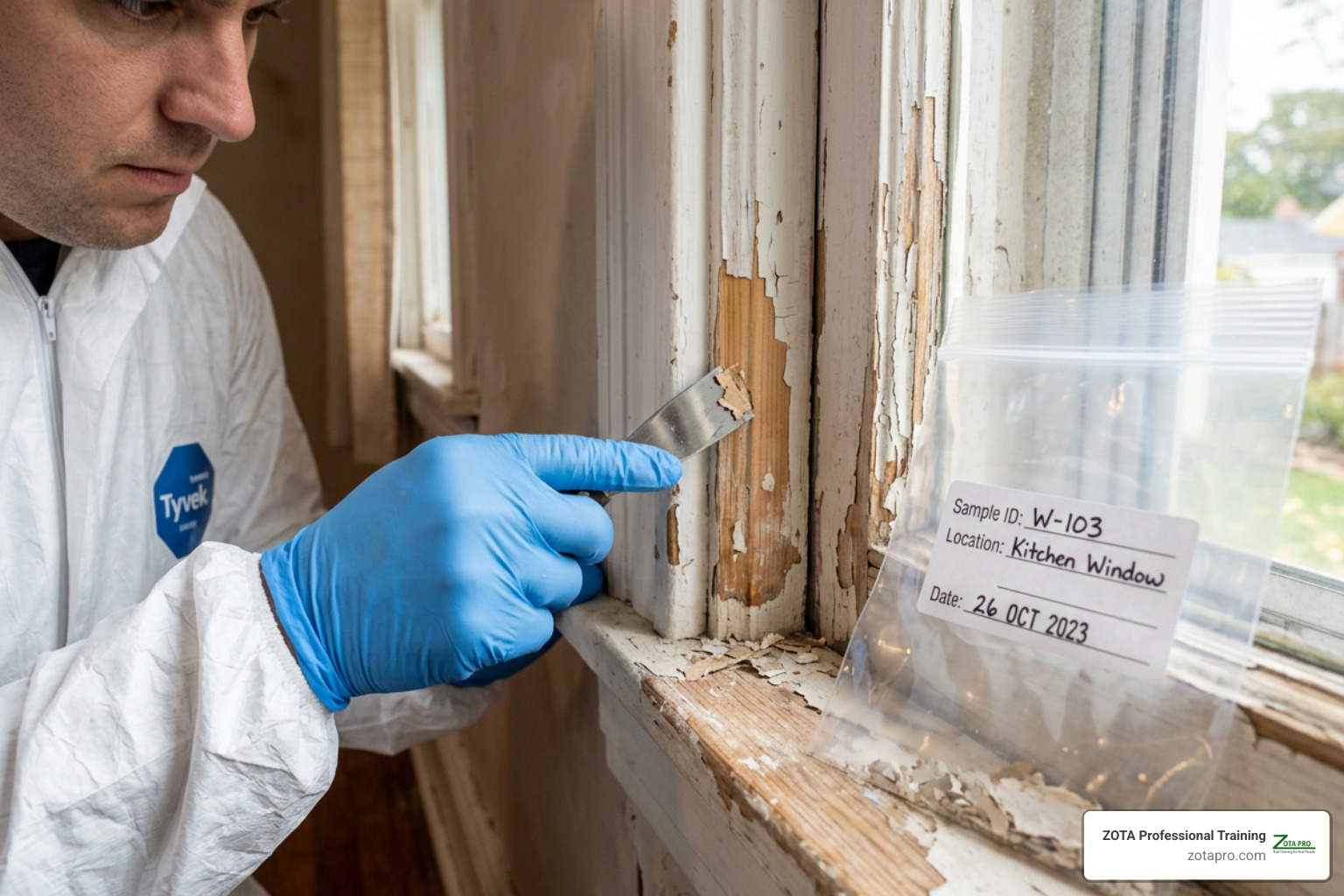
The most reliable professional approach is a surface-by-surface inspection by a certified lead inspector, usually with a portable X-ray fluorescence (XRF) analyzer. XRF testing is fast and non-destructive. If a reading is inconclusive, the inspector may collect a paint-chip sample for analysis by an accredited laboratory.
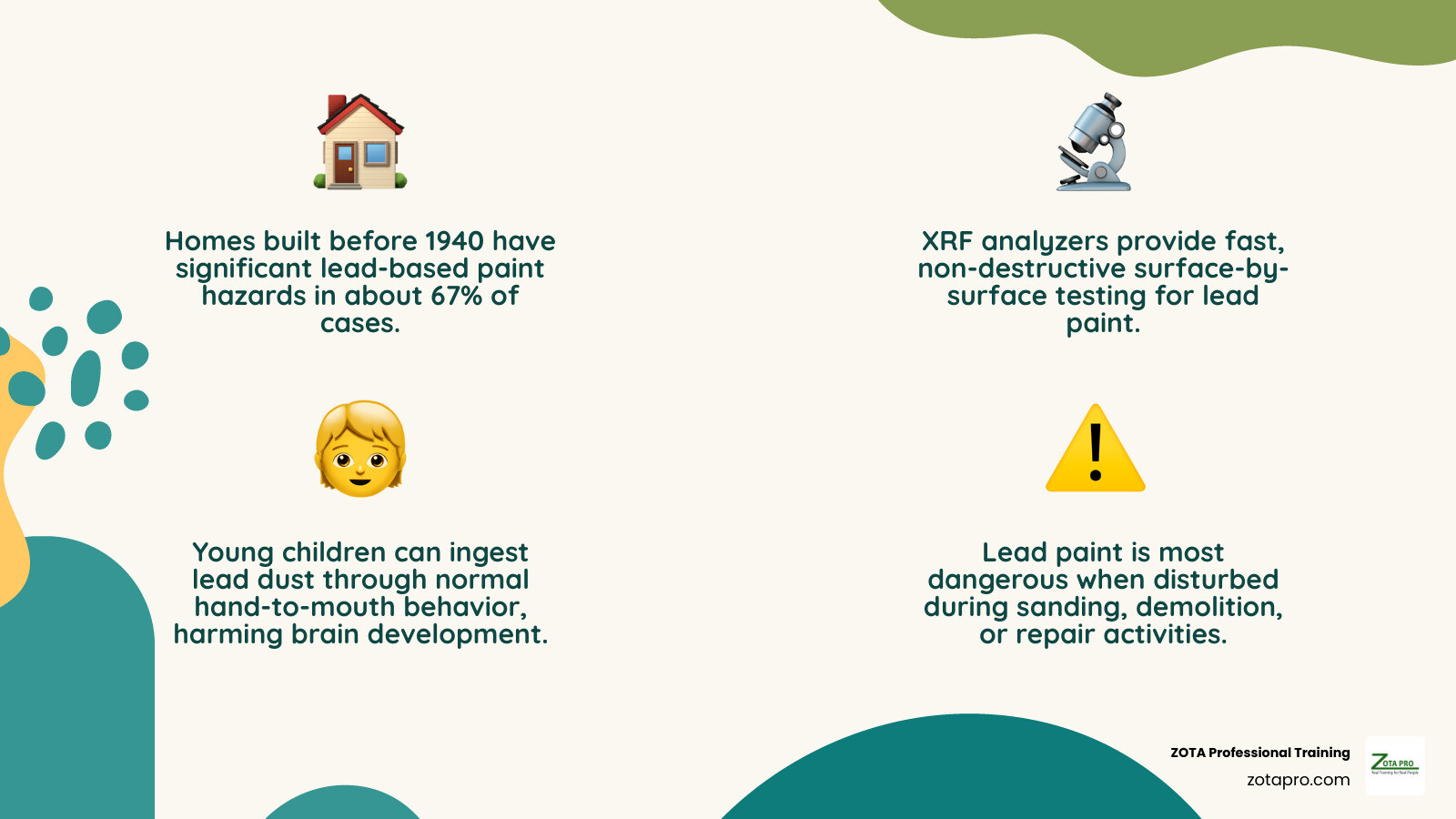
Lead paint is especially dangerous when it peels, rubs on windows and doors, or is disturbed during sanding, demolition, or repair. Young children can swallow lead dust through normal hand-to-mouth behavior, and exposure can harm brain development. Pregnant women also need protection because lead can affect pregnancy and fetal development.
Older housing deserves extra care. HUD data estimates that significant lead-based paint hazards occur in about 67% of homes built before 1940, compared with 11% of homes built from 1960 through 1977. A certified inspection does not replace lead-safe renovation practices, but it gives the project team the facts needed to choose them.
I am Bob Zak, Founder and CEO of ZOTA Professional Training, with more than 32 years of occupational health and safety experience. Through EPA-accredited training for lead, asbestos, mold, and OSHA work, I help contractors understand the credentials, work practices, and compliance needs connected to lead paint inspection projects.
Understanding the Protocols of a Lead Paint Inspection
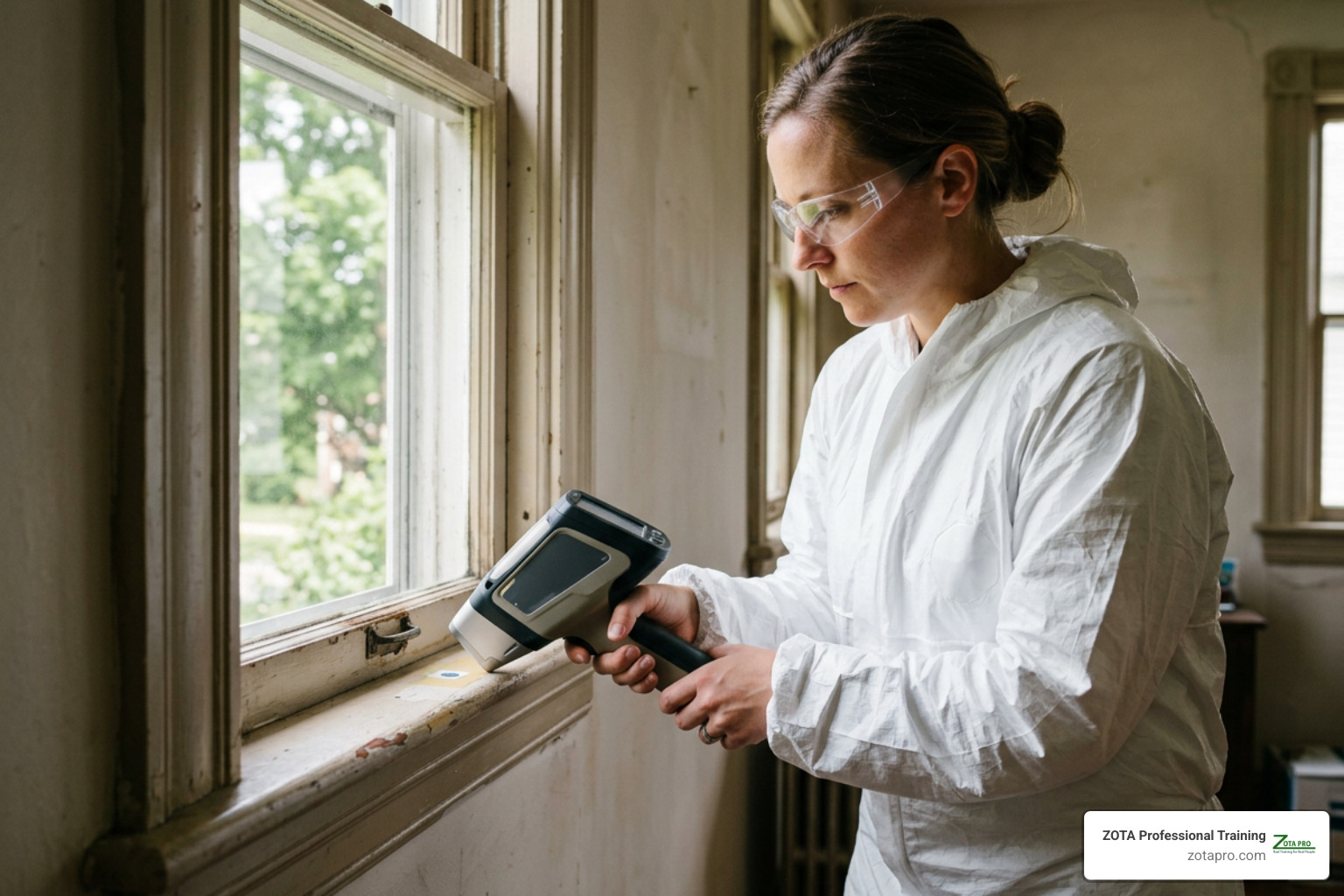
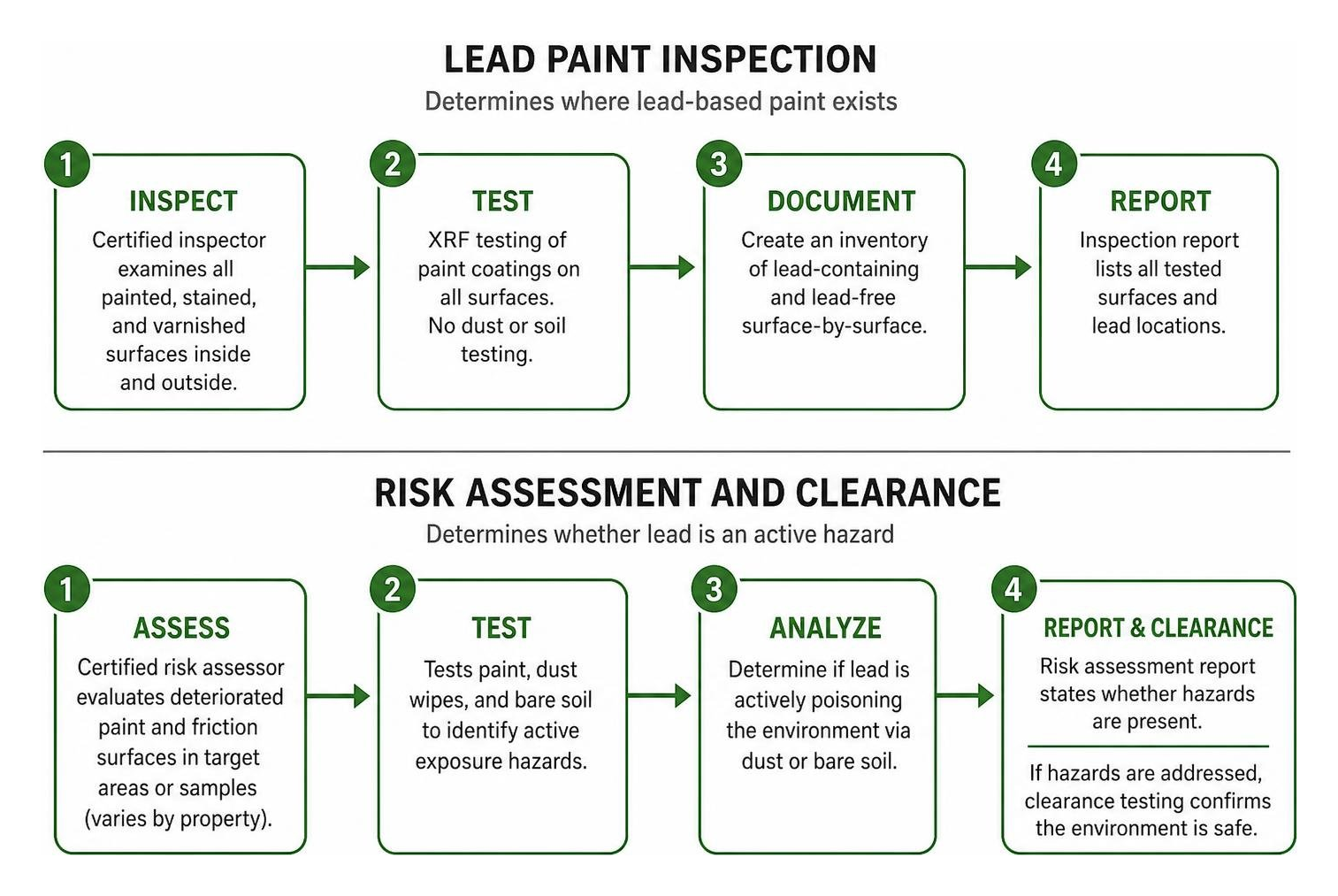
A formal inspection is an exhaustive diagnostic review rather than a simple spot check. Certified professionals examine every painted, stained, or varnished building component inside and outside a dwelling. This includes testing distinct testing combinations across living spaces, hallways, stairwells, and multi-family common utility rooms.
The objective is to establish an inventory of lead-containing architectural elements. Knowing whether a surface is lead-free or coated with toxic paint gives property managers and contractors the baseline data needed to prevent accidental poisoning.
Core Differences: Lead Paint Inspection vs. Risk Assessment and Screening
Many property owners confuse lead inspections with risk assessments. While both evaluate lead on a property, their legal purposes, testing methods, and reporting outcomes differ significantly.
| Feature | Lead-Based Paint Inspection | Lead Risk Assessment | Lead Hazard Screen |
|---|---|---|---|
| Primary Objective | Surface-by-surface inventory of all lead coatings | Identifies active exposure hazards | Negative screen to rule out hazards |
| Paint Evaluated | Intact, deteriorated, and friction surfaces | Deteriorated paint and friction surfaces only | Deteriorated paint in limited areas |
| Environmental Media Tested | Paint coatings only | Paint, dust wipes, and bare soil | Limited paint and stringent dust wipes |
| Required Professional | Certified Lead Inspector or Risk Assessor | Certified Lead Risk Assessor | Certified Lead Risk Assessor |
| Target Property Types | All target housing and child-occupied facilities | Properties with known hazards or older units | Post-1960 units in good condition |
According to federal HUD risk assessment and reevaluation guidelines, a risk assessment determines whether lead is actively poisoning the environment via toxic dust or bare soil. When reviewing lead inspector vs risk assessor differences, inspectors locate where lead exists, while assessors determine whether those coatings pose immediate health risks.
In large multi-family complexes, risk assessors may utilize statistical sampling schemes (targeted, worst-case, or random sampling) across identical units rather than testing every single room in every apartment.
Testing Methods and Surface Evaluation in a Lead Paint Inspection
Certified professionals rely on precise scientific instrumentation to evaluate painted surfaces:
- X-Ray Fluorescence (XRF) Analyzers: Handheld XRF analyzers are the industry standard. Modern tube-based XRF analyzers do not suffer from isotope fade, avoiding the routine radioactive core replacements required by older isotope-based devices. Technicians operate devices following specific XRF Performance Characteristic Sheets (PCS) to account for substrate effects on wood, metal, plaster, or drywall.
- Paint-Chip Collection: If an XRF reading is inconclusive, technicians collect paint-chip samples containing all underlying coats down to the bare substrate. These samples are sent to an environmental testing laboratory accredited under the National Lead Laboratory Accreditation Program (NLLAP).
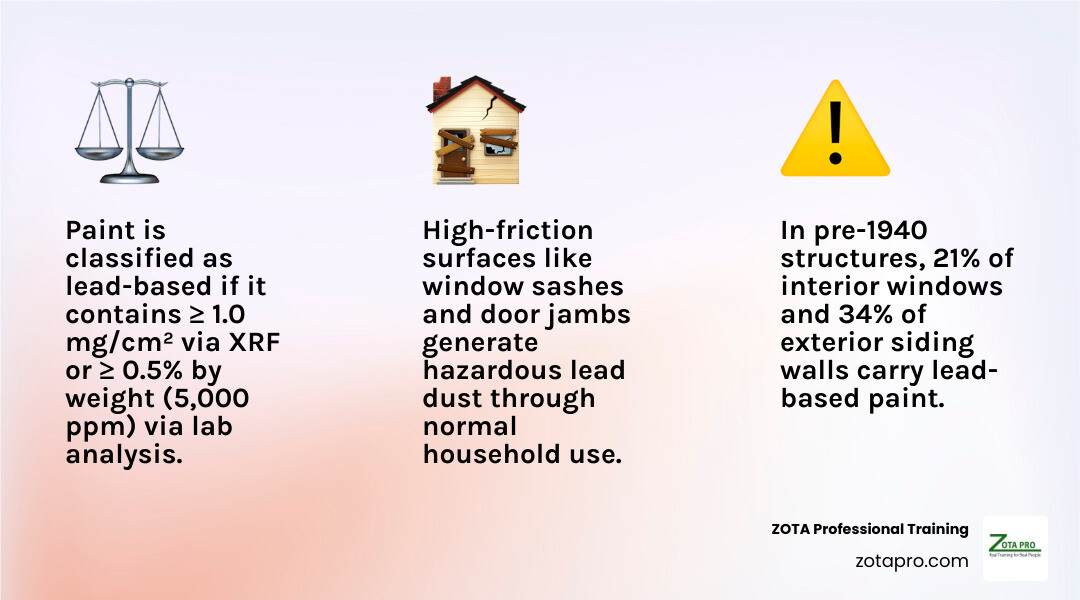
- Regulatory Thresholds: Under HUD Chapter 7 inspection protocols, paint is classified as lead-based if it equals or exceeds 1.0 mg/cm² via XRF testing or 0.5% by weight (5,000 ppm) via lab analysis.
Homeowners should exercise caution with over-the-counter DIY chemical spot test kits (such as sodium sulfide or rhodizonate swabs). When evaluating homeowner lead inspection methods, note that chemical swab kits are qualitative, prone to false positives, and not legally valid for compliance determinations under federal or state law.
When Is Testing Required and What Surfaces Are Evaluated?
High friction and impact surfaces generate fine lead dust through normal household use. In pre-1940 structures, 21% of interior window components and 41% of exterior windows carry lead coatings, while 34% of exterior siding walls contain lead paint.
Key architectural surfaces evaluated during an inspection include:
- Friction Surfaces: Window sashes, window jambs, parting beads, stair treads, and door edges.
- Impact Surfaces: Door jambs, baseboards, and wall sections impacted by door hardware.
- Chewable Surfaces: Interior window sills, stair railings, and low decorative molding within reach of children under 6.
- Exterior Features: Porch decking, soffits, fascia, exterior siding, and perimeter fences.
Knowing is a lead inspection required before renovating an older home allows property owners to plan safely. You can read our walkthrough of what happens during a lead paint inspection in Minnesota to prepare your site, or review our guide on how to check your home for lead safely.
Regulations, Remediation, and Professional Certification Pathways
Failing to properly manage lead-based paint exposes property owners to strict regulatory liability. Under the Title X mandate and federal lead paint disclosure rules, property owners must disclose all known lead inspection reports and records to prospective buyers or tenants before executing leases or sales contracts.
Federal and State Compliance Standards: EPA, HUD, and Local Laws
Federal housing standards codified in the HUD Lead Safe Housing Rule standards and the updated NSPIRE visual assessment standards establish quantitative thresholds for deteriorated paint:
- Interior Large Surfaces: Greater than 2 square feet of peeling paint per room is classified as a significant hazard.
- Interior Small Components: Deterioration exceeding 10% of total surface area on trim or window sills is a significant deficiency.
- Exterior Surfaces: More than 20 square feet of peeling exterior paint triggers mandatory paint stabilization and clearance.
State and municipal codes are often more stringent. New York City Local Law 1 establishes an action threshold of 0.5 mg/cm² for lead paint, mandates annual inquiries in units with children under six, and requires owners to retain lead inspection and repair records for at least 10 years. In Massachusetts, state lead laws categorize inspections into Comprehensive Inspections, Risk Assessments, and RRP, while dividing remediation into low-, moderate-, and high-risk abatement tiers.
Interim Controls, Abatement, and Post-Work Clearance Inspections
When lead hazards are identified, owners have two management approaches:
- Interim Controls: Temporary measures designed to manage exposure risks, including friction reduction, specialized paint stabilization, and regular HEPA cleaning.
- Lead Abatement: Permanent elimination of lead-based paint hazards using component removal, physical enclosure behind sheetrock, chemical stripping, or specialized elastomeric encapsulation.
Following any lead abatement or significant renovation in pre-1978 properties, a formal clearance examination is legally mandatory.
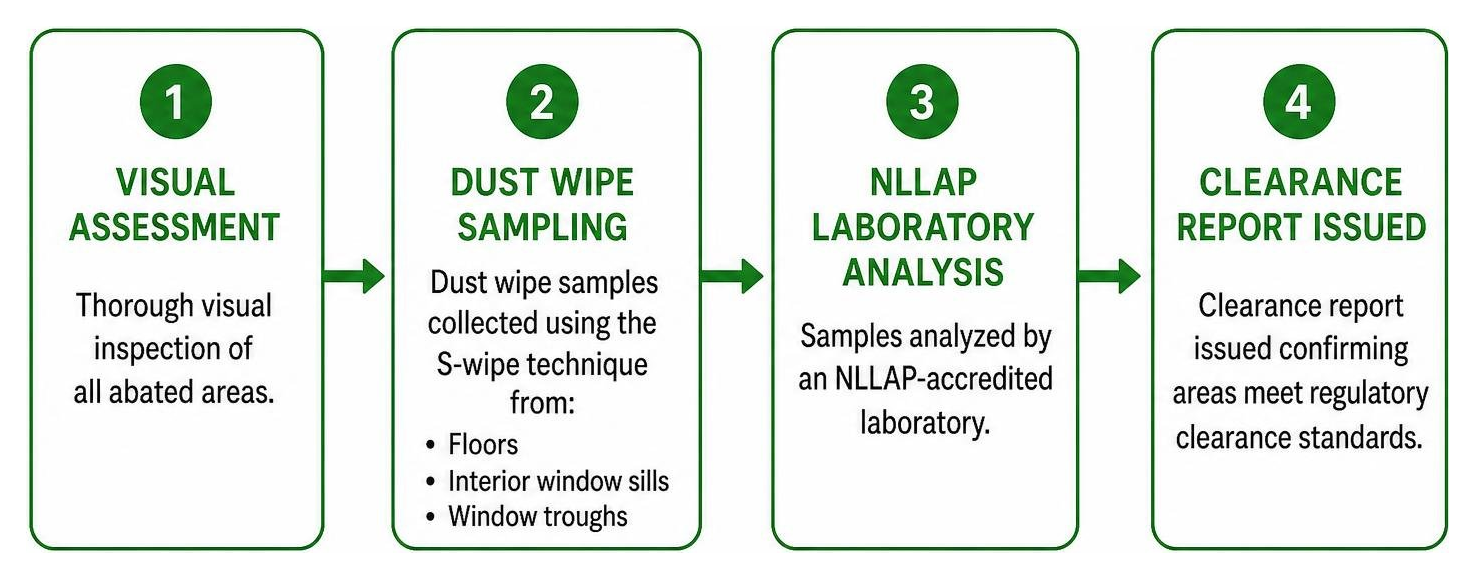
Under 24 CFR § 35.1340 clearance mandates, the clearance examination must include a thorough visual inspection followed by dust wipe sampling on floors, interior window sills, and window troughs using the standardized S-wipe technique.
To eliminate conflicts of interest, clearance testing must be performed by an independent third party. For non-abatement interim repairs, individuals with a lead dust sampling technician certification can perform clearance testing within single-family properties.
Finding Certified Inspectors and Earning Professional Credentials
Property owners should only hire licensed lead consultant contractors who employ state- or EPA-certified professionals. Before contracting services, verify the technician’s active license, confirm their calibration protocol for portable XRF devices, and verify that all paint-chip or wipe samples will be processed by an NLLAP-recognized laboratory.
If you are a contractor or environmental consultant looking to offer professional inspection services, ZOTA Professional Training provides industry-leading credentialing programs.
- Begin your career path with the comprehensive EPA Lead Inspector Initial Course.
- Maintain your active credentials with the EPA Lead Inspector Refresher Course.
- Explore jurisdictional requirements with our guide on how to get EPA lead inspector certification in Minnesota.
We provide nationwide on-site training and hybrid courses in English and Spanish to help professionals meet compliance demands. Explore our full catalog of EPA lead certification programs today to advance your environmental safety credentials.