Find the Right Online Mold Inspector Course
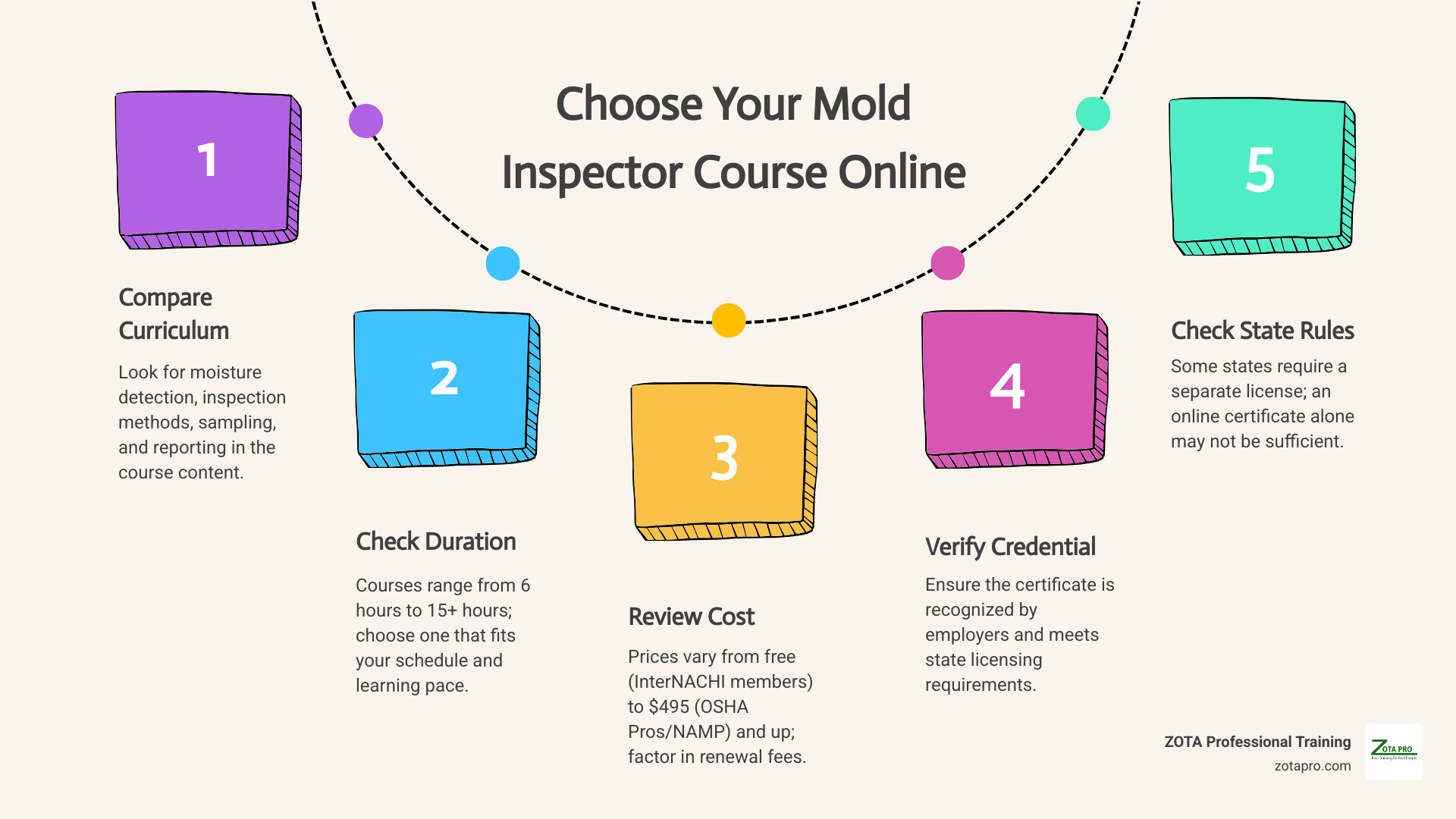
To choose a mold inspector course online, compare four things: what it teaches, how long it takes, the total cost, and the credential you earn. Look for training in moisture detection, inspection methods, sampling, and reporting. Before you enroll, check your state’s rules: an online certificate may not be enough to work as a mold inspector where a license is required.
I’m Bob Zak, founder of ZOTA Professional Training, with more than 32 years of experience in occupational health and safety. I’ll use that experience to help you compare each mold inspector course online with your career goals and licensing needs.
Mold inspector course online word roundup:
- mold inspection certification cost
- mold inspector certification cost
- mold inspector certification exam
Top mold inspector course online options compared
When exploring your path to becoming an inspector, evaluating course format, duration, and legal standing is crucial. The right program depends on whether you need a quick industry overview or state-approved credentials for regulated jurisdictions.
| Provider / Program | Format & Duration | Cost | Key Features & Credentials | State License Compliance |
|---|---|---|---|---|
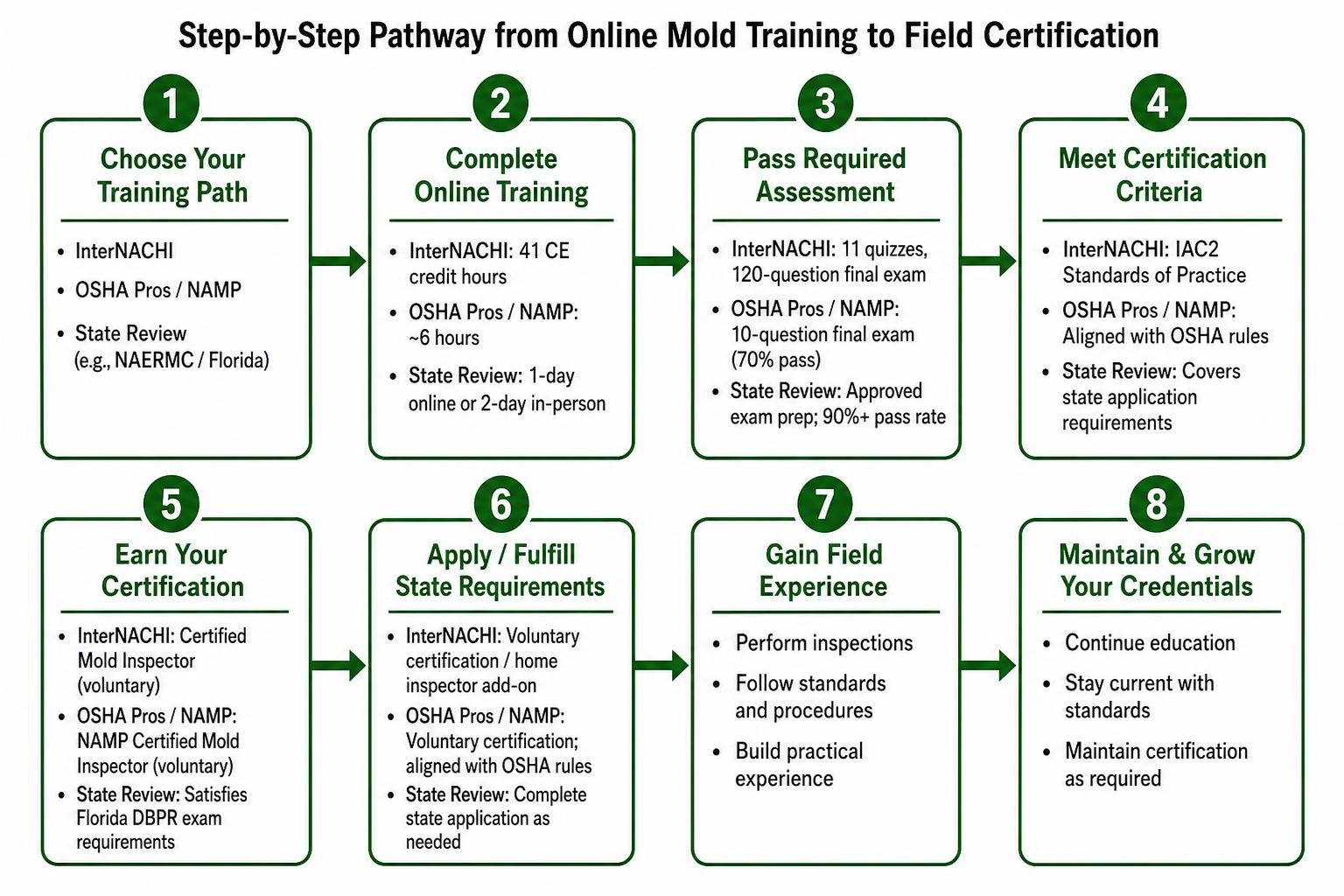
| MICRO CMI | 100% online, self-paced; ~15 hours (6-month access) | $399 (often on sale for $359) | Certified Mold Inspector (CMI); 17 modules; unlimited exam retakes; 1-yr membership | Voluntary certification; check state rules |
| InterNACHI | Online, self-paced; 41 CE credit hours (50,000+ words) | Free with InterNACHI membership | IAC2 Standards of Practice; 11 quizzes, 120-question final exam | Voluntary certification / home inspector add-on |
| OSHA Pros / NAMP | 100% online, self-paced; ~6 hours (6-month access) | $495 | NAMP Certified Mold Inspector; 10-question final exam (70% pass) | Voluntary certification; aligned with OSHA rules |
| State Review (e.g., NAERMC / Florida) | 1-day online Zoom review or 2-day in-person | Varies by provider | Approved exam prep; 90%+ pass rate; covers state application | Satisfies Florida DBPR exam requirements |
At ZOTA Professional Training, we help students navigate these paths with comprehensive mold certification options that fit both voluntary market standards and strict state compliance.
Best mold inspector course online for comprehensive self-paced training: MICRO CMI
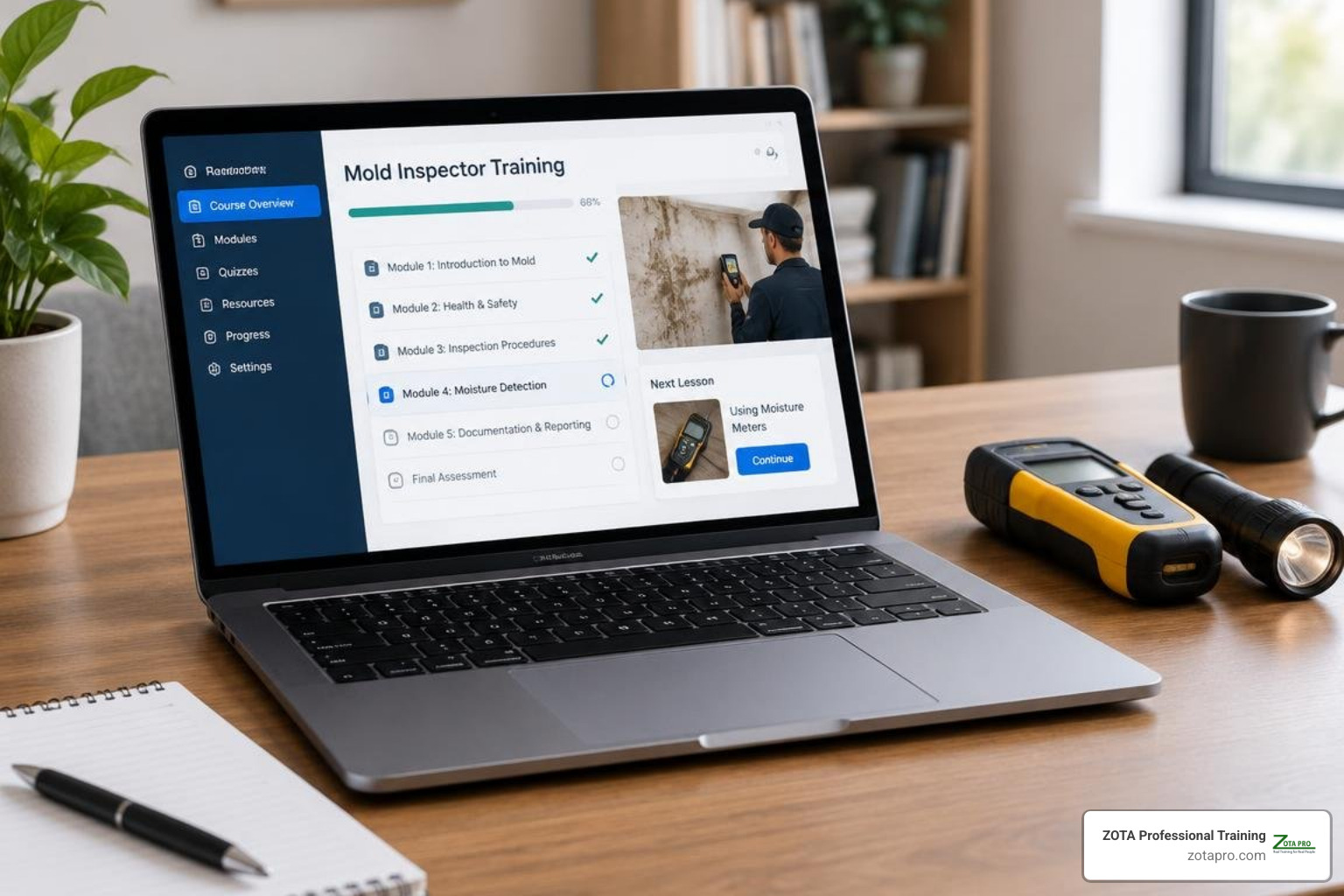
The MICRO Certified Mold Inspector (CMI) course offers thorough foundational training for professionals entering the indoor air quality and property inspection fields. Priced at a regular fee of $399.00 (frequently discounted to $359.00), this self-paced course consists of 17 comprehensive sections taking approximately 15 hours to complete. Students receive six months of 24/7 online access from enrollment.
No previous mold inspection experience is required to enroll. The curriculum covers building and material science, structural systems, ventilation, moisture intrusion, air and surface sampling procedures, laboratory result interpretation, and inspection report preparation.
Tuition includes training materials, project forms, an online final examination with unlimited retakes under the MICRO Success Guarantee, and a 1-year MICRO membership. The course qualifies for 14 hours of continuing education with the IICRC and 20 hours of professional development credit for ACAC recertification. While nationally recognized among private trade bodies, learners must always review local mold inspector certification requirements and calculate overall mold inspection certification costs before providing commercial services.
Best mold inspector course online for member-based learning: InterNACHI
For existing home inspectors or those planning to launch a broad property inspection business, InterNACHI provides extensive training integrated into its membership ecosystem. Members gain access to the “How to Perform Mold Inspections Course,” which includes 50,016 words of instructional material and provides 41 InterNACHI CE credit hours.
The curriculum covers:
- IAC2 Mold Inspection Standards of Practice
- Health effects and fungal physical characteristics
- Inspection tools, personal protective equipment (PPE), and sampling devices
- Detailed procedures for surface and air sampling (and when not to sample)
- Threshold limit values and lab report interpretation
- Remediation protocols, containment, and moisture prevention
Assessment includes 76 quiz questions across 11 module quizzes and a comprehensive 120-question final exam. Completing the curriculum allows members to become a Certified Mold Inspector and utilize marketing logos. Taking advantage of online mold inspector exam prep ensures you master the weighted testing system and practical writing assignments.
Best short online option: OSHA Pros and NAMP
If you need a streamlined introduction to indoor microbial assessments, the National Association of Mold Professionals (NAMP) certified course offered via OSHA Pros delivers core concepts rapidly. The course costs $495, requires no prerequisites, and takes approximately 6 hours to complete.
The training covers:
- Characteristics and health impacts of toxigenic fungi
- Mold control methods and inspector safety under OSHA standards (29 CFR 1910.141 & 1926.51)
- Essential PPE and moisture detection equipment
- Visual inspection protocols for foundations, roofs, attics, basements, and interior rooms
- AIHA-accredited laboratory sampling protocols and chain-of-custody procedures
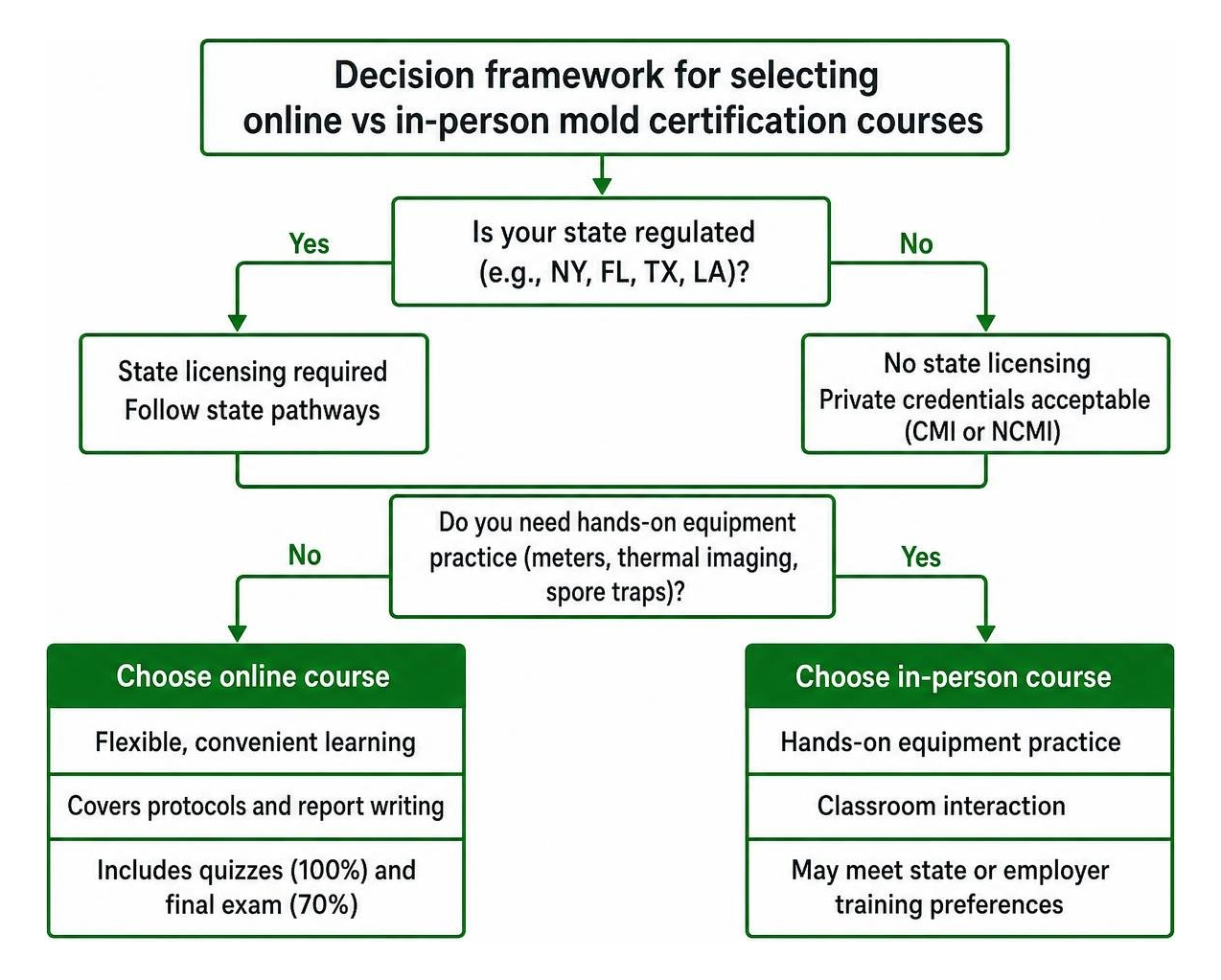
To complete the program, students must pass short module quizzes with a 100% score and achieve at least 70% on a 10-question final exam. Upon completion, learners earn a printable certificate showing proficiency in fundamental assessment protocols. It is important to remember that assessing a property requires different skills than fixing one; review our guide on mold remediation training to understand the technical boundary between inspecting and remediating.
Best course for state-specific licensing: Florida and NORMI pathways
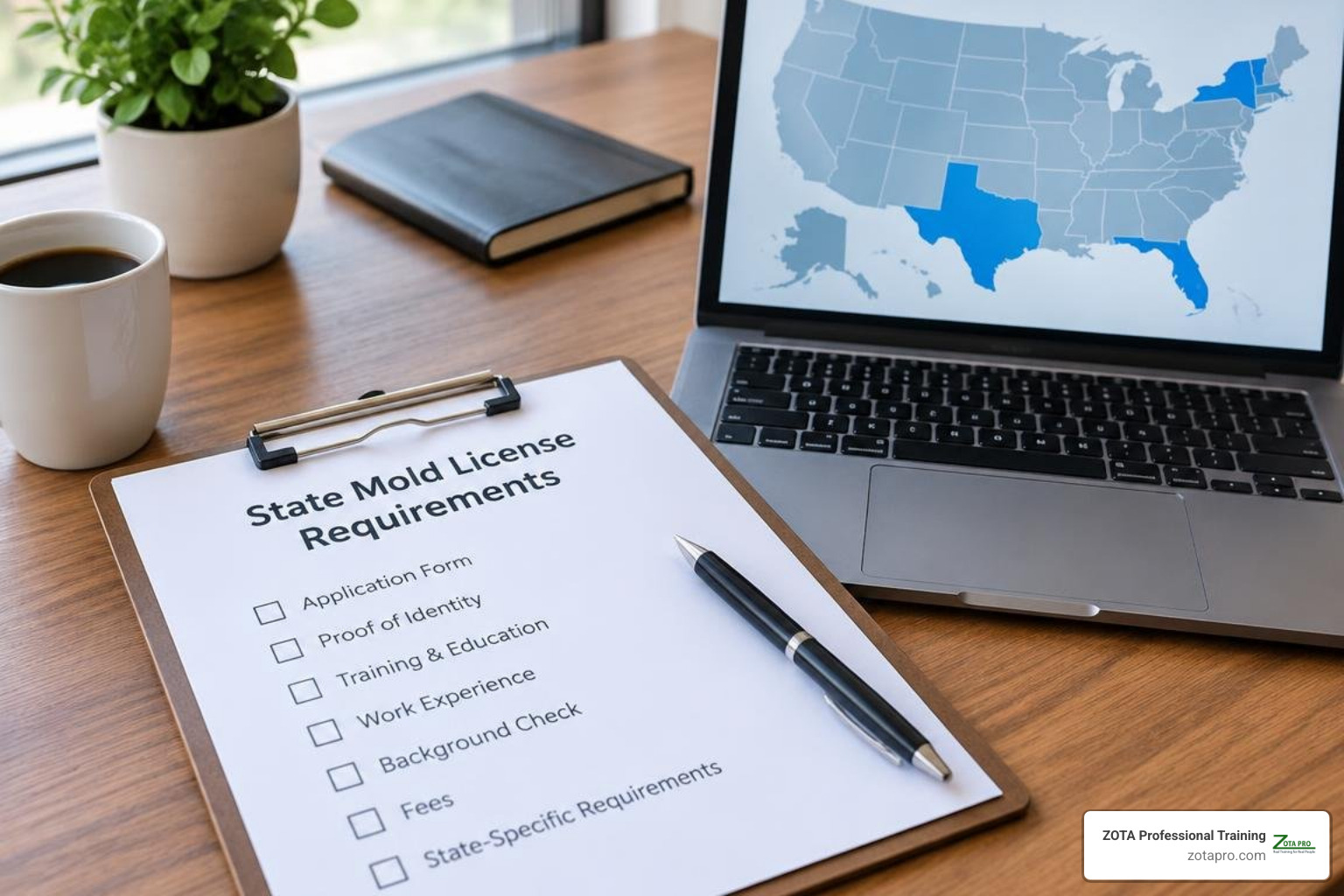
Several states mandate formal government licensing rather than voluntary association credentials. Florida, for example, requires individual licensing for Mold Assessors and Mold Remediators through the Department of Business and Professional Regulation (DBPR).
Programs such as the NAERMC Florida exam training provide a 1-day online Zoom review (or 2-day in-person class) that has trained over 2,500 students with a first-time pass rate exceeding 90%. Florida does not administer its own state exam; passing an approved provider exam satisfies the testing requirement, allowing candidates with required documented experience (such as 15 related jobs over 12 months) to apply directly for licensure.
Similarly, the National Organization of Remediators and Microbial Inspectors (NORMI) offers an 8-hour online Certified Microbial Inspector (NCMI) course for unregulated jurisdictions, but requires a comprehensive 3-day mold assessment and remediation course for licensing states like Florida, Texas, and Louisiana. In regulated markets like New York, professionals must meet specific New York mold licensing requirements by completing approved initial training courses. You can explore how these credentials compare in our breakdown of mold certification types.
Choose your course, check licensing, and plan your next steps
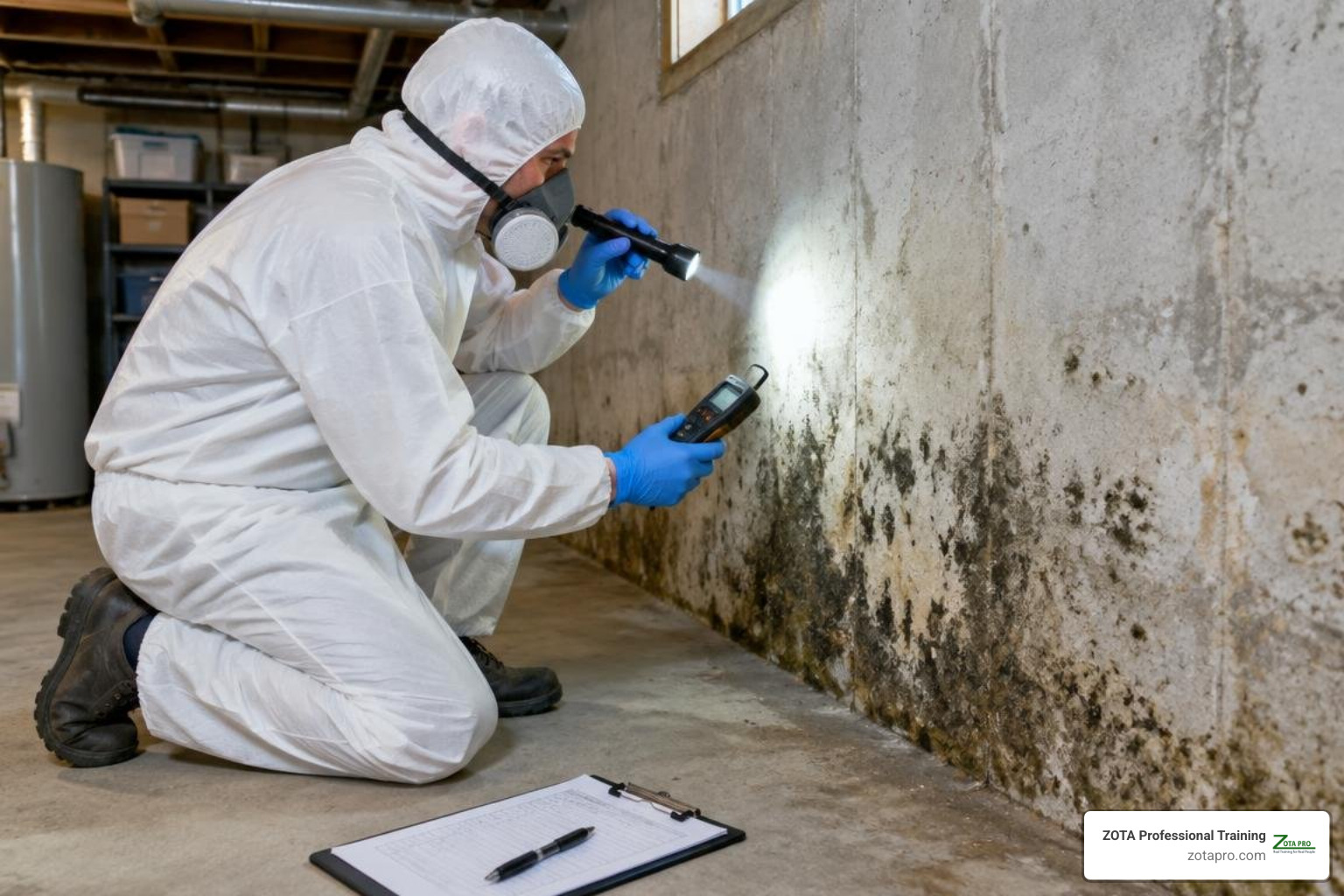
Finding the right course requires matching your professional ambitions with regulatory realities. Whether you plan to launch an independent assessment firm or add moisture testing to your contracting business, following a structured mold certification guide ensures you meet industry standards.
How to choose a mold inspector course online for your career goals
To select the ideal program, evaluate these key dimensions:
- Industry Alignment: Ensure the syllabus covers moisture meters, thermal imaging, spore traps, and sample handling. If you work in insurance adjusting, restoration, or commercial facility management, verify that your training aligns with relevant risk-assessment standards.
- Curriculum Depth: Look for courses covering building science, airflow dynamics, common species (such as Stachybotrys, Aspergillus, and Cladosporium), and report writing.
- Format Flexibility: While online courses provide convenience, weigh the benefits of online versus in-person mold training to decide if you need hands-on equipment practice.
- Field Reference Materials: A quality course supplies inspection checklists, chain-of-custody forms, and standard report templates, such as those found in a professional mold inspection field guide.
Before enrolling: licensing, recognition, renewal, and career scope
Before purchasing any training, confirm the regulatory environment in your target operating area. Private certificates (such as CMI or NCMI) prove competency in unregulated states, but operating without a state license in regulated states (like NY, FL, or TX) carries legal penalties.
Inspectors must also plan for credential maintenance. Most certifying bodies require annual dues and ongoing education, while licensed states mandate periodic mold certification renewal courses to maintain legal standing.
Finally, maintain strict professional boundaries: in most regulated markets, performing both assessment and remediation on the same property represents an unethical conflict of interest.
At ZOTA Professional Training, we provide flexible, multilingual (English and Spanish) training options with nationwide support to help you achieve your career goals. Explore our accredited mold certification programs today to build a compliant, successful inspection career.