Why Mold Certification Matters for Contractors and Inspectors
Mold certification is the credential that proves you’re qualified to inspect, test, or remediate mold in residential and commercial buildings. If you’re a contractor or inspector looking to get certified, here’s the fast answer:
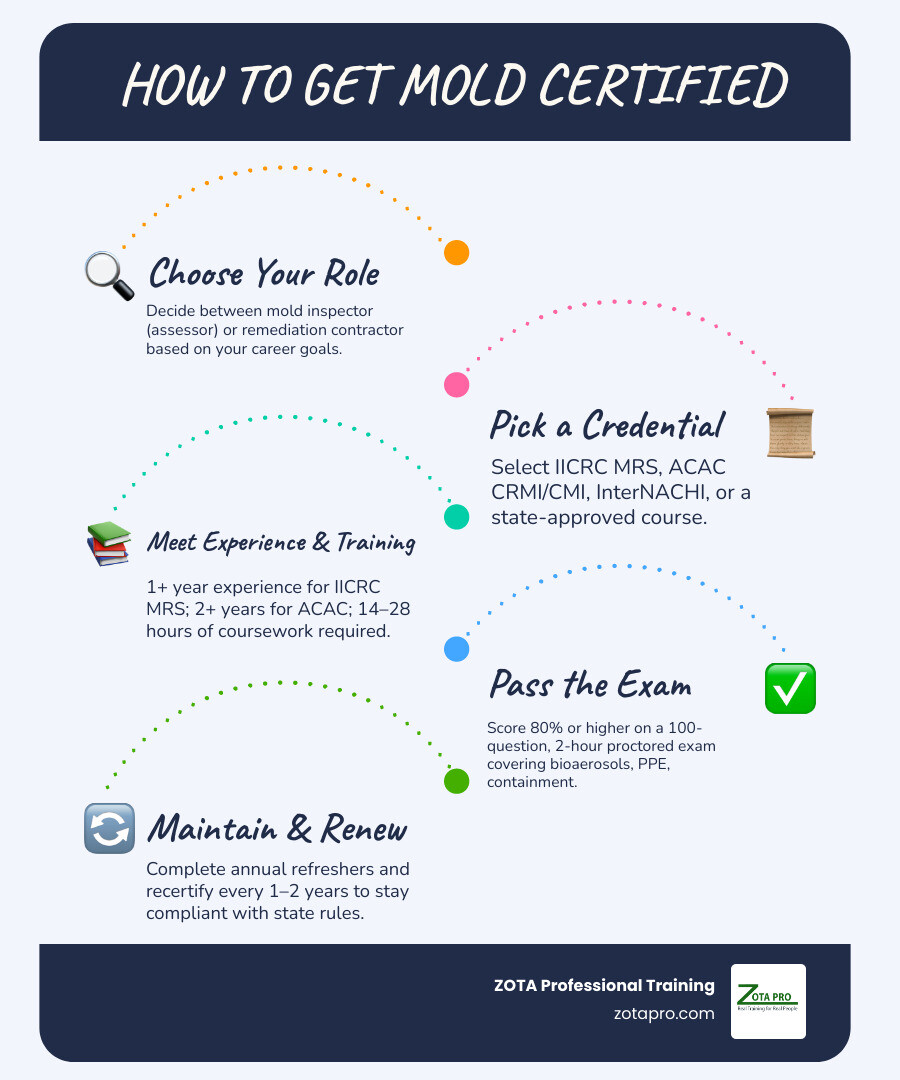
How to get mold certified (quick overview):
- Choose your role — mold inspector (assessor) or mold remediation contractor
- Pick your certification — IICRC MRS, ACAC CRMI/CMI, InterNACHI, or a state-approved course
- Meet experience requirements — ranges from 1 year (IICRC MRS) to 2+ years (ACAC CRMI/CMI)
- Complete required training — minimum 14 hours for inspectors, 28 hours for contractors
- Pass the exam — typically 80% or higher passing score
- Meet state licensing rules — required in states like New York, Florida, and Texas
- Maintain your credential — annual refresher training and recertification every 1–2 years
Mold is a serious issue in both residential and commercial buildings — and the demand for qualified professionals is growing. Whether you’re a renovation contractor working on older homes or a home inspector adding new services, getting certified opens doors to more jobs, higher credibility, and legal compliance.
Not all certifications are equal. Some are experience-based (like the IICRC MRS). Others require formal coursework, board approval, or state licensing on top of a national credential. Knowing which path fits your work is the first step.
I’m Bob Zak, Founder and CEO of ZOTA Professional Training, with over 32 years of experience in occupational health and safety — including deep expertise in mold certification training for contractors and field professionals. In this guide, I’ll walk you through every major credential, requirement, and decision point so you can choose the right path for your career.
The Importance of Professional Mold Certification and Industry Standards
In our industry, safety and credibility are everything. Having a recognized mold certification shows clients, insurance companies, and regulatory agencies that we don’t just “guess” when we find mold — we follow rigorous, science-backed protocols.
Historically, the restoration industry was a bit of a Wild West. Early water damage standards evolved into specialized guidelines as the risks associated with mold exposure became clearer. Today, professional mold work is governed by respected benchmarks like the ANSI/IICRC S520 Standard and the R520 Reference Guide.
According to the S520 – IICRC standard, modern mold remediation has shifted away from simply measuring the physical size of the mold. Instead, professionals use a “condition-based assessment.” This system categorizes indoor environments into three distinct levels:
- Condition 1 (Normal): An environment with normal fungal ecology.
- Condition 2 (Settled Spores): An environment contaminated with settled mold spores or fragments that resulted from nearby mold growth.
- Condition 3 (Active Growth): An environment with active visible or hidden mold growth.
To understand which credential fits your specific business goals, check out our guide on mold certification-types-explained-which-one-do-you-need. It is also vital to understand the difference between Abatement Vs Remediation so you can communicate clearly with your clients. For a deeper dive into the science behind these standards, you can preview the REFERENCE GUIDE FOR PROFESSIONAL MOLD REMEDIATION .
Mold Inspector vs. Mold Remediation Contractor Roles
Before you sign up for a training course, you must decide which side of the industry you want to operate on. To prevent unethical practices, the industry maintains strict boundaries between the professional who inspects the mold and the professional who cleans it up.
- Mold Inspector (Assessor): This professional investigates microbial issues, performs mold testing, interprets laboratory bioaerosol results, and designs the cleanup protocol.
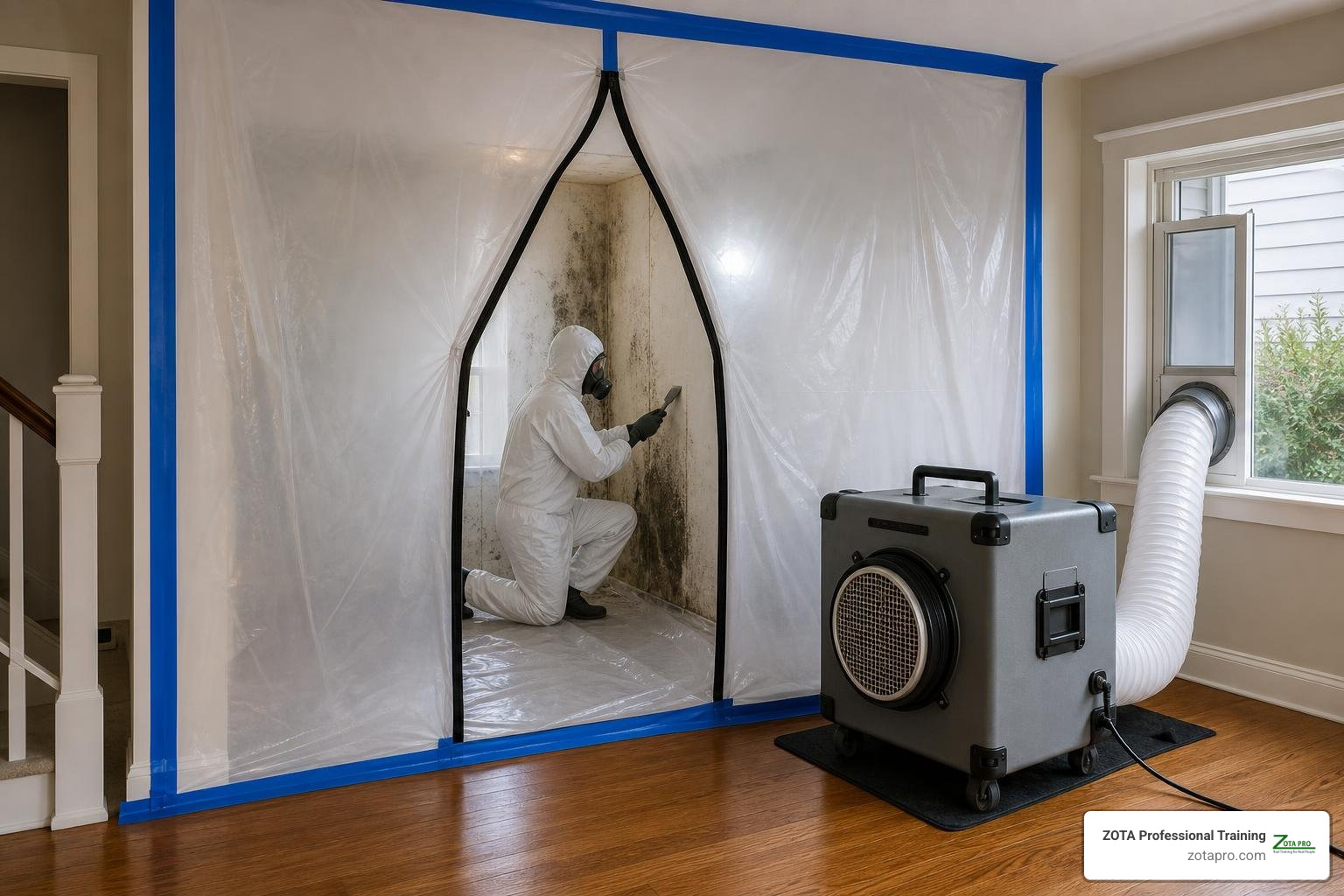
- Mold Remediation Contractor: This professional sets up containment zones, establishes negative air pressure, and physically removes the contaminated materials.
To avoid a direct conflict of interest, a licensee cannot perform both mold inspection and mold remediation on the same project. Doing so is illegal in several states. If you inspect a property and write the cleanup plan, you must hand the physical cleanup work to an independent contractor.

To help you decide which path to take, we have detailed guides on Mold Inspector Certification Requirements Building Professionals as well as the practical Mold Remediation Training Skills Contractors Gain From Certification.
Top Credentials: IICRC MRS and ACAC Mold Certification Options
There are several highly respected national certifying bodies. Choosing the right one depends on your experience level and career goals.
IICRC Mold Remediation Specialist (MRS)
The IICRC MRS is an elite, experience-first credential. Unlike other certifications, there is no preparatory course or official study guide. It is designed to validate the skills of professionals who already have at least one year of verifiable field experience. You can learn more directly on the MRS – IICRC page.
ACAC Certifications
The American Council for Accredited Certification (ACAC) offers prestigious credentials that are independently accredited by the Council for Engineering and Scientific Specialty Boards (CESB).
- Council-certified Residential Mold Inspector (CRMI): Requires 2 years of field experience.
- Council-certified Microbial Investigator (CMI): Designed for broader indoor air quality sampling, requiring 2 years of experience.
- Council-certified Microbial Consultant (CMC): An advanced designation requiring 8 years of field experience.
You can explore these options at About ACAC — American Council for Accredited Certification and read about their specialized consulting tracks at Microbial Consulting — American Council for Accredited Certification .
InterNACHI and OSHA Pros
If you are a home inspector looking to add mold testing to your services, InterNACHI offers excellent foundational courses. For those focused on workplace safety compliance, OSHA Pros provides online safety courses that align with standards like 29 CFR 1910.141. For a detailed breakdown, see our Step By Step Guide To Osha Mold Remediation Certification.
How to Get Certified: Requirements, Exams, and State Regulations
Getting certified requires navigating eligibility rules, passing exams, and ensuring you meet local state laws.
If you are ready to take the next step, our primary mold certification page lists upcoming courses. We also recommend reading our guide, Want To Get Mold Certified Heres How To Do It The Right Way.
Eligibility and Experience Requirements for Mold Certification
The eligibility requirements vary depending on the credential you target:
- IICRC MRS: Requires a minimum of one (1) year of verifiable mold remediation field experience. The IICRC calculates this by the span between your first documented job and your last documented job (which must be at least 12 months apart).
- ACAC CRMI / CMI: Requires 2 years of field experience. However, ACAC allows you to substitute college credits in “hard” sciences (like biology or chemistry) for experience. They grant 2 years of experience for 15 college semester hours and 4 years of experience for 30 semester hours. Regardless of your education, you must still have at least 1 year of hands-on field experience.
- ACAC CMC: Requires 8 years of experience (or a combination of college credits and field experience).
If you are debating between starting online or in-person, check out our analysis: Can I Get Mold Certified Online Pros Cons Of Online Vs In Person.
The Application, Fees, and Examination Process
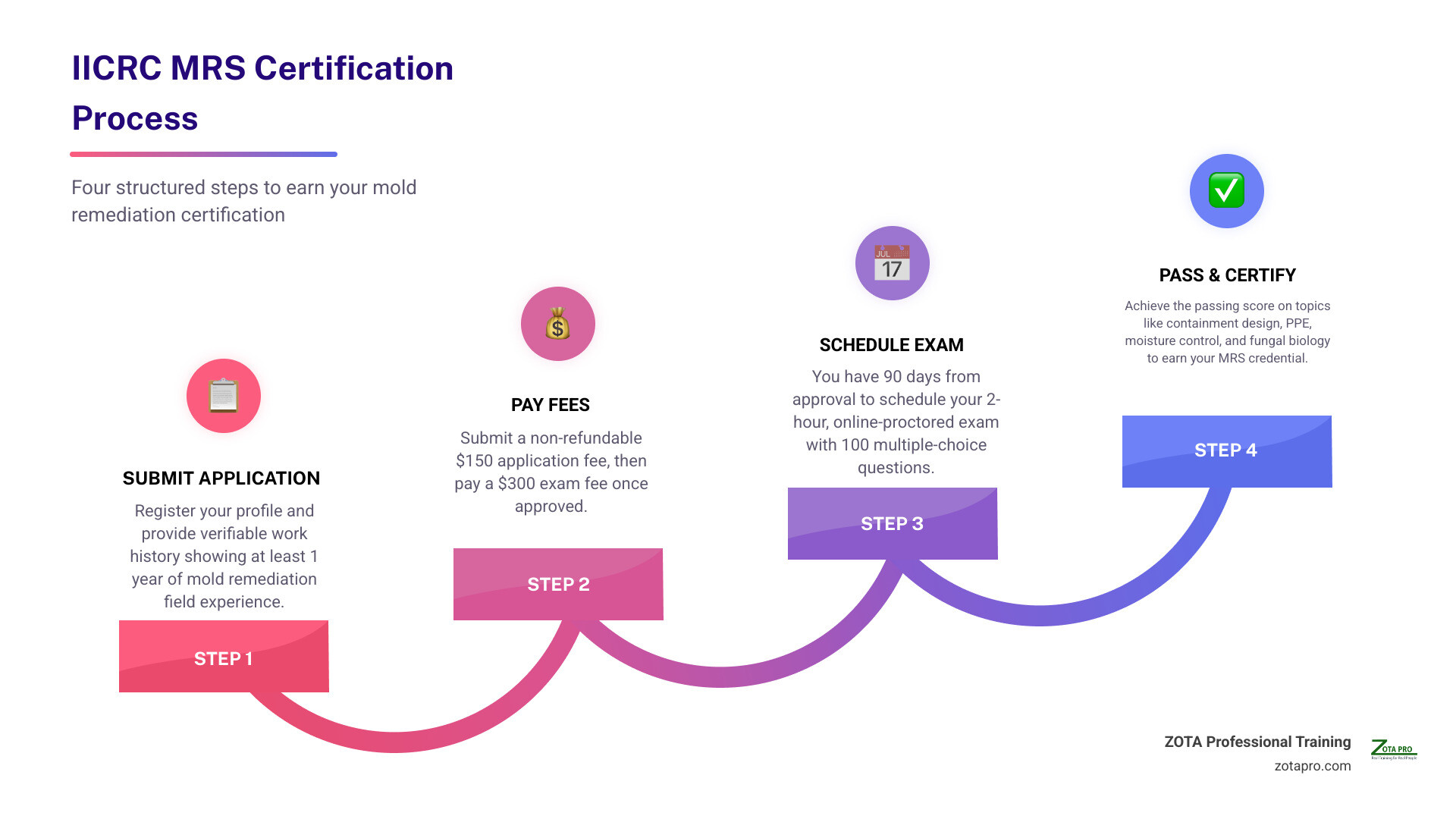
For experience-based certifications like the IICRC MRS, the process is highly structured:
- Submit Application: Register your profile and submit your work history.
- Pay Application Fee: A non-refundable $150 application fee is required.
- Pay Exam Fee: Once approved, you pay a $300 examination fee.
- Schedule Exam: You have 90 days from approval to schedule and pass your exam.
The MRS exam is a 2-hour, online-proctored test consisting of 100 scored multiple-choice questions. Because it is based on a US-specific job analysis, the exam is administered in US English using Imperial measurements.
The exams cover critical topics including:
- Fungal biology and health effects
- Designing containment zones and using negative air machines
- Personal Protective Equipment (PPE) and respirators
- Moisture control and building science
State Licensing, Continuing Education, and Ethical Rules
While national certifications are excellent, several states legally require a state-specific license to practice. States like New York, Florida, and Texas have strict laws.
Under standard regulatory guidelines (which you can review in the Mold Inspection and Remediation Rules ), there are specific training hour requirements:
- Mold Inspectors: Must complete at least 14 hours of initial training and pass a 25-question exam with a score of 80% or higher.
- Remediation Contractors: Must complete at least 28 hours of initial training and pass a 50-question exam with a score of 80% or higher.
The 20 Square Feet Exemption
In most regulated areas, a person is not required to be licensed to perform mold remediation if the mold contamination affects a total surface area of less than 20 contiguous or cumulative square feet within a single indoor air environment. Anything larger requires a licensed professional.
To maintain your credentials, you must keep up with continuing education:
- State Licenses: Typically require a 7-hour refresher course every year. You can read more about New York’s specific rules in our guide on New York Mold Licensing Requirements For Assessors Contractors And Workers and learn When Do You Need A Mold Certification Refresher Course.
- ACAC Certifications: Require recertification every two years, which includes submitting 40 hours of professional development activities (an average of 20 hours per year).
Choosing the Right Training Program for Your Career
At ZOTA Professional Training, we provide flexible, high-quality, and bilingual (English/Spanish) training options to help you meet state licensing and certification goals. Whether you want to focus on assessments or physical remediation, we have the right initial courses for you.
Get started today by enrolling in our mold certification/assessor-initial-course or our comprehensive mold certification/remediation-contractor-initial-course. We offer hybrid learning options and group training with nationwide support to fit your busy schedule!