

When Was Lead-Based Paint Banned, and Why Does It Still Matter?
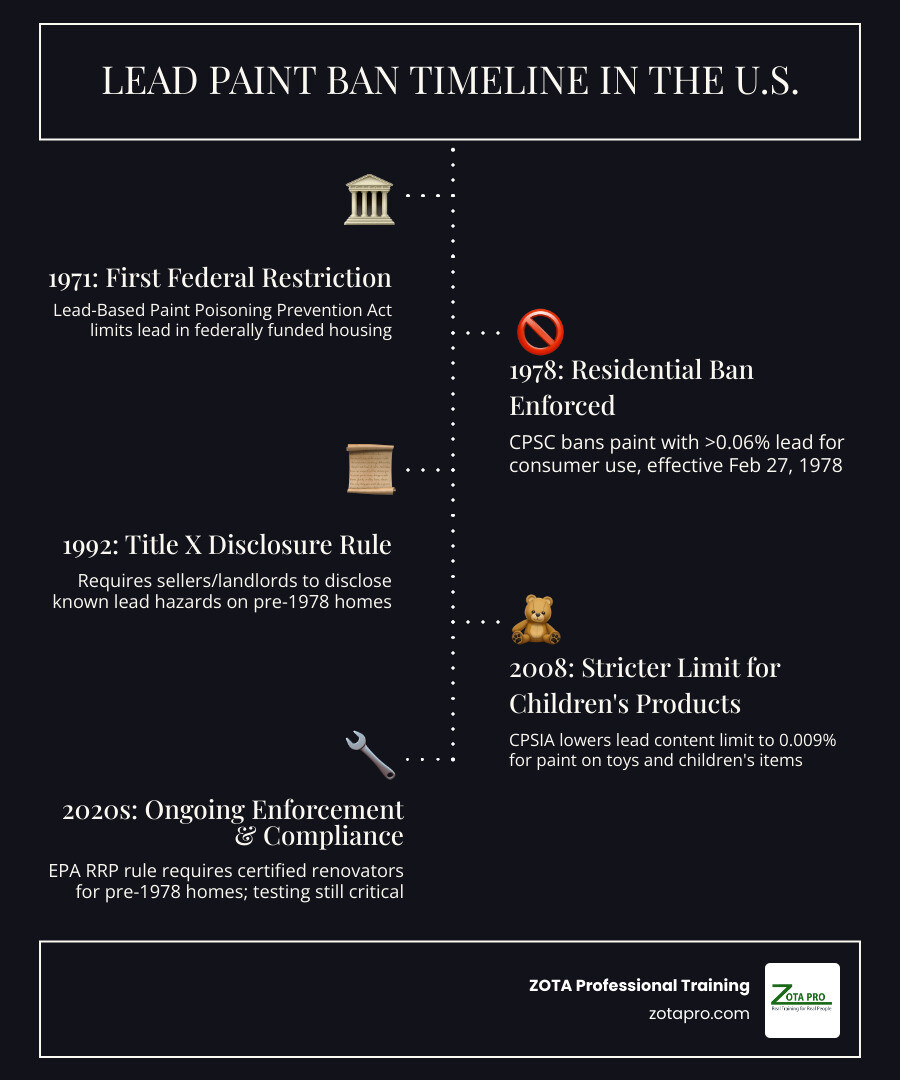
Lead-based paint was banned for residential use in the United States on February 27, 1978. That is when a Consumer Product Safety Commission rule took effect, prohibiting consumer paint with more than 0.06% lead. The rule did not remove paint already on walls, so homes built before 1978 may still contain it.
For contractors, the key question is not just when the ban happened. It is whether a renovation could disturb old paint and create lead dust. Testing before work and following lead-safe renovation rules help protect the people who live there and the crew doing the job.
I’m Bob Zak, founder of ZOTA Professional Training, with more than 32 years of occupational health and safety experience, including work as Ramsey County’s occupational health and safety manager. I help contractors who ask “when was lead based paint banned” understand what that date means for work on older homes.
When Was Lead Based Paint Banned in the United States?

The landmark federal ruling restricting residential lead paint was issued by the U.S. Consumer Product Safety Commission (CPSC) under the authority of the Consumer Product Safety Act. Codified under 16 CFR 1303.1 scope and consumer product safety standards, the final regulation formally went into effect on February 27, 1978.
Before this national standard, manufacturers added heavy concentrations of lead pigments—often making up 10% to 50% of the dry paint film—because it dried quickly, resisted moisture, and held vibrant pigments. Gaining a full understanding of lead-based paint requires recognizing that the 1978 ban targeted future sales and manufacturing of consumer coatings rather than mandating the immediate removal of existing layers on existing properties.
Regulatory History: When Was Lead Based Paint Banned from Federal Housing to Consumer Goods?
The path toward eliminating leaded coatings involved multiple federal milestones:
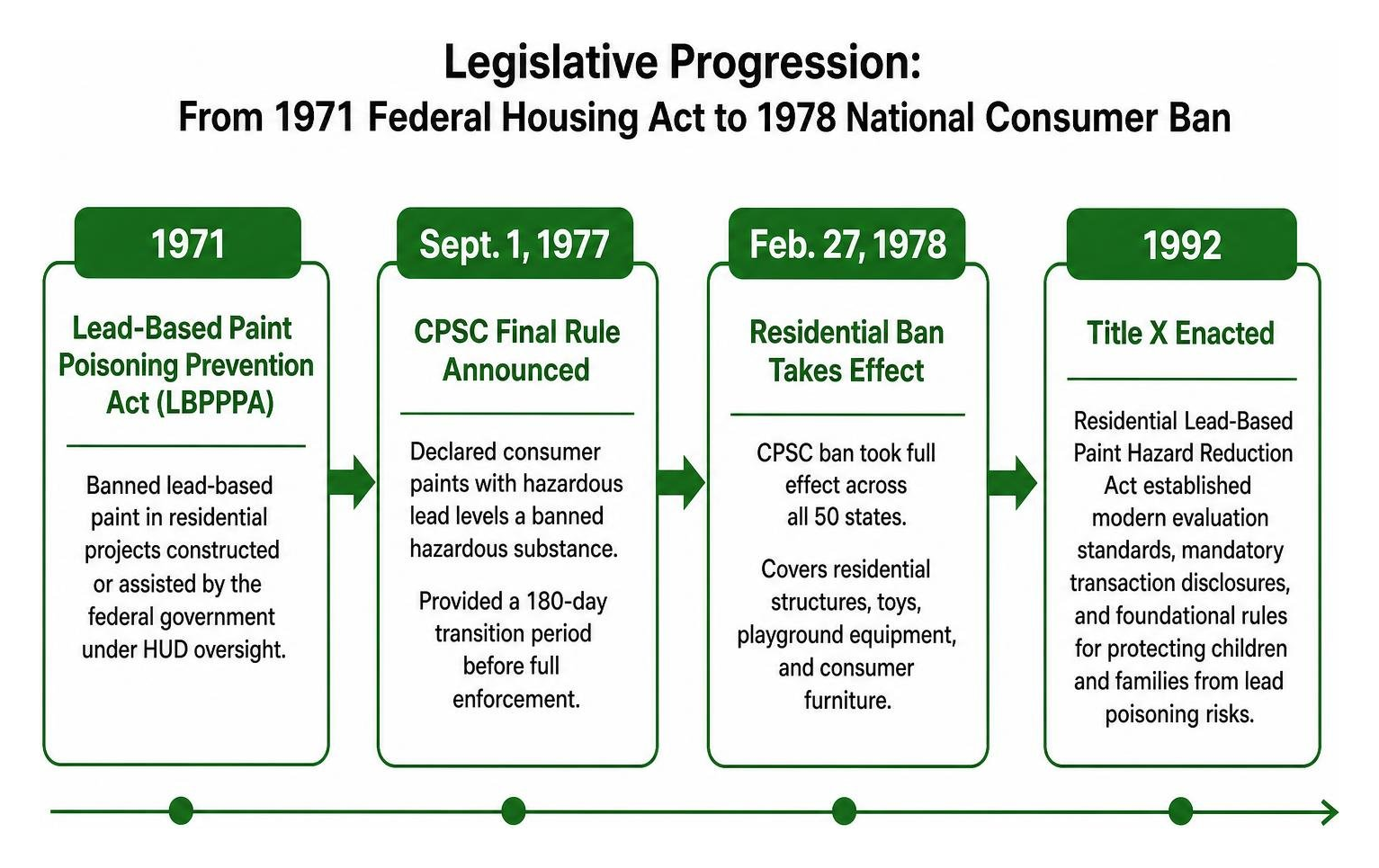
- 1971: Congress passed the Lead-Based Paint Poisoning Prevention Act (LBPPPA), which banned lead-based paint in residential projects constructed or assisted by the federal government under the oversight of the Department of Housing and Urban Development (HUD).
- September 1, 1977: The CPSC announced its final rule declaring consumer paints with hazardous lead levels a banned hazardous substance, providing a 180-day transition period before full enforcement.
- February 27, 1978: The CPSC residential ban took full effect across all 50 states, covering residential structures, toys, playground equipment, and consumer furniture.
- 1992: Congress enacted Title X (the Residential Lead-Based Paint Hazard Reduction Act), establishing modern evaluation standards, mandatory transaction disclosures, and foundational rules for protecting children and families from lead poisoning risks.
These evolving laws set clear safety standards for living in a house with lead paint, addressing the millions of residential units built prior to federal intervention.
Standards and Exemptions: What Applies Today Versus When Was Lead Based Paint Banned?
The legal definition of what constitutes a hazardous lead level has tightened significantly over the decades. The table below illustrates the historical progression of allowable lead thresholds:
| Era / Regulation | Allowable Lead by Weight | Parts Per Million (ppm) | Scope & Application |
|---|---|---|---|
| Pre-1970s Industry Practice | Up to 50.0% | Up to 500,000 ppm | Standard residential interior and exterior oil paints |
| 1971 Federal Housing Act | 0.5% | 5,000 ppm | Federally constructed or assisted housing units |
| 1978 CPSC Ban | 0.06% | 600 ppm | Consumer paints, residential properties, toys, and furniture |
| 2008 CPSIA (Effective Aug 14, 2009) | 0.009% | 90 ppm | All modern consumer paints and surface coatings |
While consumer coatings must comply with the strict 90 ppm ceiling, the CPSC exempted specific non-consumer applications where alternative pigments were historically impractical, provided they carry clear warning labels:
- Industrial and agricultural equipment coatings
- Marine finishes and anti-corrosive bridge paints
- Artists’ specialized oil paints and graphic arts coatings
- Lead-bearing backing coats on traditional glass mirrors
- Touch-up coatings for metal appliances and lawn equipment
Understanding these distinctions helps property owners and tradespeople in preventing toxic lead paint exposure and guarding against the severe dangers of lead that remain present in legacy structures.
Modern Regulations, Safety Standards, and Protecting Your Property Today
Today, approximately 29 million housing units across the United States still harbor lead-based paint hazards, including peeling coatings and contaminated micro-dust. Nearly 2.6 million of these properties house young children, who are uniquely vulnerable to developmental and neurological damage from lead ingestion.
Age is the strongest indicator of potential risk:
- Homes built before 1940: 87% chance of containing lead-based paint
- Homes built between 1940 and 1959: 69% chance
- Homes built between 1960 and 1977: 24% chance
Intact lead paint resting on stationary walls poses minimal immediate danger. The real hazard emerges when friction surfaces (such as double-hung window sashes, doors, and stair treads) grind against each other or when uncontained remodeling creates fine dust. Reviewing home renovation lead paint safety guidelines and mastering core lead paint rules and compliance requirements ensures that updates to older properties proceed without endangering occupants.
Pre-1978 Home Risks, Detection Methods, and Safe Remediation
Before launching any project that disturbs painted surfaces in pre-1978 structures, property owners should establish an accurate assessment using professional testing protocols:
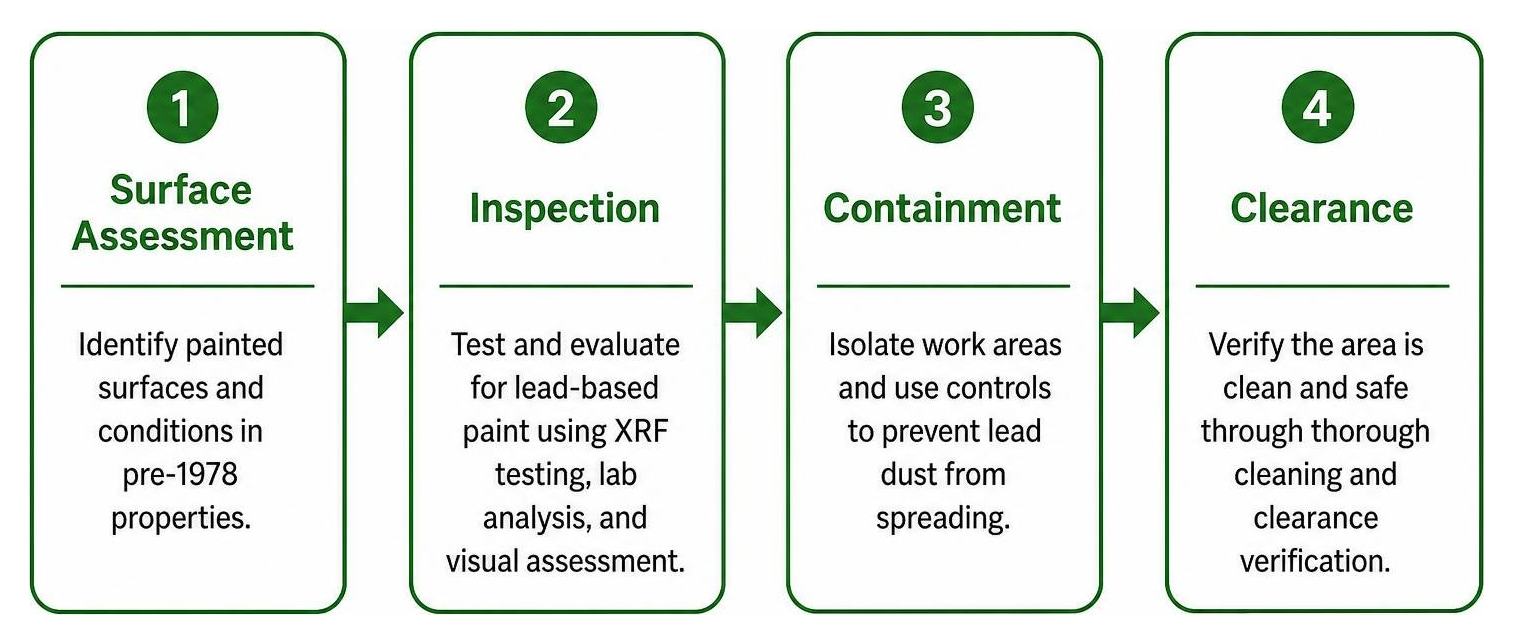
- X-Ray Fluorescence (XRF) Testing: A certified inspector uses a non-destructive XRF analyzer to detect lead concentrations within underlying paint layers. Paint is legally classified as lead-based if it measures at or above 1.0 mg/cm² or 0.5% by weight (5,000 ppm).
- Laboratory Paint Chip Analysis: Small paint samples are carefully extracted and sent to an accredited environmental testing laboratory for chemical verification.
- Visual Risk Assessments: Inspectors apply standard procedures like the HUD Visual Assessment Training protocol to locate chipping, peeling, or deteriorating substrates.
If lead is verified, mitigation generally falls into two categories:
- Interim Controls: Temporary containment measures, such as wet cleaning, stabilizing loose chips, or encapsulating and painting over lead paint using specialized elastomeric liquid coatings.
- Permanent Abatement: Long-term elimination through total component replacement (e.g., removing old window frames), mechanical stripping with local HEPA exhaust, or permanent enclosure behind new drywall.
Real Estate Disclosures and Contractor Compliance Mandates
Federal law imposes strict disclosure rules on residential property transactions to ensure buyers and tenants are fully informed:
- The Lead Disclosure Rule (Section 1018 of Title X): Sellers and landlords of target housing constructed before 1978 must disclose all known lead-based paint records, provide an official EPA-approved information pamphlet (Protect Your Family From Lead in Your Home), include a formal Lead Warning Statement in the lease or contract, and grant buyers a 10-day period to conduct an independent inspection.
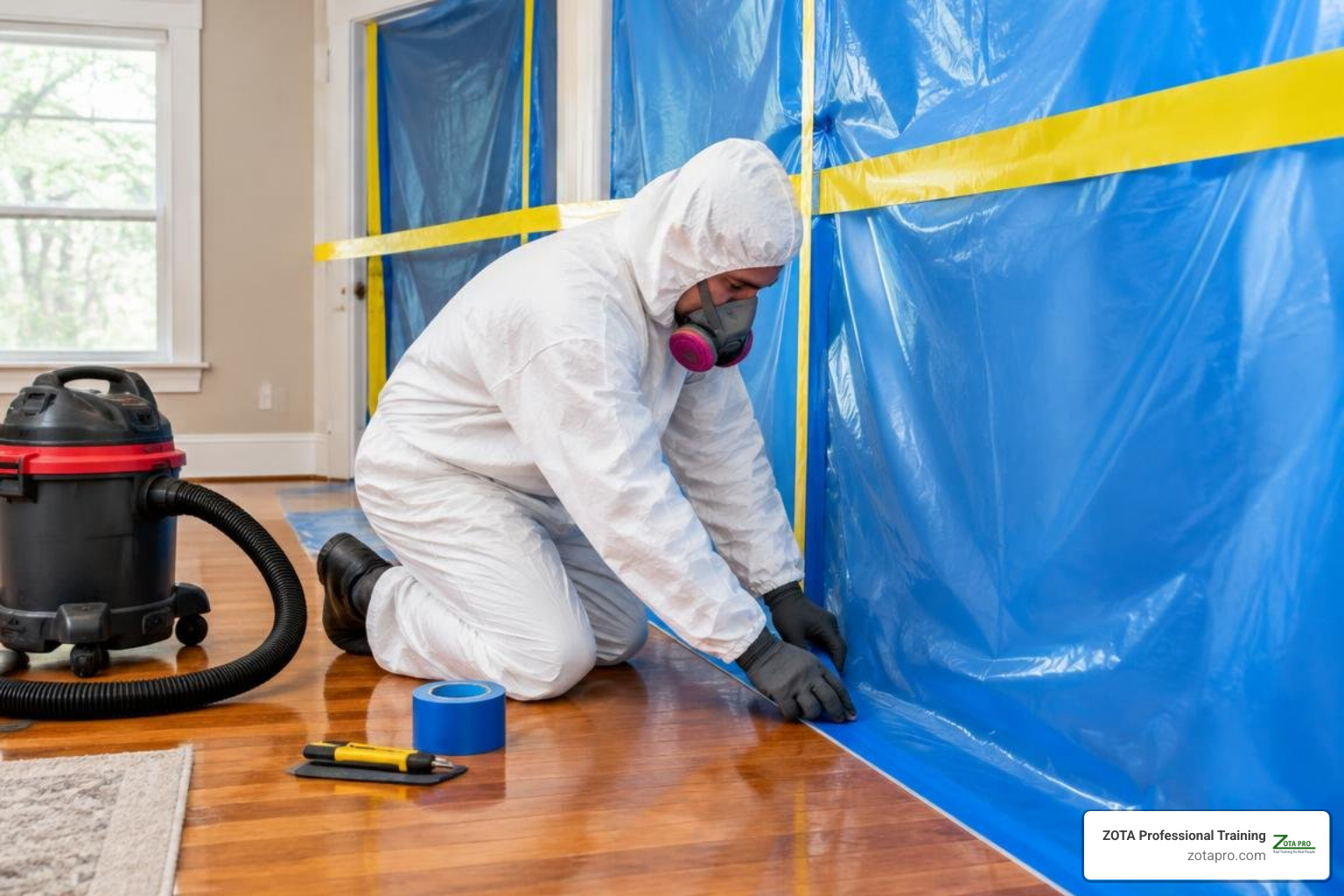
- The EPA Renovation, Repair, and Painting (RRP) Rule: Enacted under federal authority, this regulation requires that any paid firm disturbing more than 6 square feet of interior paint or 20 square feet of exterior paint in pre-1978 housing or child-occupied facilities be certified and use trained renovators who implement strict containment and HEPA cleanup protocols.
Failing to follow the mandatory lead paint disclosure process can trigger severe federal civil penalties, stop-work orders, and liability claims. Contractors and property managers can consult our comprehensive EPA Lead Renovation Complete Guide to ensure every job site meets current environmental safety benchmarks.
At ZOTA Professional Training, we deliver EPA-accredited initial and refresher certification courses in flexible online, hybrid, and bilingual (English/Spanish) formats. Whether you manage a nationwide maintenance crew or operate as an independent general contractor, our programs provide the practical training and regulatory credentials you need to work safely and remain fully compliant on every pre-1978 property.