
Find the Right EPA Lead Renovator Class Before Work Starts
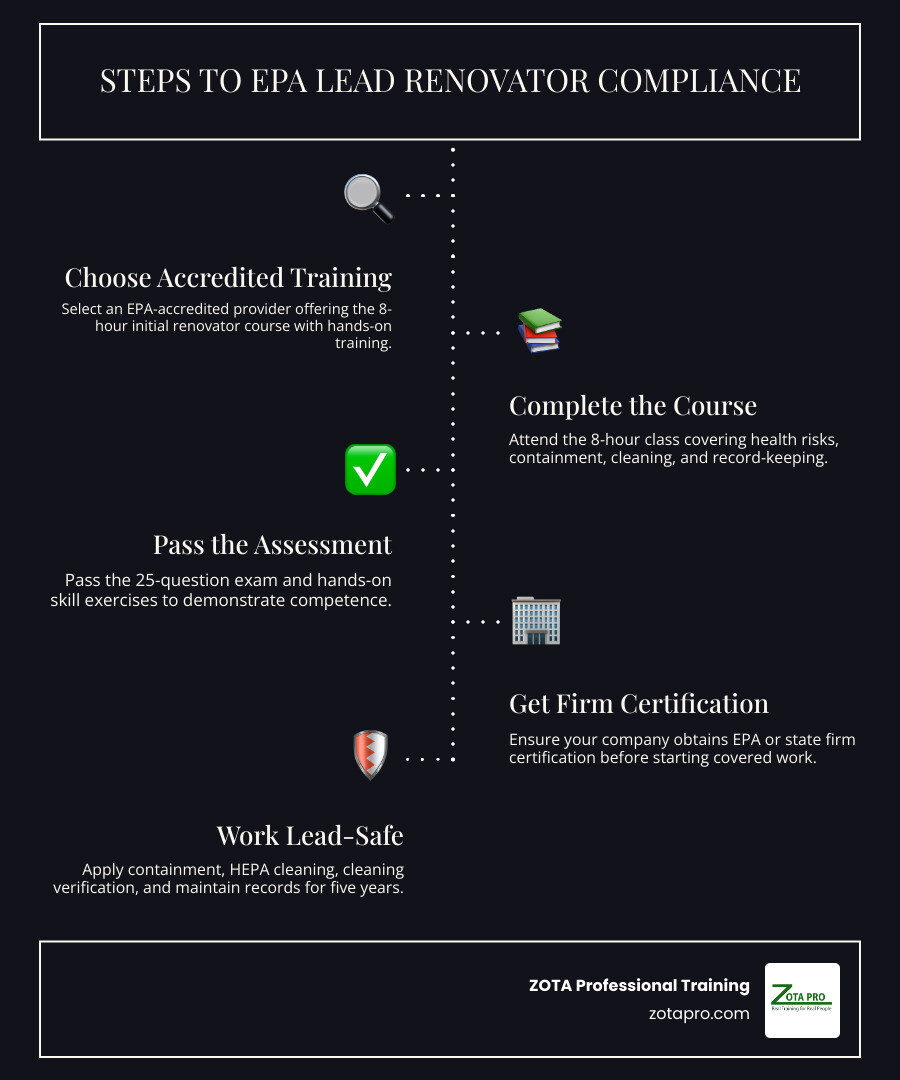
An EPA lead renovator class is the training contractors need to supervise lead-safe renovation, repair, and painting work in most pre-1978 homes and child-occupied facilities. To get started, choose an EPA-accredited provider, complete the 8-hour initial course with hands-on training, pass the course assessment, and make sure your company also has the required EPA or state firm certification before taking covered jobs.
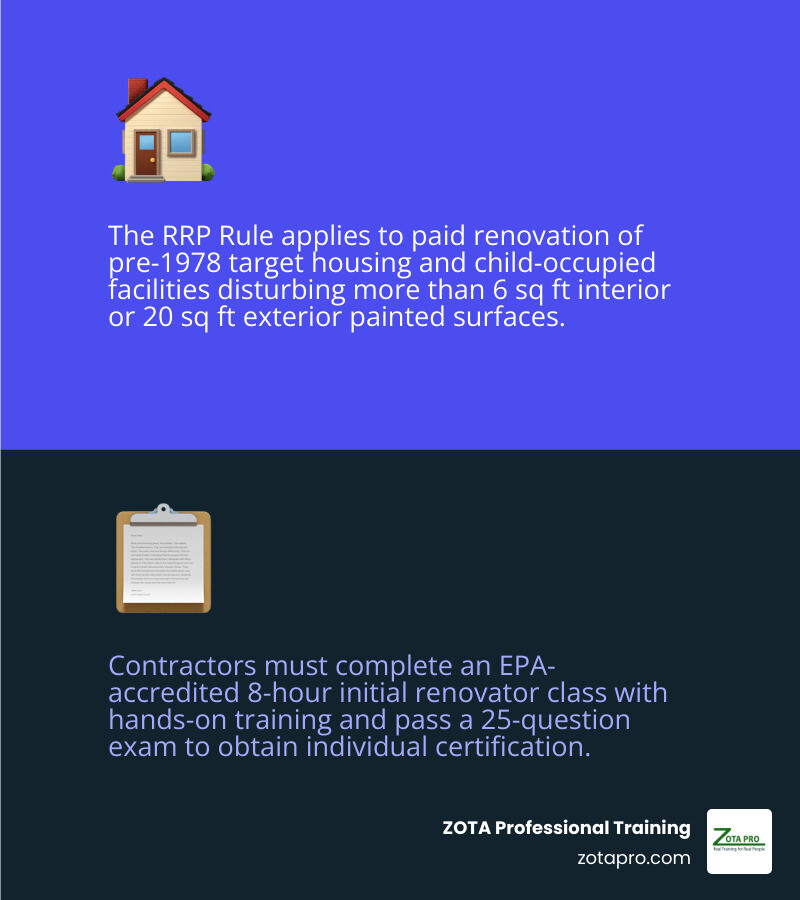
This matters when work disturbs more than 6 square feet of interior painted surface or 20 square feet of exterior painted surface. Window replacement can trigger the rule too. A trained certified renovator helps your crew control dust, protect occupants, document the job, and avoid expensive compliance problems.
The class is not just about passing a test. It teaches the jobsite skills that make lead-safe work practical: setting up containment, using approved test methods, cleaning with the right tools, completing cleaning verification, and keeping records for at least five years.
I am Bob Zak, Founder and CEO of ZOTA Professional Training, with more than 32 years of occupational health and safety experience, including prior work as an Occupational Health & Safety Manager at Ramsey County. Since founding ZOTA in 2004, I have helped contractors build the real-world compliance skills they need from an EPA lead renovator class and related safety training.
Understanding the EPA Lead Renovator Class and RRP Rule Requirements
Working on older residential properties presents unique occupational hazards. Lead-based paint was commonly used across the United States until its residential ban in 1978, leaving a legacy of contaminated dust in millions of structures. To protect building occupants—especially vulnerable children—the Environmental Protection Agency enforces the Renovation, Repair, and Painting (RRP) Rule.
The rule applies to target housing (most residential dwellings built prior to 1978) and child-occupied facilities such as daycares, preschools, and kindergarten classrooms. Under federal regulations, any paid contractor disturbing painted surfaces in these facilities must follow strict lead-safe practices supervised by an individually certified renovator.
Who Must Attend an EPA Lead Renovator Class?
Compliance requirements are broad. The rule applies not just to specialized environmental remediators, but to anyone whose trade disrupts paint in older structures.
Trades that frequently require an individual credential include:
- General contractors and home remodelers
- Residential painters and drywall specialists
- Carpenters and siding contractors
- Window replacement installers
- Electricians and plumbers cutting into walls or ceilings
- Multi-family property managers and maintenance personnel
Understanding the baseline requirements for EPA lead renovator certification helps trade businesses maintain continuous compliance. Federal guidelines detailed by the Lead Renovation, Repair and Painting Program | US EPA require that every covered project assigns at least one certified renovator who oversees containment setup, conducts required testing, trains uncertified workers on-site, and handles post-work cleaning verification.
Key Regulatory Triggers, Penalties, and Firm Certification
The EPA establishes clear disturbance thresholds that trigger mandatory RRP procedures:
- Interior surfaces: Disturbing more than 6 square feet of painted surface per room.
- Exterior surfaces: Disturbing more than 20 square feet of painted surface.
- Special activities: Window replacement projects and partial or full demolition, regardless of surface area.
Failing to comply can result in severe financial penalties. EPA enforcement actions can issue civil fines reaching up to $37,500 or more per violation per day. Beyond federal fines, uncertified contractors face immediate stop-work orders, contract cancellations, and potential licensing suspensions from local municipal agencies.
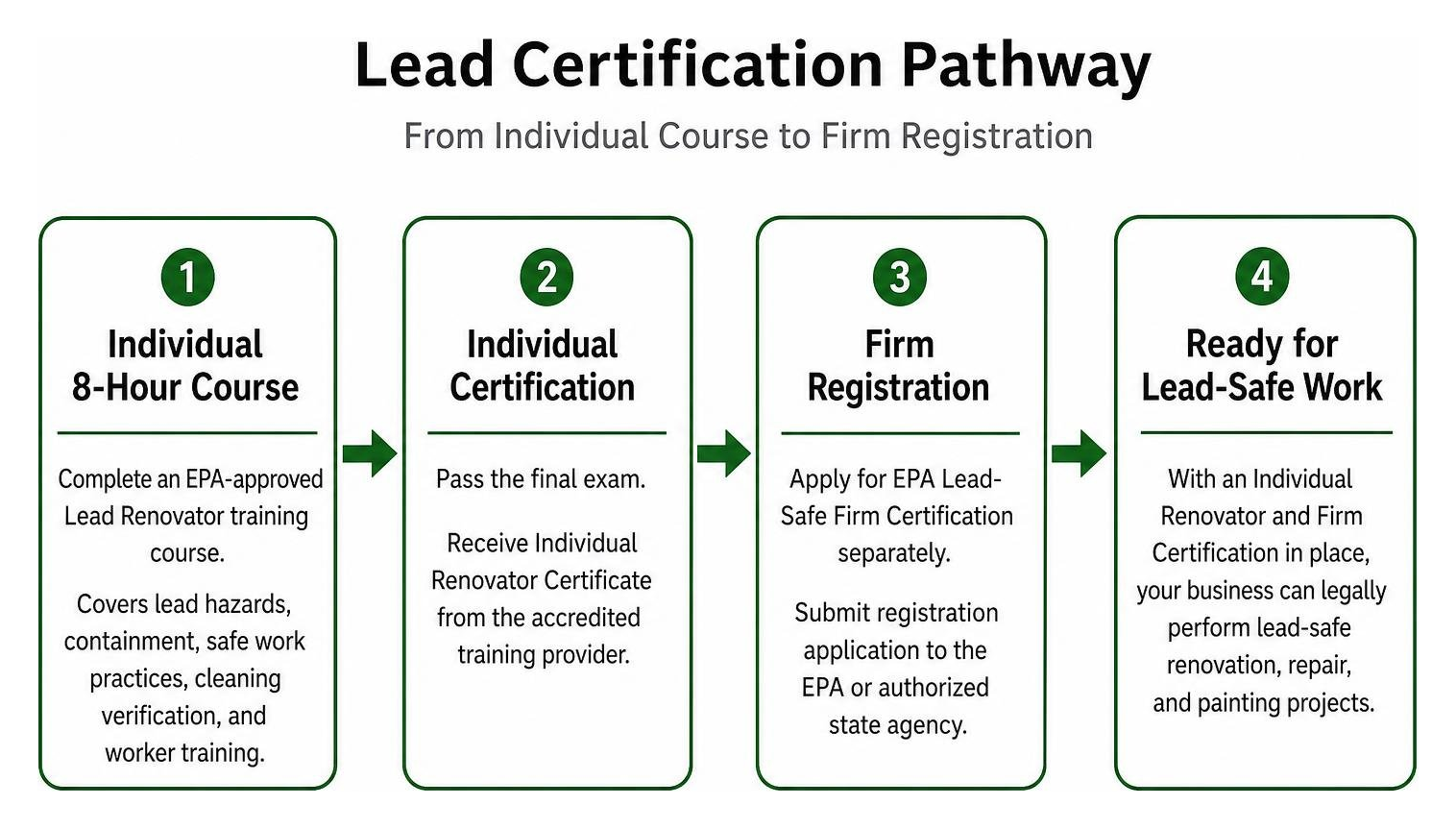
Contractors must also remember that completing an individual training class covers half the legal equation. Following the practical steps to obtain EPA lead certification requires securing both individual renovator credentials and an EPA Lead-Safe Firm Certification. Individual renovator certificates are issued directly by the accredited training provider upon course completion, whereas firm licensing involves a separate registration application submitted directly to the EPA or authorized state agency.
Curriculum Breakdown: What Happens During the 8-Hour Training
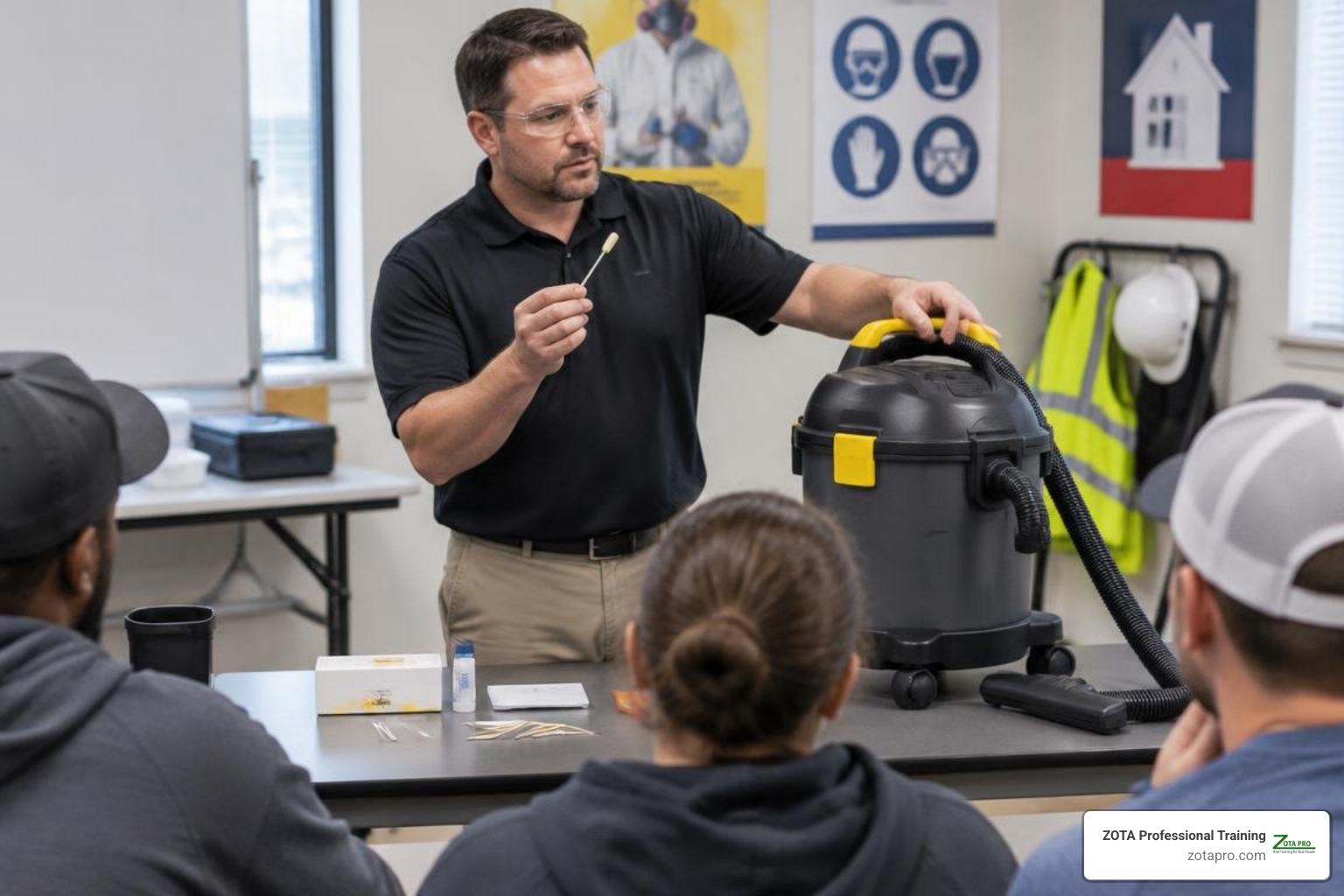
The initial RRP course is an intensive 8-hour program designed to combine theoretical safety principles with hands-on practice. Official instructional frameworks like the Model Renovator Initial Training Course | US EPA ensure students master lead containment, hazard minimization, and verification protocols.
Enrolling in an accredited EPA Lead Renovator Initial Certification Course equips tradespeople with practical jobsite strategies rather than abstract theory.
Core Modules Covered in the EPA Lead Renovator Class
The course curriculum is organized into structured modules guiding students through every project phase:
- Lead Hazards & Health Risks: The physiological impacts of lead dust, including neurological damage, developmental delays in children, and chronic adult health issues.
- Regulations & Standards: How the EPA RRP Rule interacts with the HUD Lead Safe Housing Rule and OSHA construction safety standards.
- Pre-Renovation Education: Distributing the mandatory EPA Renovate Right pamphlet and securing written client acknowledgments.
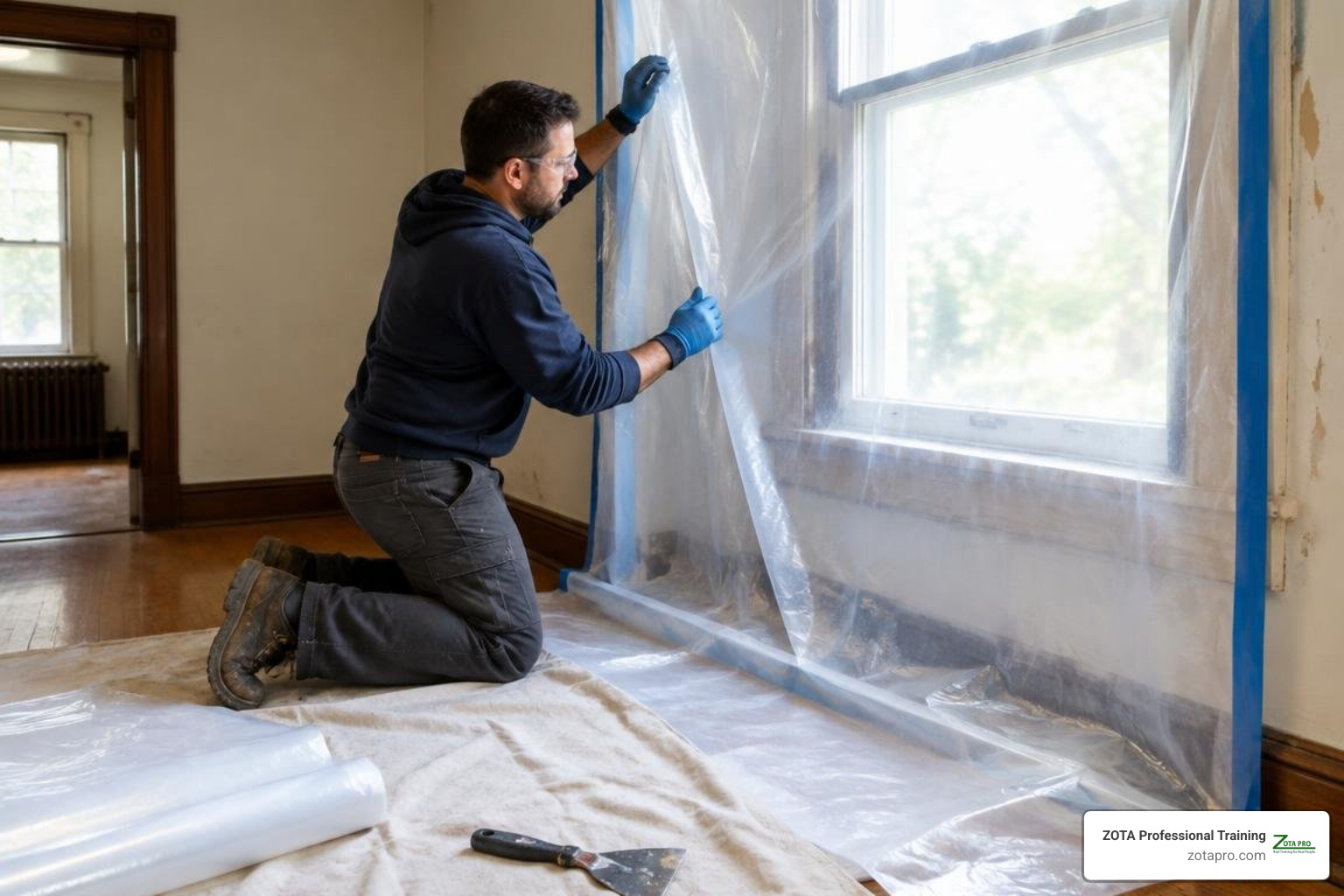
- Containment Techniques: Practical methods for establishing protective poly sheeting barriers on floors, walls, and exterior grounds.
- Dust-Lead Action Levels & Control: Minimizing airborne dust using wet-sanding methods and HEPA-filtered tools, aligned with updated federal dust-lead standards.
- Cleaning Protocols & Verification: Thorough interior cleaning techniques utilizing HEPA vacuums, wet washing, and dry wipe procedures.
- Record Retention: Documenting testing results, worker on-the-job training logs, and cleaning verification checklists, all of which must be retained for at least five years.
Students follow standardized learning materials provided in the Model Renovator Initial Training Course Student Manual during lectures and field reviews.
Mandatory Hands-On Skill Exercises and Testing Procedures
An EPA-accredited course requires a minimum of 2 hours dedicated entirely to hands-on exercises. Trainees interact with equipment and simulate real jobsite conditions.
Critical practical exercises include:
- Testing for Lead: Using EPA-recognized chemical test kits and preparing paint-chip samples for laboratory submission.
- Containment Setup: Constructing containment barriers, sealing interior doors with protective plastic flaps, and covering HVAC vents.
- Exterior Setup: Establishing ground-cover containment extending 10 feet out from working surfaces.
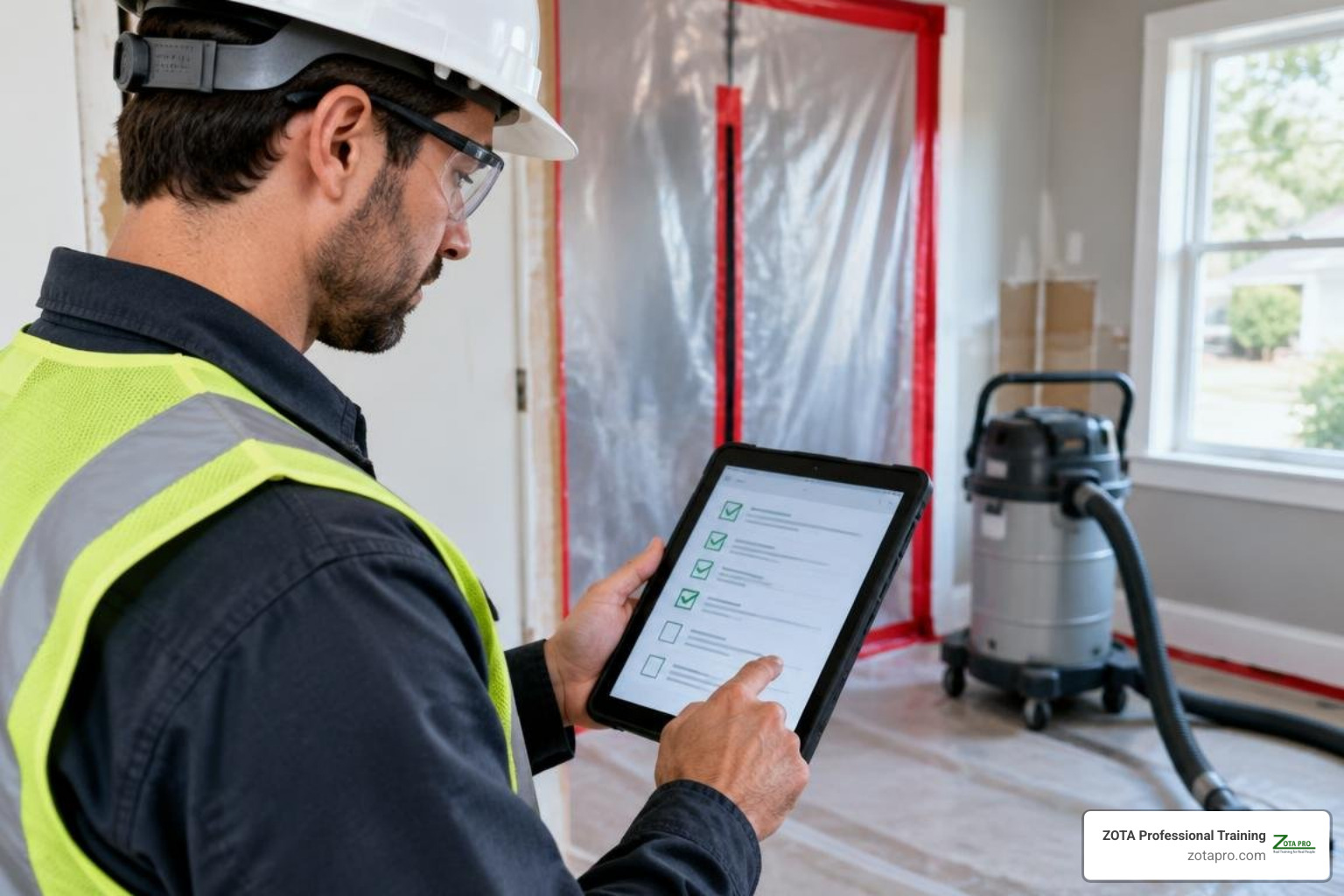
- Cleaning Verification: Using disposable wet wipes alongside official EPA cleaning verification cards to assess post-renovation dust levels.
Instructors guide these practical sessions using the Model Renovator Initial Training Course Instructor Manual. Participating in structured EPA lead renovator hands-on training ensures students gain practical confidence. At the end of the day, students take a 25-question multiple-choice exam covering regulatory thresholds, jobsite setup, and lead-safe practices. Passing the exam and finishing all hands-on exercises earns an immediate individual certification certificate valid for five years.
Certification Renewal, Delivery Formats, and State Reciprocity
Maintaining compliance requires keeping certifications active before they expire. Letting your certificate lapse means retaking the full 8-hour initial course, making proactive renewal planning essential for trade businesses.
| Feature / Metric | Initial Certification Course | Refresher Certification Course |
|---|---|---|
| Course Duration | 8 Total Hours (including hands-on) | 4 Total Hours |
| Hands-On Requirement | Minimum 2 Hours Mandatory | Optional (depending on format) |
| Certification Validity | 5 Years | 5 Years (Hands-on) / 3 Years (Online) |
| Prerequisites | None | Active, Unexpired Renovator Certificate |
| Primary Audience | First-time renovators & lapsed credentials | Currently certified renovators |
| Exam Assessment | 25 Questions Multiple-Choice | 25 Questions Multiple-Choice |
Initial vs Refresher Training Pathways and Expiration Timelines
An initial lead renovator certificate is valid for five years from the date of completion. To remain certified without interruption, renovators must complete an accredited 4-hour refresher course before their original certificate reaches its expiration date.
When it is time to renew, choosing an EPA lead renovator refresher course allows contractors to review updated regulations, refresh safety habits, and extend their credentials. Training materials provided by the EPA/HUD Model Refresher Renovator Training Course | US EPA keep contractors up to date on changes to federal safety standards.
Taking a refresher course with a hands-on component renews your certification for a full five years. In contrast, completing an EPA-approved online refresher without hands-on practice grants a 3-year certification under federal rules.
In-Person vs Hybrid Delivery and State-Specific Rules
Contractors can choose between multiple learning formats depending on state licensing requirements and schedule preferences. Weighing online vs in-person EPA lead certification options helps teams select the most efficient route.
For first-time certification, federal standards permit hybrid formats such as an EPA lead renovator initial online course that covers classroom lectures digitally while completing required hands-on modules in person.
However, state-authorized programs may enforce their own delivery rules:
- North Carolina: The NC Health Hazards Control Unit does not accept online or hybrid training for lead certification; initial and refresher classes must be completed fully in person.
- Washington State: Administers its program through the Department of Commerce, requiring state-specific licensing considerations for local construction projects.
- EPA-Administered States: Accept EPA-accredited in-person and approved hybrid delivery formats across regular jurisdictions.
When evaluating providers, finding the right EPA RRP class involves verifying EPA accreditation, instructor experience, and available language options such as bilingual English and Spanish sessions.
At ZOTA Professional Training, we offer flexible hybrid, classroom, and private group instruction tailored to meet federal and state compliance requirements. To certify your crews or renew existing credentials, schedule EPA lead certification training with our experienced safety instructors today.