

How to Find a Qualified Mold Inspector
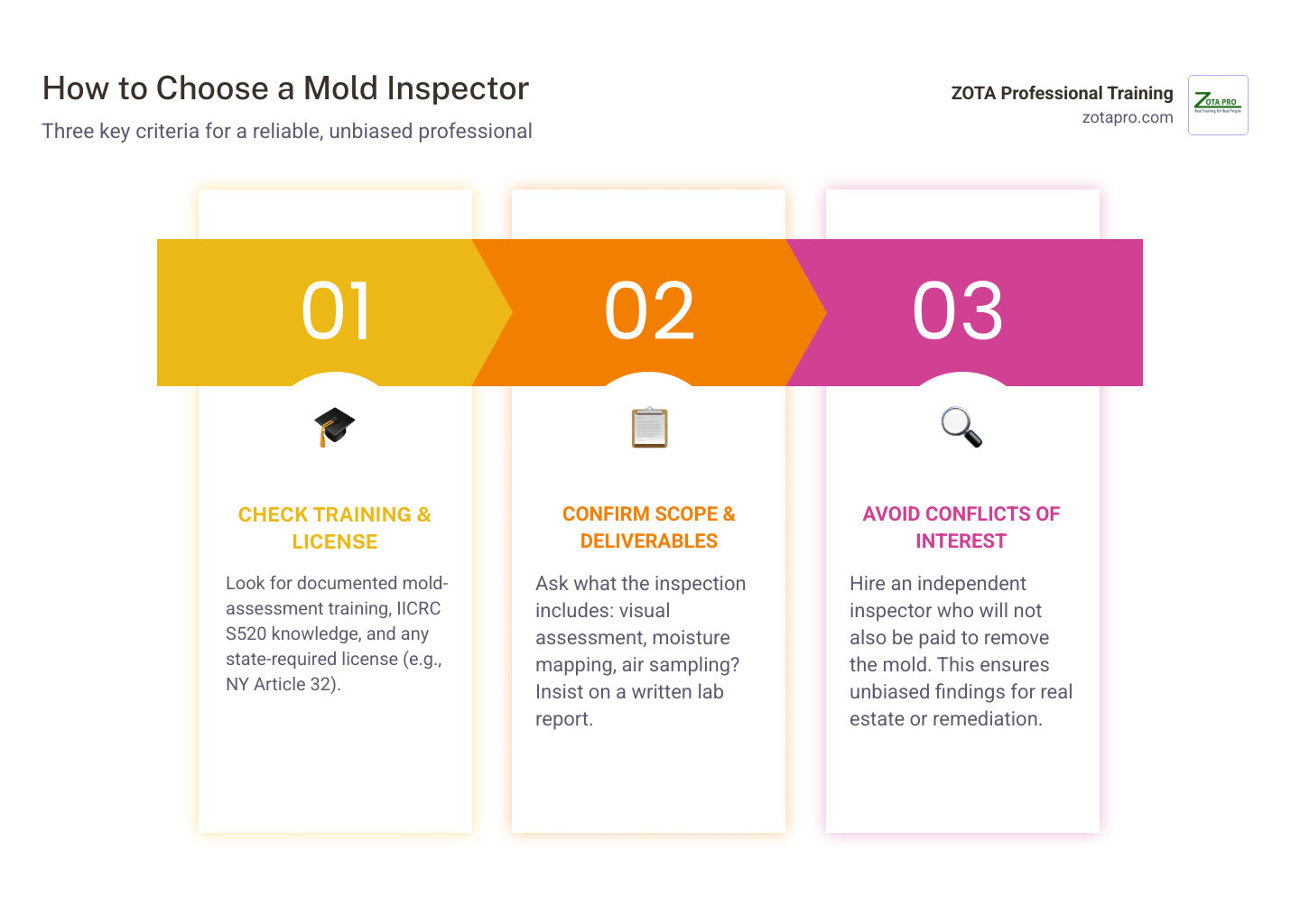
A mold inspector checks a property for visible mold and the moisture problems that let it grow. To hire one, look for documented mold-assessment training, relevant experience, and any license your state requires. Ask what the inspection includes, when samples would be useful, and whether you will receive a written report. For an unbiased assessment, choose an inspector who will not also be paid to remove the mold.
If a renovation site has a musty smell or a history of leaks, finding the water source matters as much as identifying the growth. A good inspection gives you clear findings to guide the next step.
I’m Bob Zak, founder of ZOTA Professional Training. I’ve spent more than 32 years in occupational health and safety, including training related to mold inspector work and other building hazards.
What a Mold Inspector Does and How the Inspection Process Works
A complete mold evaluation goes far beyond simply pointing a flashlight at dark spots in a basement. Professional inspectors conduct comprehensive forensic assessments focused on the root cause of microbial amplification: water.
Industry guidelines, including the US EPA guidance on mold assessment and moisture control, emphasize that controlling moisture is the most critical element in stopping microbial growth. For building managers and homeowners facing mysterious indoor air issues, following a clearheaded guide to professional mold inspection services ensures the property is thoroughly evaluated from the roof line down to the foundation.
Core Responsibilities of a Professional Mold Inspector
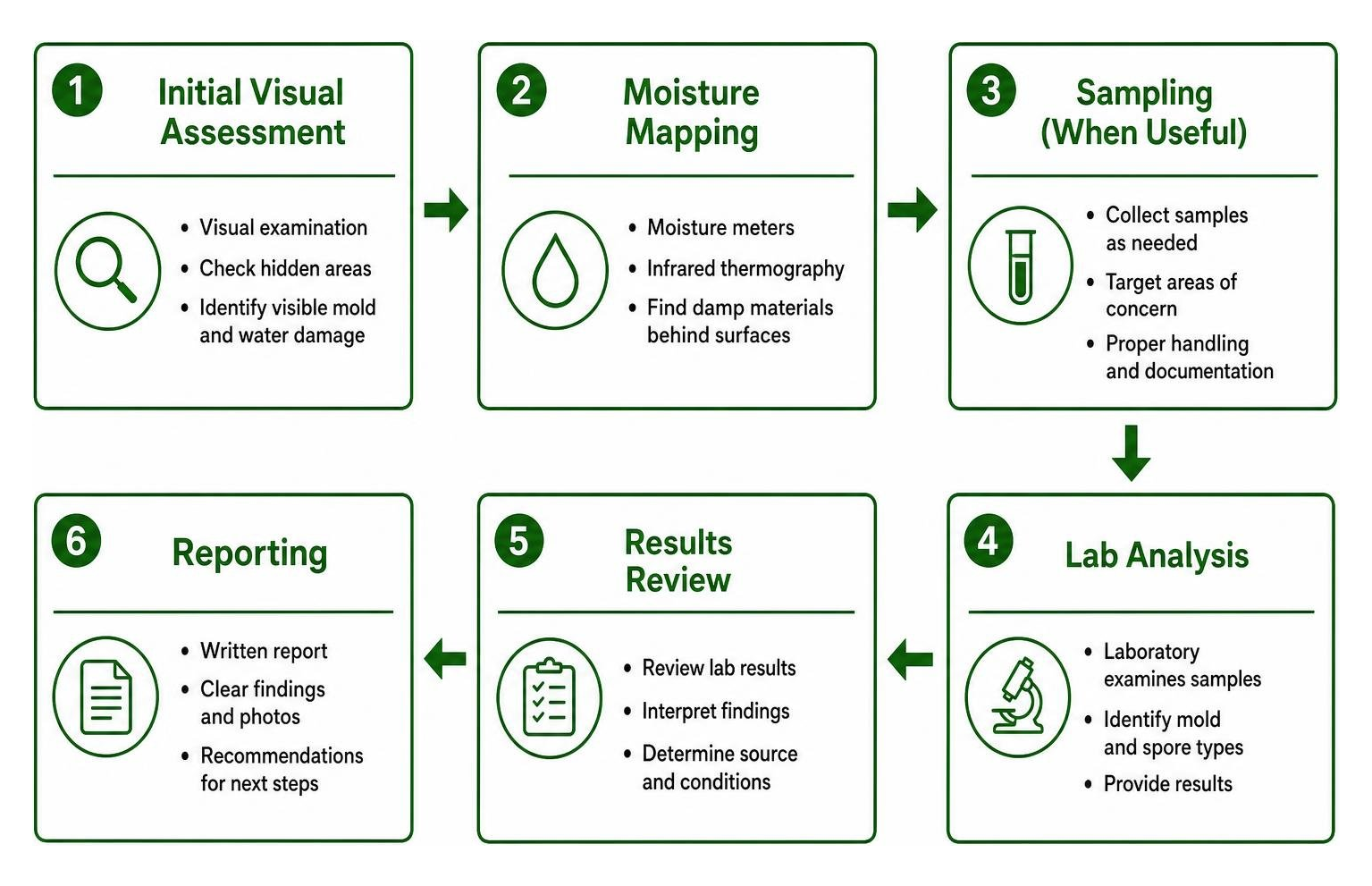
A qualified assessor performs several systematic tasks during a site visit:
- Visual Examination: Scrutinizing hidden cavities, attics, plumbing chases, crawlspaces, and HVAC ductwork.
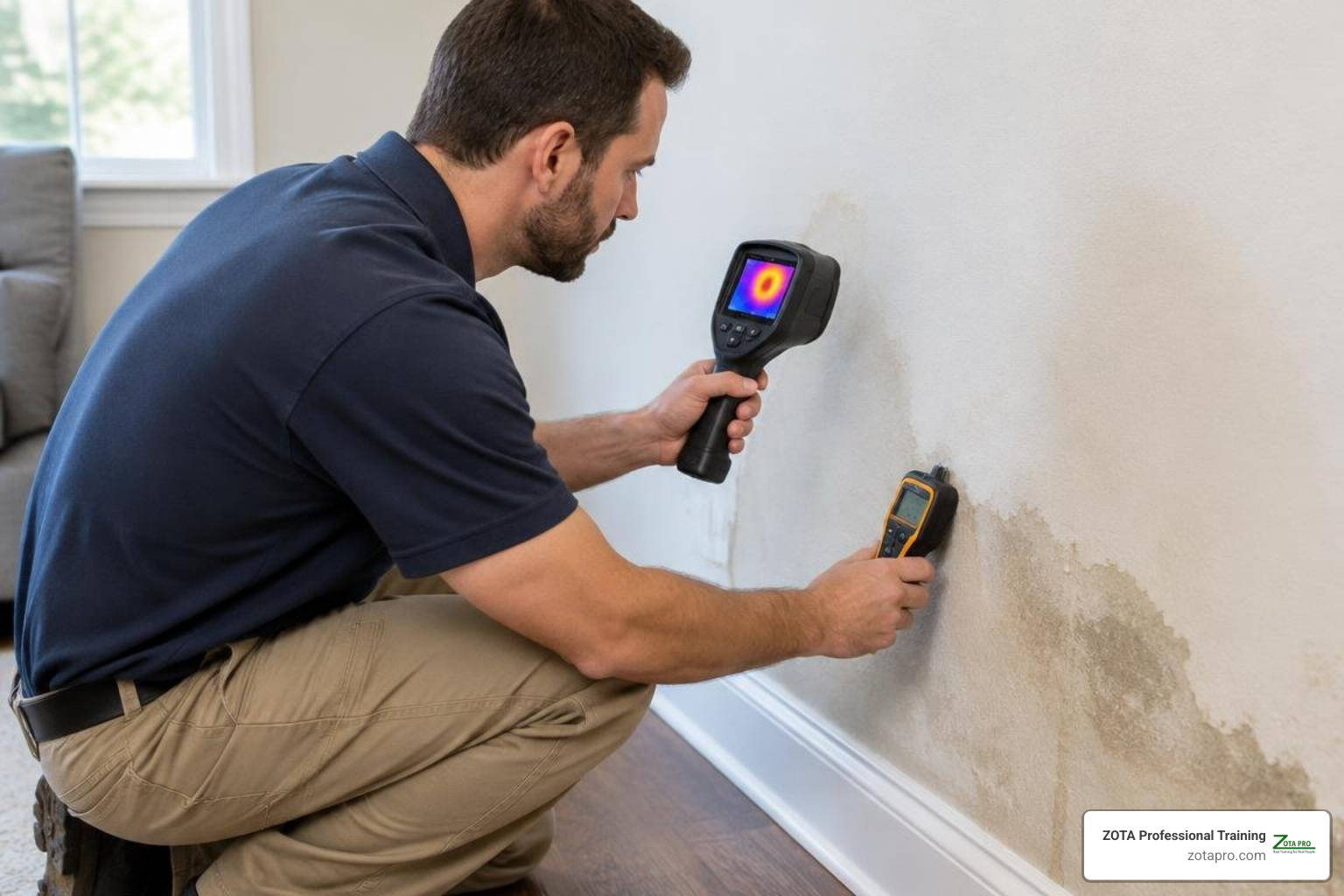
- Moisture Mapping: Utilizing pinless and penetrating moisture meters alongside infrared thermography to identify damp building materials behind drywall, subfloors, and tile.
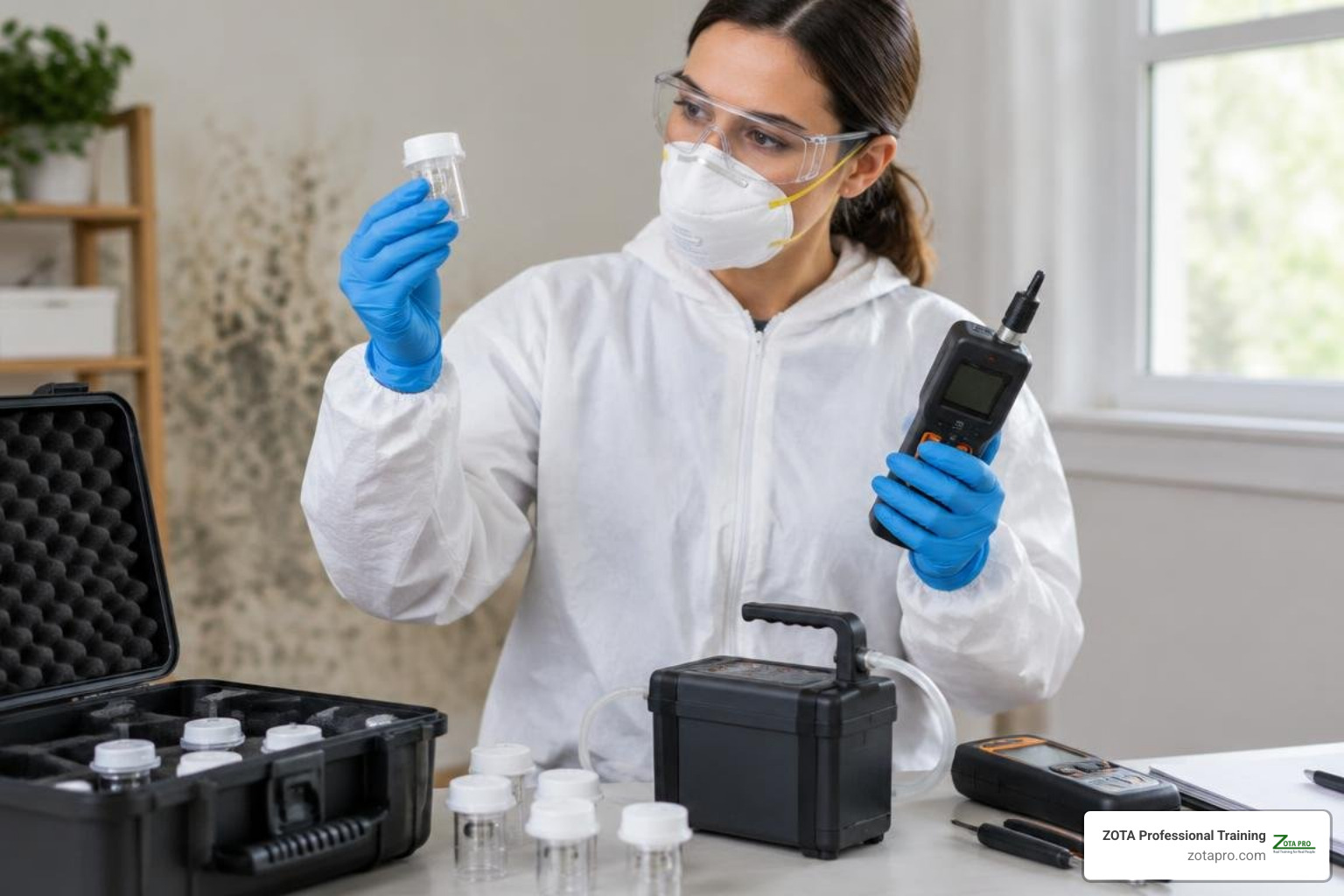
- Targeted Bioaerosol and Surface Sampling: Collecting air cassettes (such as spore traps), tape lifts, and surface swabs where physical growth or hidden amplification is suspected.
- Chain of Custody & Laboratory Coordination: Submitting samples to accredited environmental microbiology laboratories to confirm species identification and spore concentrations.
- Developing Remediation Protocols: Writing detailed scopes of work specifying containment, air filtration, and removal standards when elevated levels are confirmed.
Understanding the health effects of mold exposure and common indoor symptoms helps property owners understand why rapid, accurate detection is critical. In larger facilities, following structured commercial mold assessment protocols ensures compliance with workplace safety standards.
Key Steps and Equipment Used During an Inspection
Inspectors utilize specialized tools and personal protective equipment (PPE) to assess properties safely:
- Infrared Thermal Cameras: Highlight temperature differentials caused by evaporative cooling in damp drywall.
- Borescopes: Allow fiber-optic visual checks inside wall cavities with minimal structural disruption.
- Calibrated Hygrometers: Measure ambient relative humidity and dew points to evaluate condensation risks.
- PPE (N-95 respirators, nitrile gloves, eye protection): Safeguard the assessor in heavily contaminated spaces.
- Baseline Outdoor Control Sampling: Captures exterior air samples simultaneously with indoor samples to establish natural background spore levels, adhering to proven ISCT mold testing methodologies.
How to Choose an Independent Inspector and Avoid Conflicts of Interest
Across the United States, industry directories list roughly 5,901 mold inspection and testing firms, but only about 1,942 operate strictly as inspection-only entities.
The industry benchmark, IICRC S520 Standard for Professional Mold Remediation, strongly advises separating assessment from remediation. When the same contractor inspects the property, writes the cleanup plan, executes the remediation, and performs the final clearance test, a substantial conflict of interest exists.
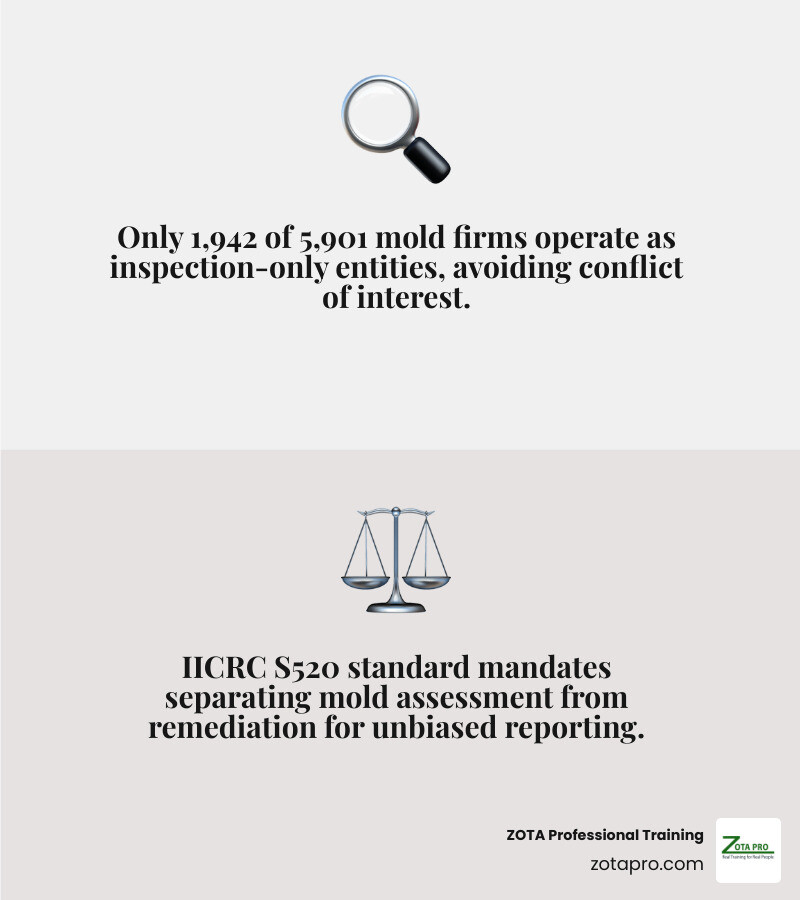
According to national tracking from the Mold Inspectors Directory data on independent firms, selecting an inspection-only specialist prevents artificially inflated repair estimates and guarantees impartial reporting.
| Feature | Independent Mold Assessor | “Free Inspection” Remediation Contractor |
|---|---|---|
| Primary Incentive | Accurate, scientific reporting & moisture detection | Securing a high-dollar remediation contract |
| Laboratory Analysis | Sent to independent AIHA-accredited laboratories | Often visual-only or uncalibrated in-house kits |
| Remediation Scope | Prescribes only necessary, targeted remediation | May over-prescribe demolition to boost job costs |
| Post-Remediation Clearance | Objective third-party verification before payout | Grades their own work with no external oversight |
Essential Credentials and State Licensing Requirements for a Mold Inspector
Because federal oversight does not include a nationwide mold licensing program, credential verification falls to state bodies and accredited certifying boards.
Leading certifications include:
- ACAC CRMI (Council-Certified Residential Mold Inspector), accredited through the CESB.
- NORMI CMA (Certified Mold Assessor).
- IAC2 (International Association of Certified Indoor Air Consultants).
Several states mandate formal government licensing. For instance, under Article 32 of the state Labor Law, assessors must satisfy strict New York mold licensing requirements for assessors, which explicitly forbids an individual from assessing and remediating the same property. To determine what credential suits your career or local jurisdiction, review the different mold certification types explained. You can also locate vetted building professionals through resources like Find Certified Home Inspectors Near You – InterNACHI®.
Why Independent Third-Party Inspection Matters for Property Owners
An objective third-party report provides defensible documentation for real estate transactions, insurance claims, and tenant-landlord disputes. Whether assessing single-family residences or multi-unit complexes under residential and commercial mold inspection standards, having lab-backed data protects building occupants from unsafe environments while shielding owners from unnecessary repair bills.

Steps to Become a Certified Professional and Launch Your Career
Entering the environmental inspection industry offers strong career stability for general contractors, home inspectors, and facility managers looking to add high-value compliance services.
To launch an assessment career:
- Review your state’s environmental licensing requirements.
- Complete an accredited training curriculum, such as our comprehensive mold assessor initial certification course.
- Invest in professional-grade inspection equipment and establish accounts with AIHA-accredited analysis labs.
- Maintain active credentials through continuing education and field assessments.
At ZOTA Professional Training, we provide EPA-accredited, OSHA, and state-approved environmental certification programs with flexible in-person, hybrid, and online delivery. If you are ready to expand your technical skills and build an inspection business, explore how to get mold certified the right way through accredited training today.